The Ordinary Work of Building a Life
By Tahera Rahmani
October 19, 2026
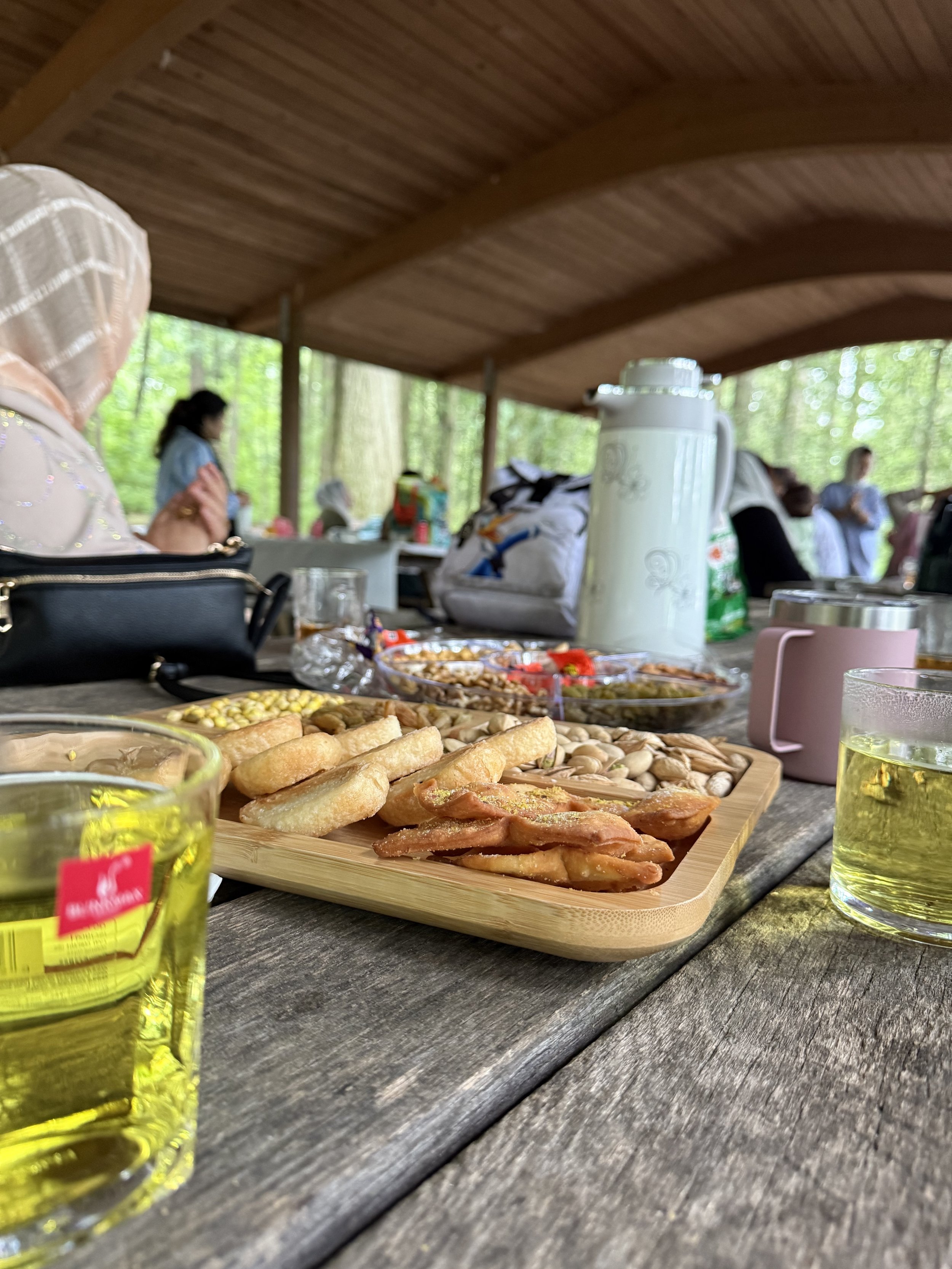
A tradition among Afghans in Philadelphia: catching up over tea and sweets at the park. Photo by Tahera Rahmani
On a warm Saturday in mid-September, I attended a birthday gathering in a Philadelphia park with a group of Afghan families. Birthdays and picnics on warm days are common in the Afghan community here — a chance to gather, catch up, and speak Dari.
The children ran off to play. Some of the men played volleyball while others drank tea and talked. The women gathered on a rug spread over the grass, with tea and dessert in front of them.
It looked like an ordinary weekend celebration. But our conversation soon turned to something heavier: going home.
Two of the women had recently traveled to Afghanistan after finally becoming U.S. citizens and obtaining the documents they needed to travel and return. For many of the other women in the circle, that possibility was still a remote one. Some were waiting for permanent residency, others for citizenship. Many had not seen their parents in four, five, or even twelve years.
They began asking questions. What was it like to see your parents after so many years? Did you surprise them? How did it feel to be there? And after finally seeing them, was it harder to leave your parents behind, or to leave your husband and the home you had built in the United States?
One woman showed us a video of the moment she surprised her parents. It had been almost five years since they had seen one another. Her parents cried and embraced her when they opened the door. In the background was a song by Afghan singer Farhad Darya about leaving one place in search of safety and still struggling to find a place that feels like home.
من افغانم، غریبم، بی مکانم
من از آواره گان جاودانم
I am Afghan, a wanderer without a place to call home.
I am one of the eternally displaced.
For almost an hour, the women passed the phone around and watched the video. Some laughed through their tears.
Another woman talked about celebrating her birthday with her parents in Afghanistan after years of imagining how wonderful that moment would be. Her husband was in the U.S. She had spent years believing that seeing her parents again would make the feeling that something was missing disappear. Instead, she realized that another part of her was missing — her husband and the life she had built here. The feeling of incompleteness was still there.
Then the conversation changed.
Someone brought out cake and tea. The women started talking about jobs, English classes, babysitting, their children's schools, and finding ways to support their husbands. They exchanged information about opportunities and asked one another for advice.
The grief was still there. But so was the ordinary work of building a life.
In many ways, that work is what inspired Philly-Afghan Info Hub, a community journalism platform I created in 2023.
Helping Afghans Rebuild Their Lives
I came to the United States from Afghanistan in 2022. I spent five years working as a journalist in Kabul, first as a translator, then moving into news writing, reporting, and research. When I first arrived in Philadelphia, I planned to seek traditional journalism jobs. But that began to change as I got to know the Afghan community here.
Initially, I worked with Temple University journalism professor Andrea Wenzel and other faculty and community members to better understand the needs and experiences of Afghan immigrants in Philadelphia. We held focus groups in different parts of the city and listened to people talk about the challenges they were facing, how they found information, and what they needed to feel more connected to their new community.
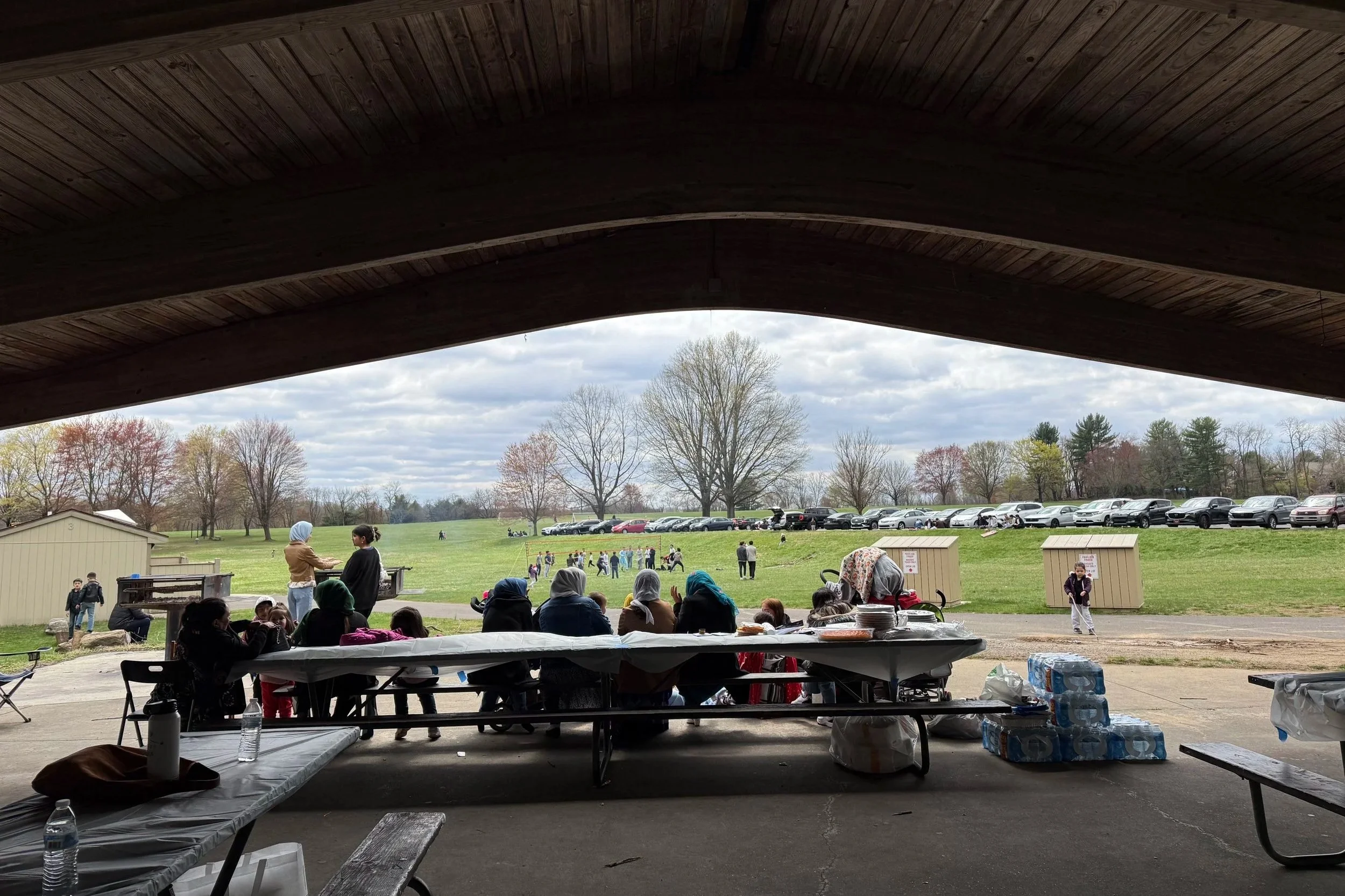
Picnics on warm days are common in the Afghan community in Philadelphia — a chance to gather, catch up, and speak Dari. Photo by Tahera Rahmani
People were piecing information together through WhatsApp groups and personal connections. Some knew where to find help; others did even not know where to begin. Many were trying to rebuild not only their lives but also their confidence and their sense of belonging.
Those conversations made me ask a different question. Instead of, “What story should I report?” I began asking, “What does my community need, and how can I help?” They helped me imagine what a community-centered journalism project could look like. Over time, the project grew to be much more than sharing information. While the work can be emotionally heavy, it is also deeply rewarding to see people find information, confidence, and connection through something we built together.
“I do not want the Afghan community to be represented only through crisis, displacement or immigration policy. Those things are part of our story. But they are not the whole story.”
In 2023, we created a free community resource guide with practical resources, community stories, and Afghan recipes. Whenever I held an event, workshop, or focus group, I brought copies and put them on the table. Eventually, people started telling me, “We already have one.”
Something similar took place in one of our English classes, where we connected Afghan women with English-speaking volunteers in Philadelphia. But the classes quickly became more than language lessons. Participants asked questions about jobs, schools, driving, legal issues and everyday life.
One of the volunteer teachers, Sarah, told me about a woman, “Mahtab,” who expressed interest in getting her driver's license. Women in the community wanted to be able to drive their children to school and become more independent. The teacher answered their questions about permits, licenses, and the process of learning to drive.
One day, Mahtab returned to class with her driver's license.
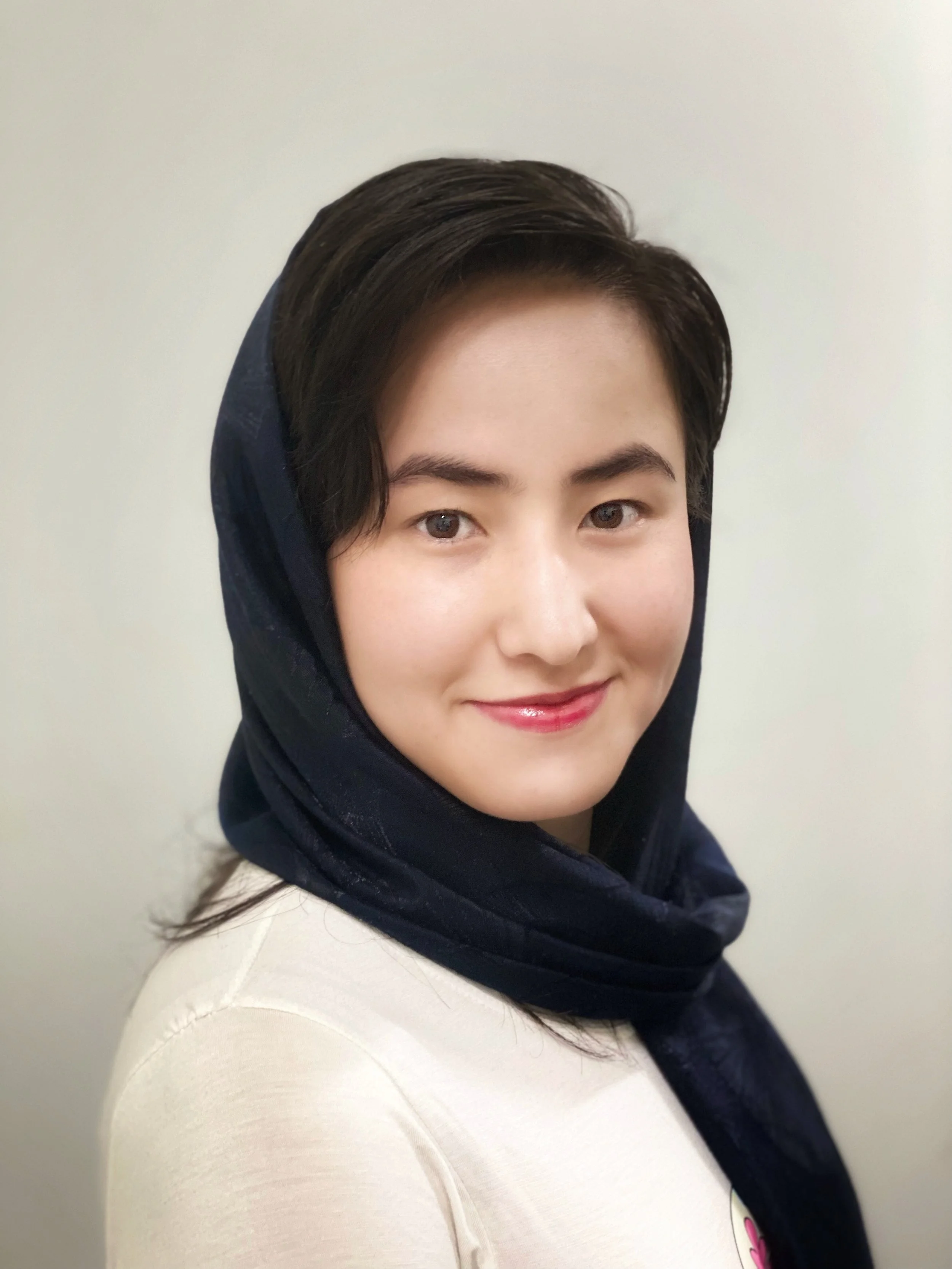
Tahera Rahmani worked as a journalist and translator in Afghanistan before moving to the U.S. in 2022.
Photo courtesy of Tahera Rahmani
Moments like this have changed the way I think about journalism. Sometimes journalism is a story. Sometimes it provides an answer to a question or a need, or a connection to an immigration lawyer, or job opportunities. Sometimes it simply offers a reason for people to gather.
That is one of the things I have come to understand about community work: information creates connections, and connections become community.
Much of what I hear from other Afghan immigrants is also part of my own story. I recognize pieces of my own life in theirs: leaving my country, adapting to a new place, being separated from family, and learning how to start building a life.
I do not want the Afghan community to be represented only through crisis, displacement or immigration policy. Those things are part of our story. They have shaped our lives and continue to affect our families. But they are not the whole story.
We are also parents, students, journalists, artists, business owners, workers, and neighbors. We are raising children, learning languages, starting businesses, celebrating birthdays, finding jobs, making friends and figuring out how to belong to a city that was not our first home.
When I think back to those women in the park, I remember the tears. But I also remember the cake, the tea, the conversations about jobs and schools, the advice they gave one another, and the laughter that slowly returned.
Their lives are not only stories about what they left behind. They are also stories about what they are building here.
And our community must have a role in telling those stories, not only when there is a crisis, but in the ordinary moments that show how an immigrant community becomes part of the civic and cultural life of a city.
That is what home in the diaspora can look like: not forgetting the places and people we came from, but forging bonds in a new place so that life can keep growing.
In helping others build those connections, I found some for myself, too.
***
Tahera Rahmani is a Philadelphia–based Afghan journalist and the founder of Philly-Afghan Info Hub, a community media project. Before moving to the U.S. she spent five years working as a reporter, translator, and investigative journalist in Afghanistan. She holds an MS in Journalism from Temple University’s Klein College of Media and Communication. Through Philly-Afghan Info Hub, she shares stories and practical information to help connect Afghan community members with resources and amplify their voices and experiences.

This story was made possible by the People’s Media Fund.