
By Keith Garabedian
November 5, 2026
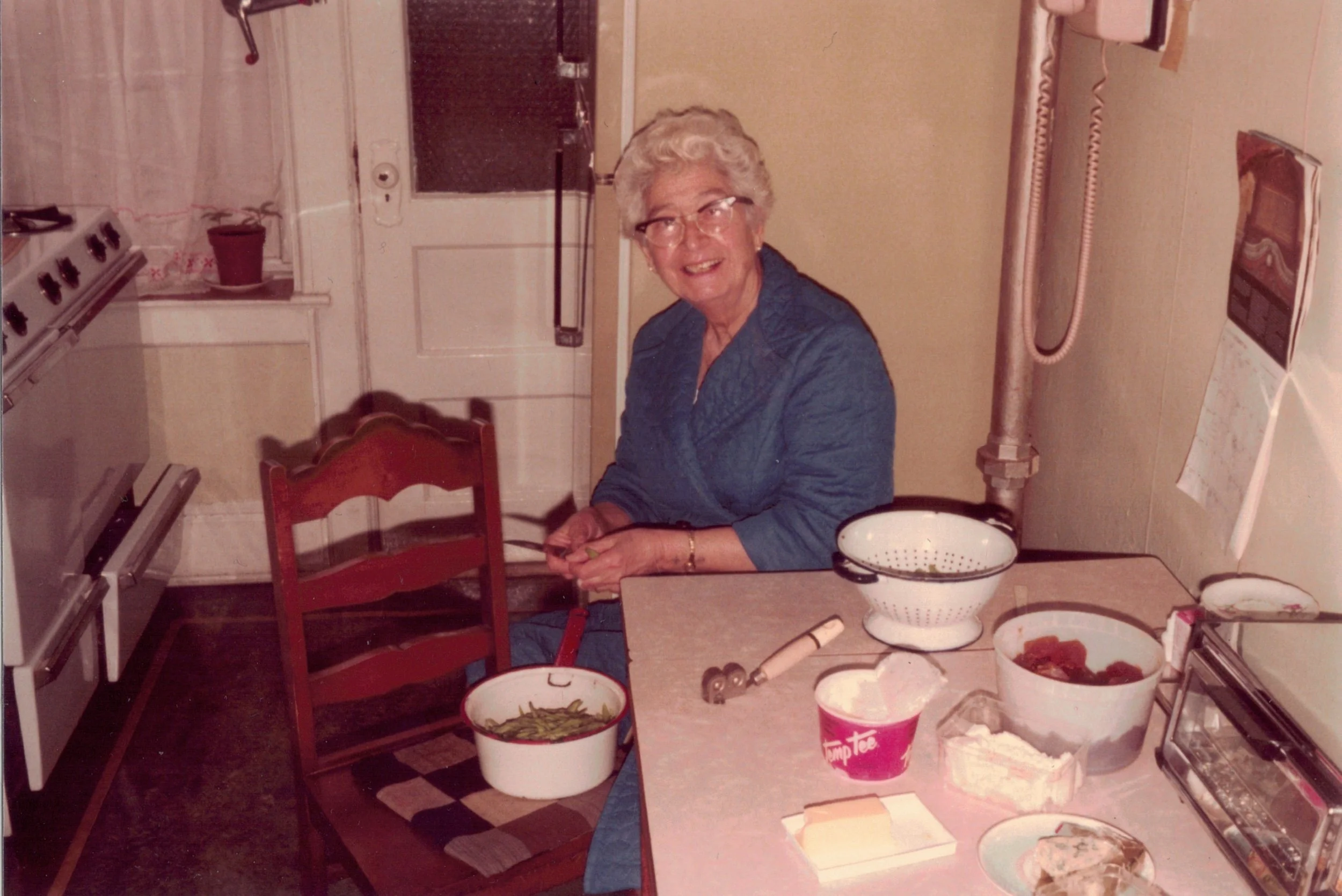
Keith’s Yia–Yia (great-grandmother), Myrianne Kuzujian (Chavousian), snips green beans for Armenian fassoulia at her kitchen table in Sunnyside, Queens, New York City, 1982. All photos courtesy of Keith Garabedian
Three years ago, a family friend decided to move back to the Philadelphia area, purchase a large house, and make plans to create a center for arts and culture. Given my previous experience running restaurants, she asked me whether I would be interested in running a community kitchen and starting a dinner series.
The question had barely left her lips before “Yes!” sprang from my mouth. This was a dream come true. Finally, a chance to leave behind the buzz of fluorescent lights and the daily drudgery of my desk job and get back to what I love: cooking and building community.
Over the next few months, I put together plans for a community kitchen. The question of what I could contribute to our dinner series kept yanking on my imaginary chef coat. Then it hit me — Armenian food! The cuisine had been part of my life for as long as I could remember, but I had not cooked it much for other people, let alone as a vehicle for cultural understanding. I was suddenly struck by an overwhelming sense of self–doubt. A single question cut through everything I was hoping to do:
Could I culturally appropriate my own culture’s food?
Growing up, I had attended an Armenian church with my grandmother, taken part in circle dances at weddings, and eaten my share of kibbeh, kabobs, dolmas, and baklava. But was that enough? I had never learned to speak our unique language. I had left behind the church, a central gathering place for Armenians, years ago. I didn’t own Armenian–styled clothes, didn’t really know the music, didn’t attend an Armenian school as a child, and had never even visited my family’s ancestral homeland in what is now Eastern Turkey.
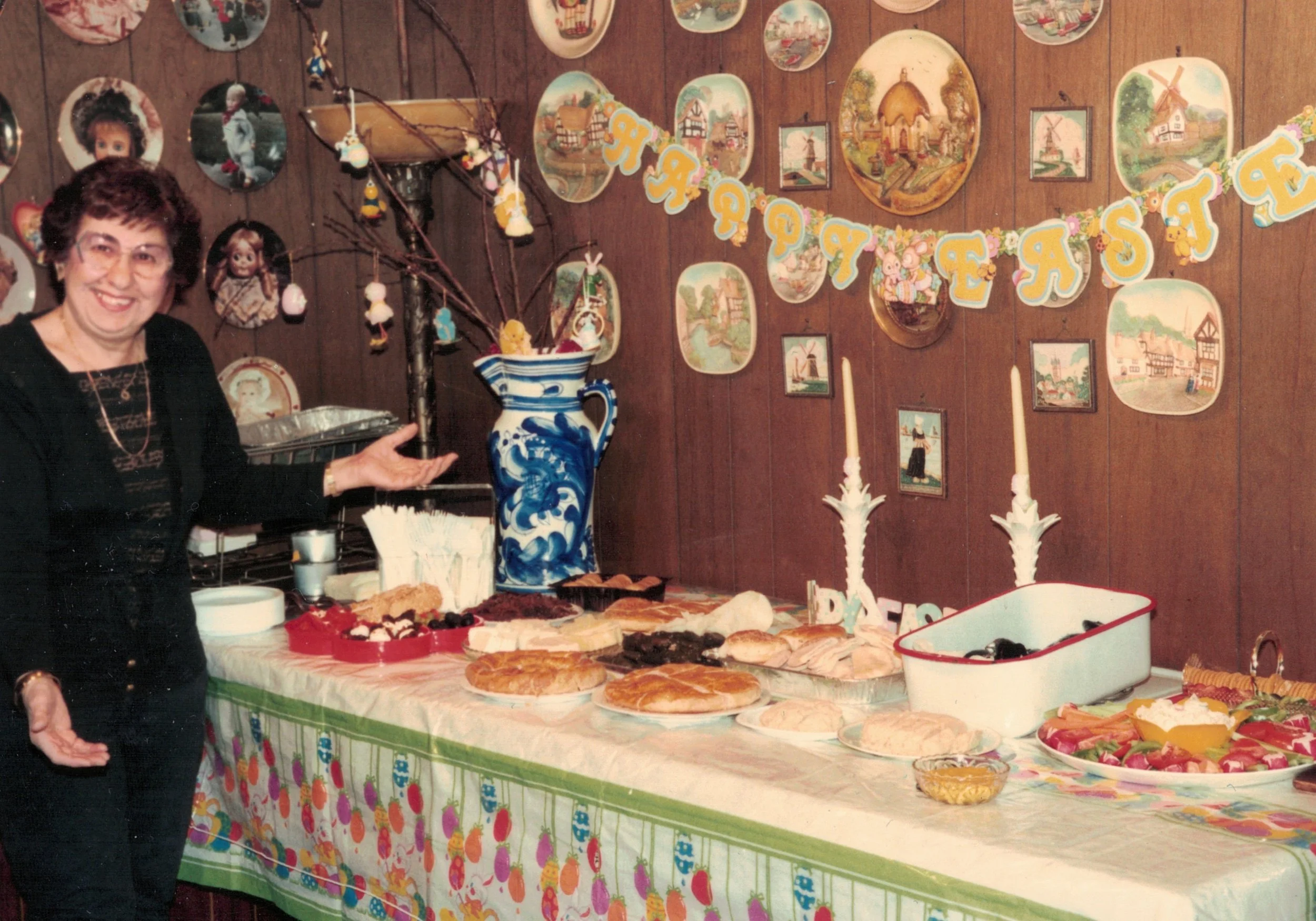
Rose Garabedian, Keith’s grandmother, poses with her Easter appetizer spread at the family home in Sunnyside, Queens, 1991.
What on earth was I doing? This wasn’t like cooking up a few Armenian dishes for friends. The stakes were higher. Cooking Armenian food for the public would mean taking on some sort of representational mantle for my people and my family, whether I wanted to or not. People who had never tasted Armenian food would be swayed, positively or negatively, by what I presented to them, by what I called “Armenian.”
I started thinking about my family’s food and what I had learned about the cuisine of the greater SWANA (Southwest Asian and North African) region. My family’s food seemed so similar to neighboring countries’ food. Sometimes, finding a recipe for my grandmother’s Armenian dishes actually meant scouring a Turkish, Greek, or Lebanese cookbook. I also thought about what it meant to have a deep understanding of a cuisine. Knowing how to make your grandmother’s red sauce or your father’s “famous” BBQ rub doesn’t necessarily make you an expert in Italian food or barbecue.
So, I set myself two goals: first, to understand Armenian food in the context of the region, and second, to try a variety of recipes and experience all their subtle variations from family to family, restaurant to restaurant, village to village, and country to country.
Everyone Loves a Dumpling
I started compiling a cookbook. I photocopied recipes from every Armenian and regional cookbook I owned, along with the treasured handwritten recipe cards I inherited from my grandmother. I organized these recipes in binders, starting each section with the recipe I was most familiar with — my grandmother’s version — then expanding out to other areas.
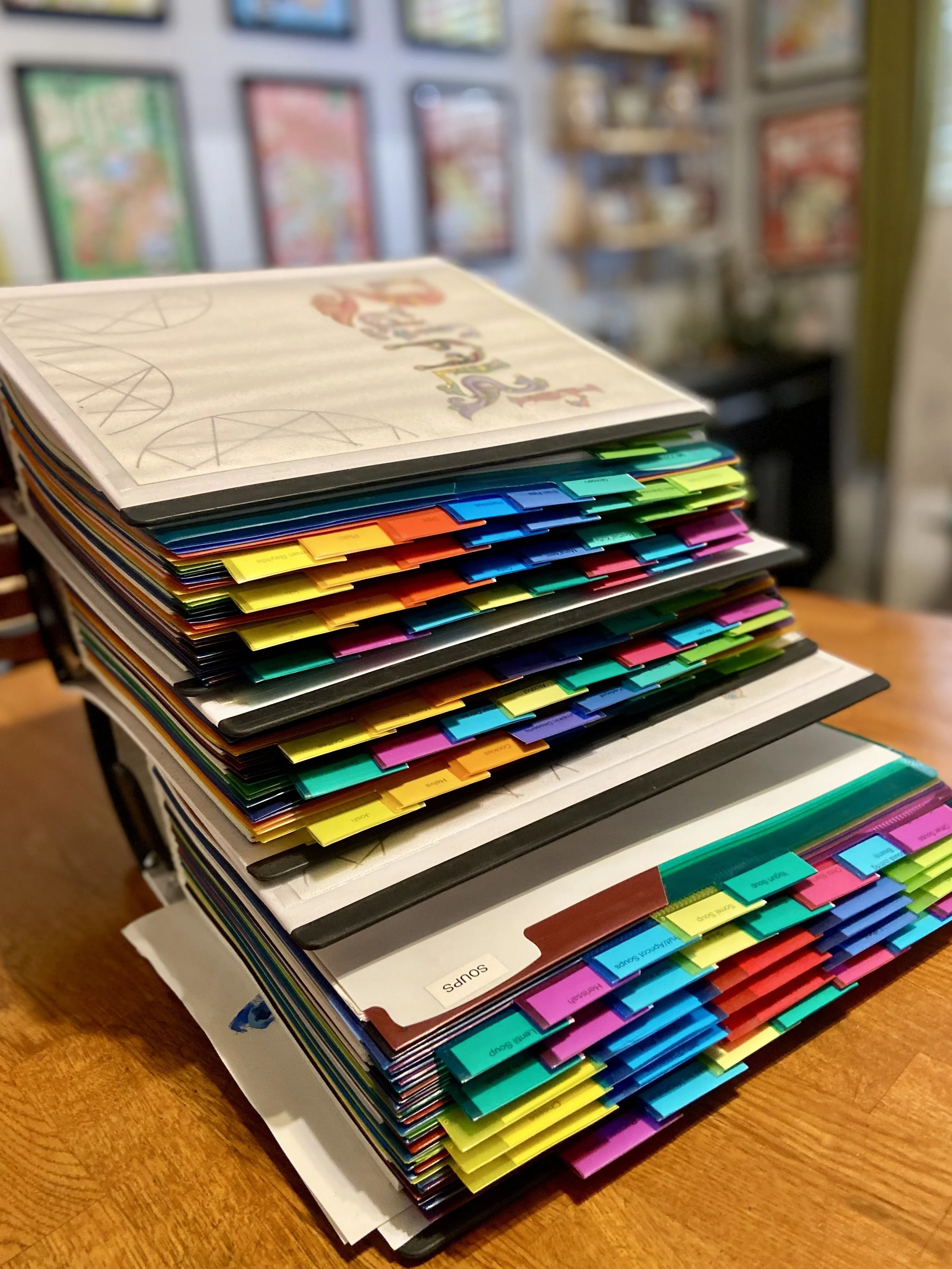
Above: Keith’s SWANA recipe binders start with his grandmother Rose’s version of each dish, then branch out to variations in regional cookbooks. Below: Rose’s recipe for “mom’s montee,” or Armenian manti.
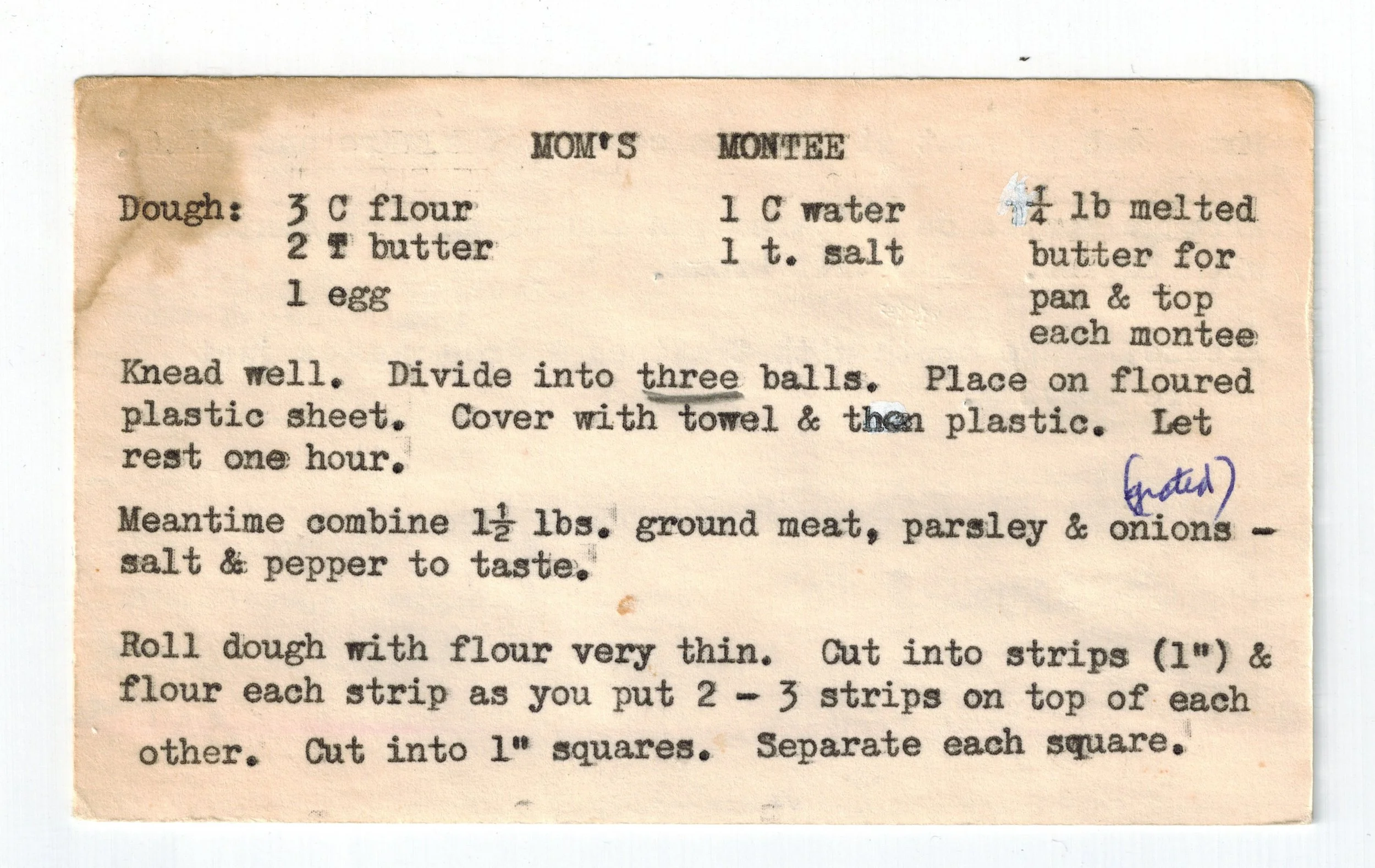
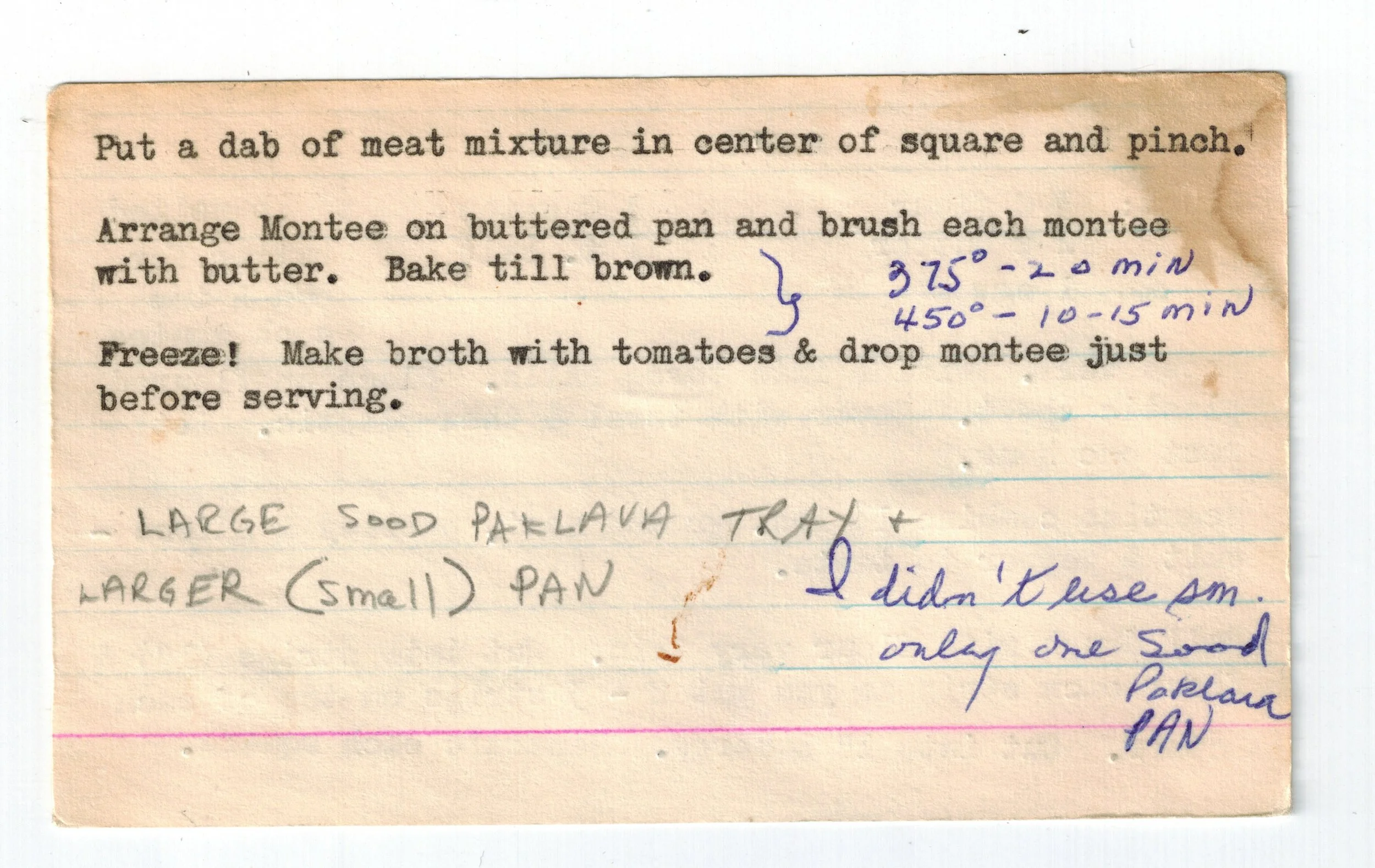
For instance, my grandmother's recipe for dolma would start the section, followed by Turkish and Georgian recipes, then outward to Greek, Iranian, Afghan, and Romanian versions. I repeated this process over and over. I learned that the manti I grew up with was an “open dumpling,” baked on a tray and covered in a light tomato sauce or soup. But in Turkey, manti were smaller, closed, boiled, and served with yogurt and a brilliant red butter. In Uzbekistan, they were larger, filled with precooked minced meat, enrobed with incredible flower-like folds, and also served with yogurt. All the renditions were seasoned the same, with some black pepper and more onions than you can imagine.
Then I discovered recipes for mandu from South Korea. From my grandmother’s index card, I had traveled over 4000 miles east! It was incredible, but only the beginning. Where were these dumplings from? Did they originate in Korea and travel west, or travel east from the Caucasus and the Mediterranean? Or somewhere in between? There was so much more to learn.
“Our cuisines are inextricably linked to the land, climate, and the political and migratory forces that have shaped our unique area of the globe over millennia.”
As I explored the cuisine of the Armenian people, it was abundantly clear how similar we are to others in our geographical region. We all make flatbreads, eat tomato and cucumber salad (though its origin and name remain contentious), and enjoy our weekends by skewering small bits of meat and cooking them over glowing charcoal embers.
It makes sense that we enjoy so many similar dishes. The geography of the region is suited for raising similar livestock and growing citrus and olive trees. In all of our cultures we make use of every part of the harvest. We grow grapes to make wines, fruit syrups, and dried raisins. The leaves become cooking vessels for dolma or sarmas, and the grape vines are burned to grill delicious kabobs.
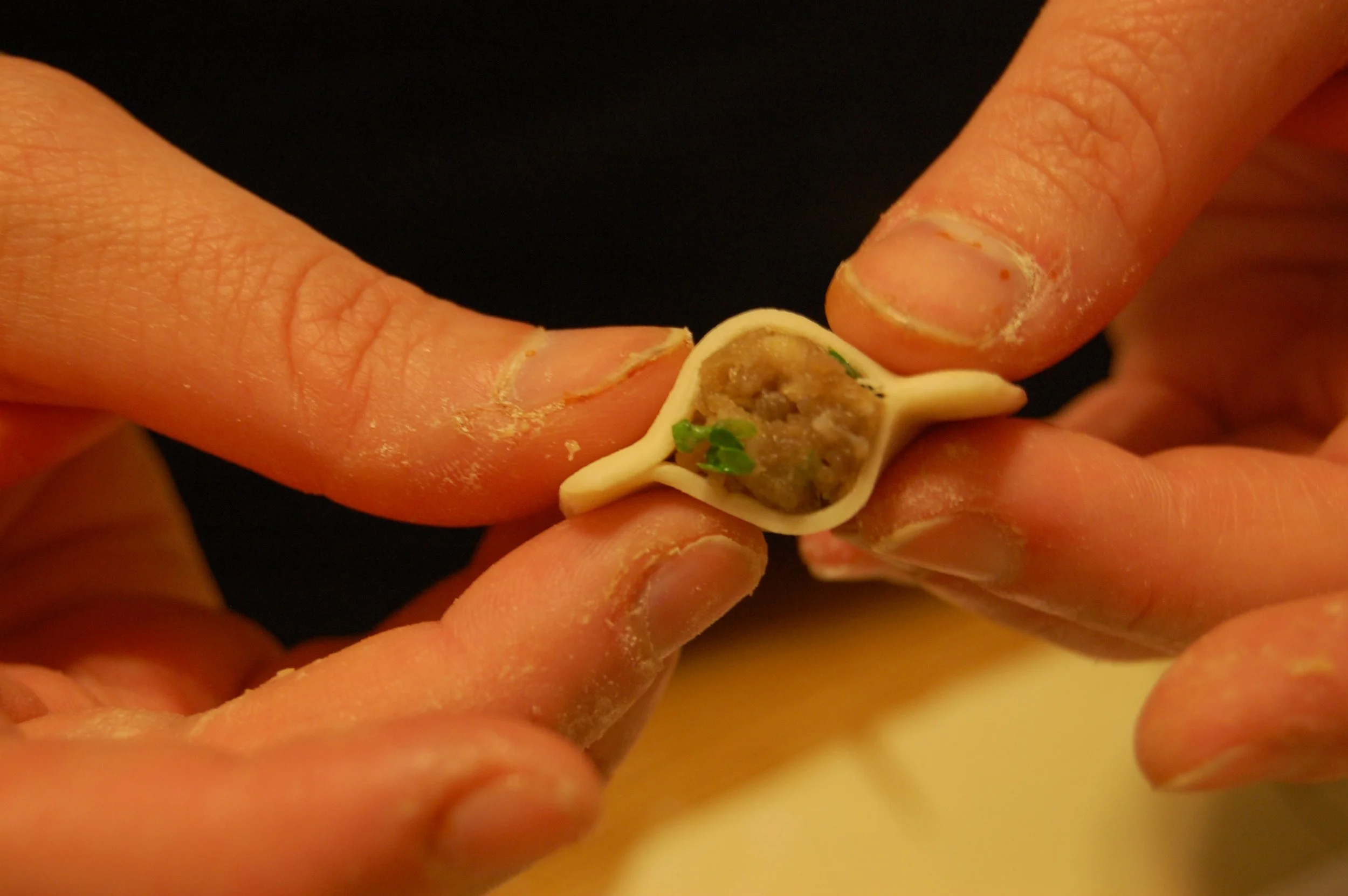
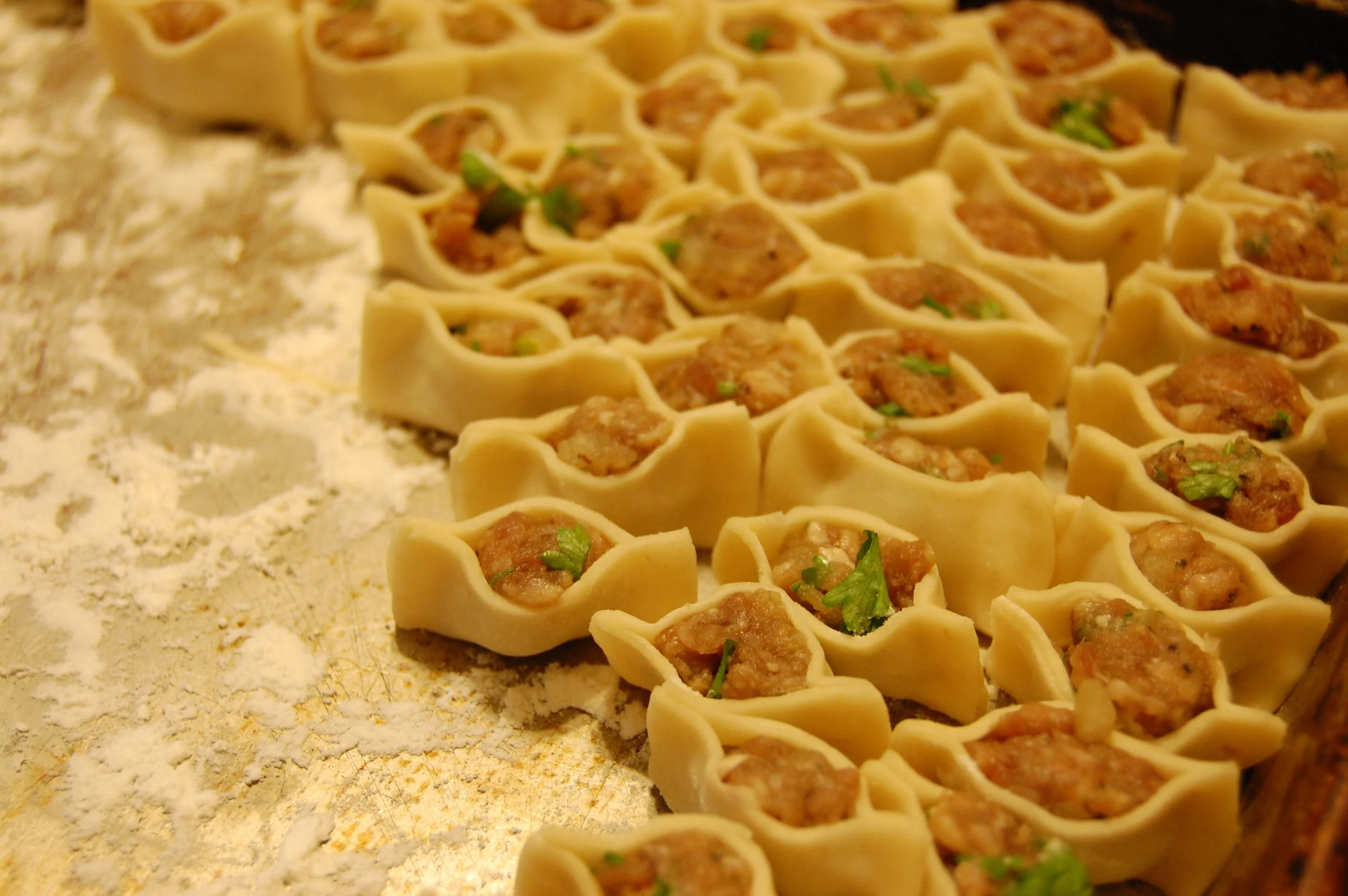
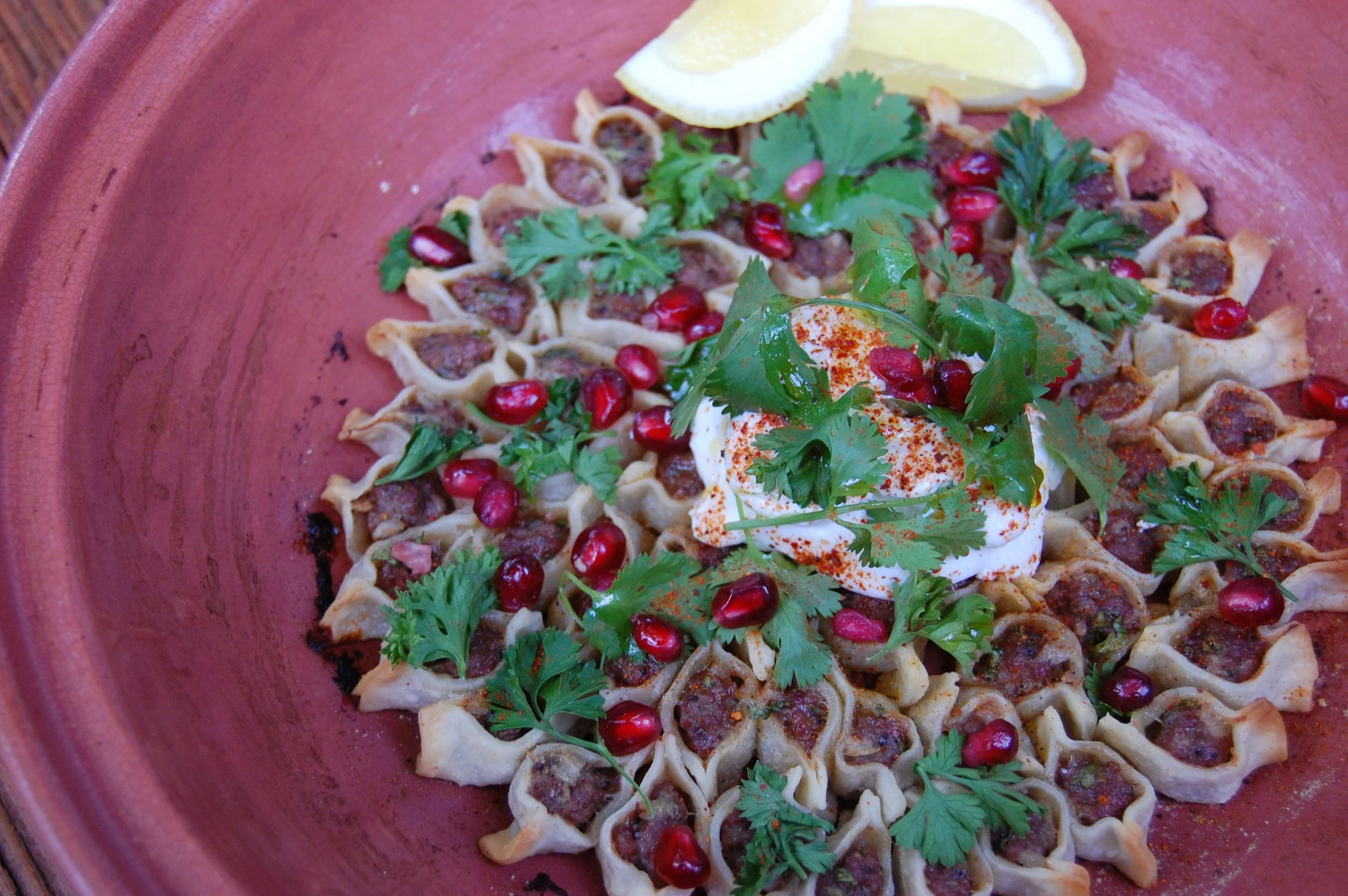
Keith prepares manti the Armenian way, then garnishes the dish with pomegranate seeds and cilantro.
Our similar uses of dairy and yogurt alone could fill an entire book. In contrast with the abundant forests of the European continent, which provide fuel for vast hearths and boiling techniques, our region makes efficient use of small, quick–cooking cuts of meat over a thin layer of charcoal, or burying whole animals in the ground to maximize heat retention and flavor. Our cuisines are inextricably linked to the land, climate, and the political and migratory forces that have shaped our unique area of the globe over millennia.
Sour Pickles and Celebrations
In Armenia, most meals are served with a side or tourshi, a mélange of vinegar–pickled vegetables, usually including cauliflower, carrots, cabbage, celery, and cucumber. Just to our west, there is Turkish turşu, a nearly identical mix. Depending on where you are in the greater region, this pickle dish might include turnips and beet juice, which turn the vegetables a vibrant pink color and are a must when eating döner or shawarma. To Armenia’s east, Iranians make a dish called shoor, a briny mix of pickles — or khiarshoor if it is only cucumbers. Armenians and Iranians will often refer to lovely sour dishes as tasting very “toursh,” as in the case of the Persian stew called khoresh-e goje sabz, made with meat and green plums.
Further south in the SWANA region there is Algeria’s torshi, which gets an extra kick from preserved lime. As we venture further east, the dish continues to change but still retains some similarities. In Pakistan, pickles are referred to as achaar, which gets its flavor from an unripe mango powder called amchur. (Even the “oor” sound remains in the word.) Achaar, like tourshi, is a mix of pickled vegetables, but it also features spices like turmeric and fenugreek, even oil.
“Across a myriad of cultures in the SWANA region, to hear that beautiful name “qatayef” is surely as sweet as the dessert itself. ”
Heading back toward the Mediterranean, you find the Italian classic giardiniera, meaning garden, made with cauliflower, carrots, celery, peppers — all the ingredients found in Armenian tourshi. As in the Middle East, giardiniera is also used as an accompaniment to sandwiches and savory grilled meats. In fact, the two are so similar that it would be hard to differentiate a jar of store-bought giardiniera from tourshi.
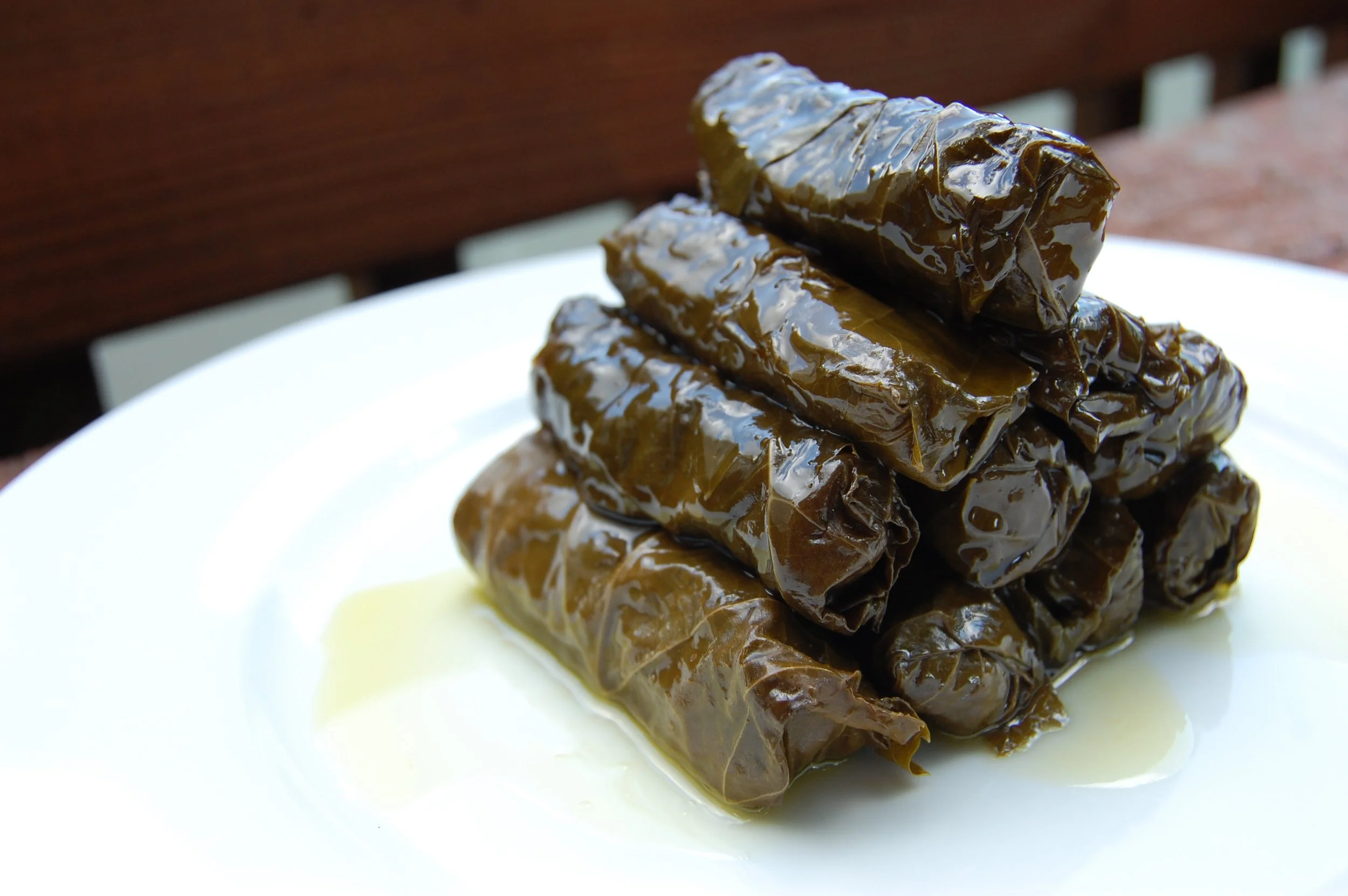
Keith makes Armenian yalangee, the stuffed grape leaves known elsewhere as warak enab or dolma, using his grandmother’s recipe cards, pictured below.
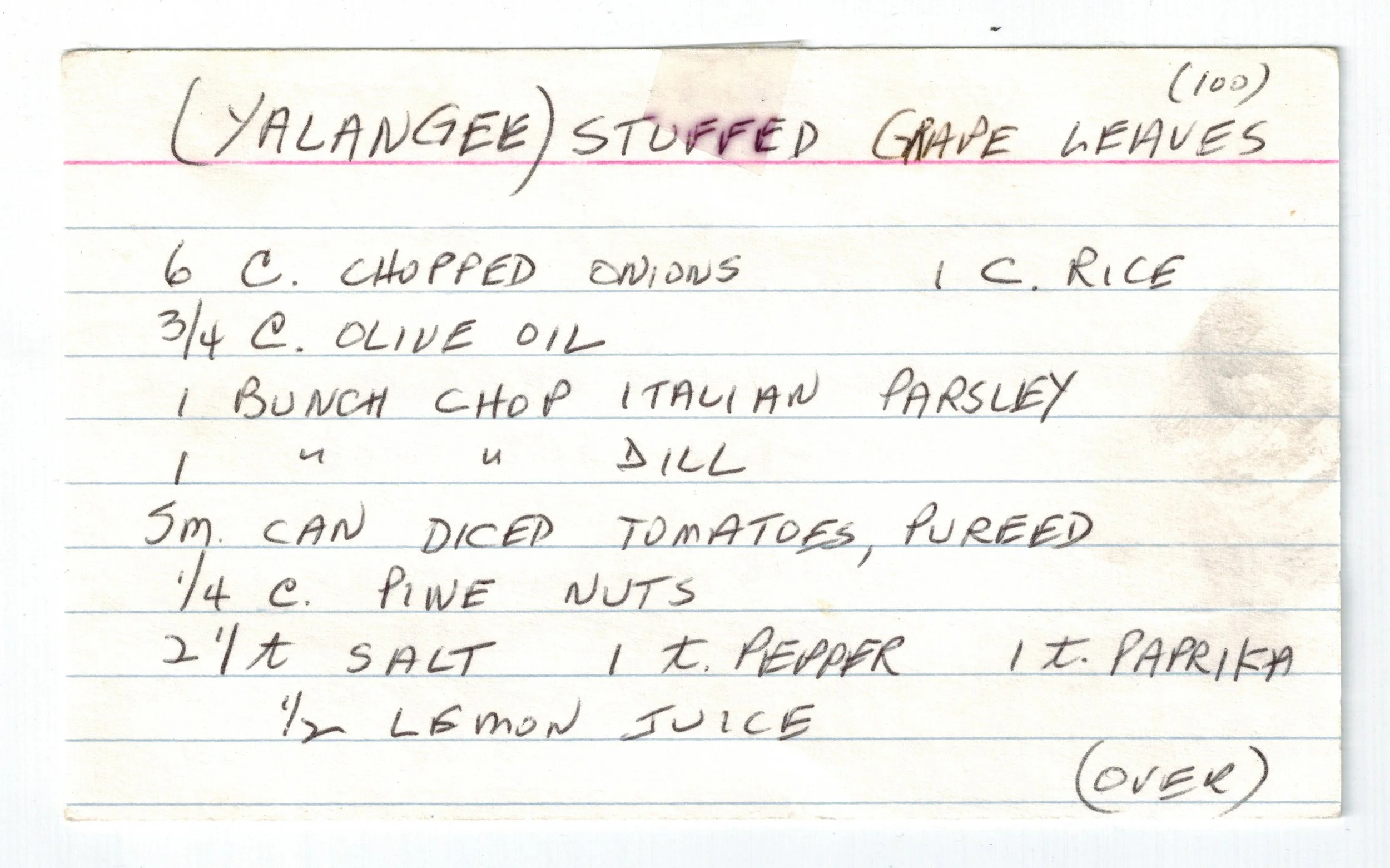
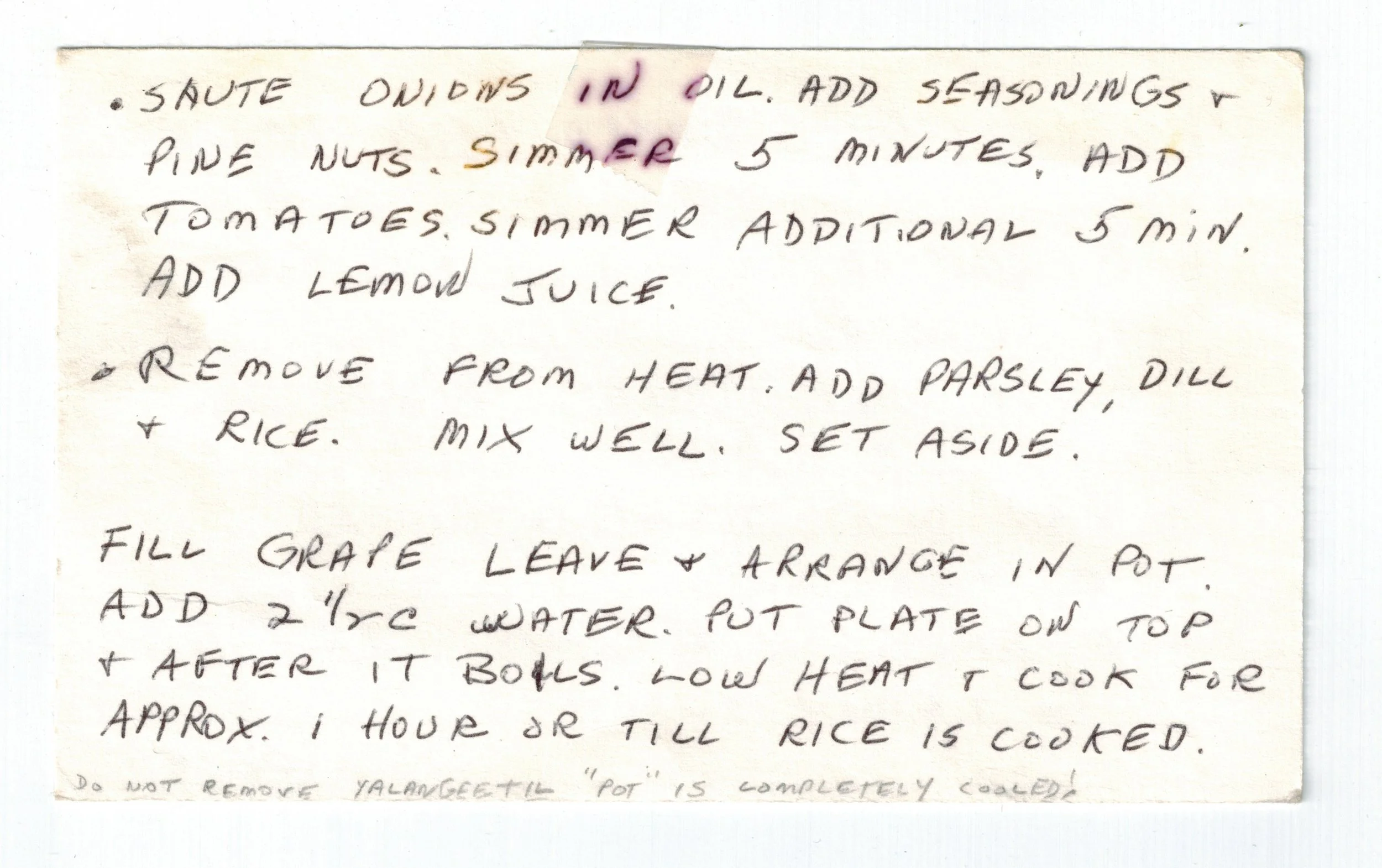
I also found similarities in how a dish is named across cultures, even when the preparation is different. For instance, in Armenian, kadayif refers to a fine shredded filo dough and the dessert made from it. Similar to how baklava is prepared, ground nuts and spices are topped with the shredded filo and butter, baked, and then soaked in a sugar syrup. Other variations include clotted cream or custard, similar to Palestinian knafeh.
What Palestinians call qatayef actually has different ingredients from kadayif. Qatayef is a small, delicate pancake, cooked on one side, pinched at one end, and then filled with a creamy filling (not unlike the Italian cannoli). South of Palestine in Egypt, the preparation of qatayef, or atayef, begins the same way as the Palestinian version, except the pancakes are filled with nuts, sealed on all sides, then deep fried before they are soaked in a perfumed simple syrup. Across a myriad of cultures in the SWANA region, to hear that beautiful name “qatayef” is surely as sweet as the dessert itself.
The cultural use and significance of dishes is another part of our shared food heritage. Take, for example, ma’amoul — a molded semolina-based shortbread filled with dried fruits and nuts. Some are filled with date paste, others with crushed walnuts (pistachios if you want to flaunt it a bit), maybe some diced apricots.
The entire region makes these cookies, but what I find fascinating is how they share not only ingredients, but a purpose — they are for celebrating! In Armenia and other Christian communities, ma’amoul are made for holidays like Easter, while Muslim communities make them on Eid. There is a common recognition of the specialness of this dessert, the molded forms they take, and the care put into each one — not unlike another celebratory food, ma’amoul’s distant cousin, the Chinese mooncake.
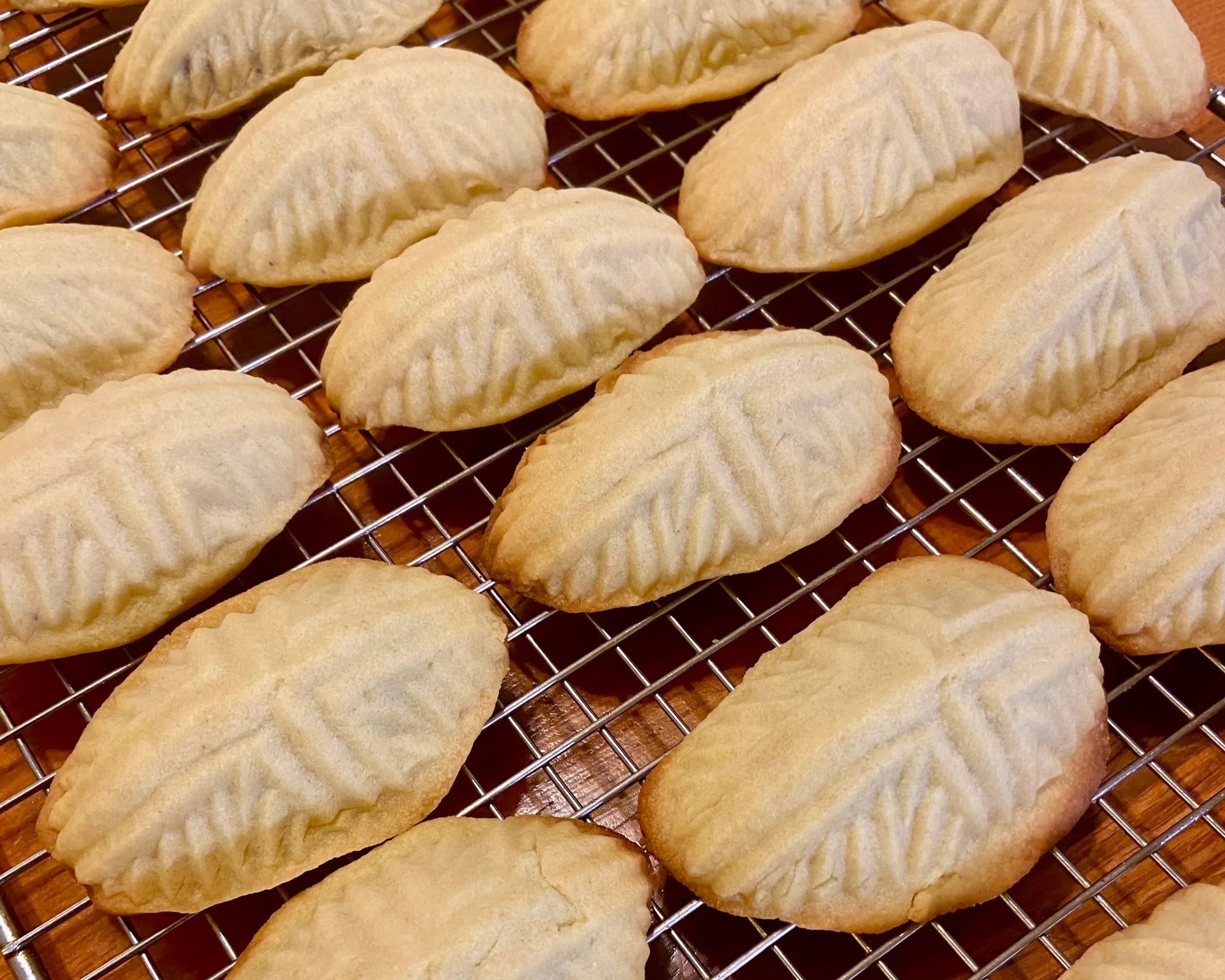
Keith fills his ma’amoul with a date and espresso purée.
Our Foods Carry Our Memories
As I continued my culinary travels, not only was I learning the history and variations of dishes across a continent, I discovered that each dish was connected to an emotion. We all have memories of our loved ones cooking our culture’s foods for us, be it muhammara, slow–cooked lamb, bamia, and tabbouleh, or miso soup, chicken Milanese, mapo tofu, or mofongo. I remembered my anticipation and deep appreciation for the meals my family would make, for the feeling of fullness and satisfaction. And I felt the loss when I fondly remembered those who cooked the dishes and aren’t with us anymore.
Ultimately, our plans for a community kitchen had to be put on hold. But the spark that originally pushed me to ask real questions about my identity turned into a fire. In the years since, my identity has expanded beyond being Armenian. I connect myself throughout the region through not only the foods we all eat, but our styles of dress and embroidery, our music and instruments, the terrain of our homeland, and more. My identity is a beautiful, fluid dance: Armenian, Ottoman, Mediterranean, Caucasian, Middle Eastern, SWANA, Asian, American.
Something as simple as the way your culture bakes bread, makes dumplings, or stuffs a cookie can link you to worlds of tetas, yia-yias, abuelas, aunties, mommas, babushkas, sobos, saftas, and grandmas. Connect with the farmers and workers who grow the food, the immigrants who harvest and pack your produce, the lineage of those who came before you, who sustained themselves on the dishes of their forebears, and their forebears. They persist not only in memory but in real, meaningful, and triumphant ways.
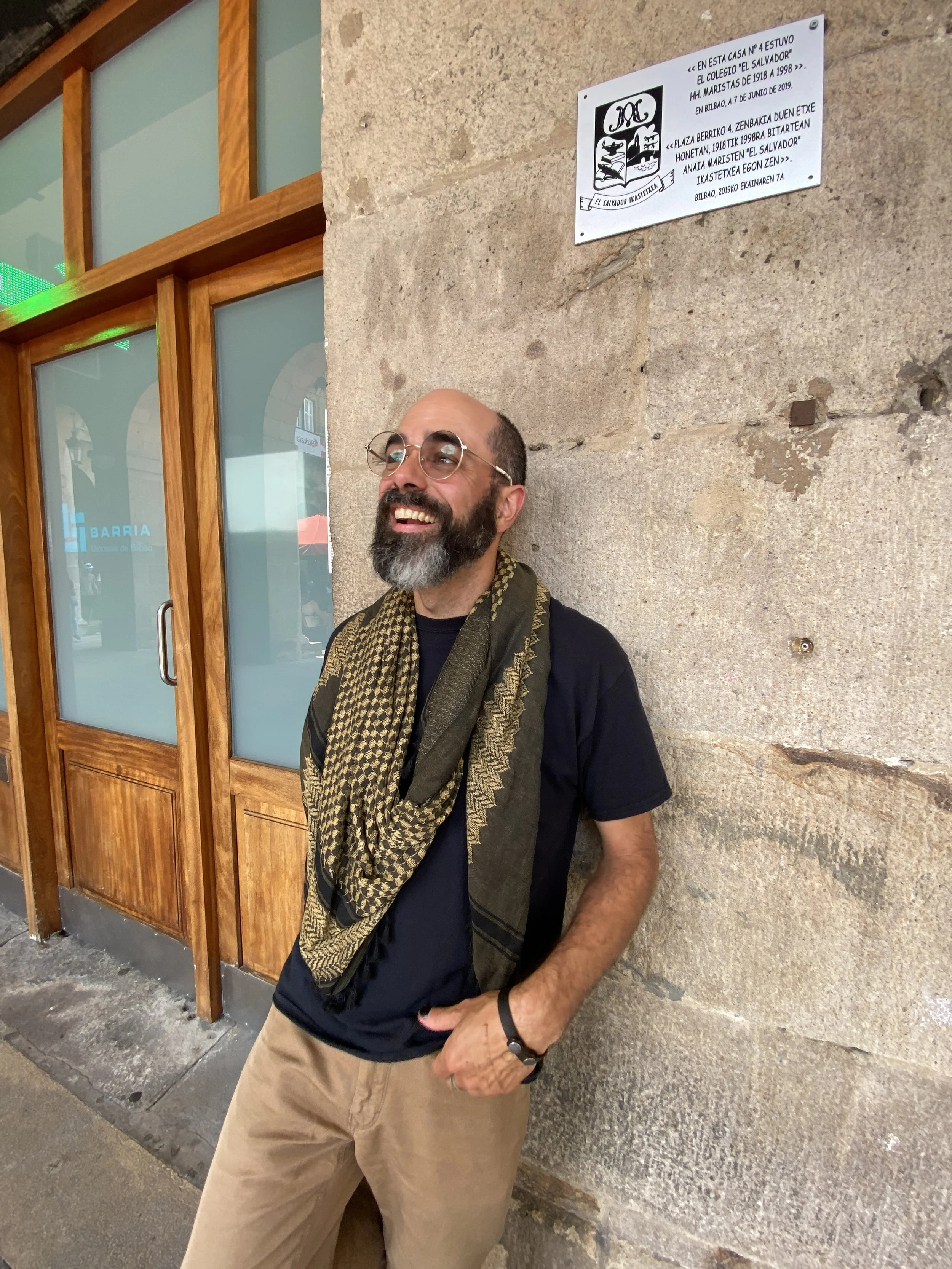
Keith Garabedian on a trip to Bilbao, Spain, 2023.
I remembered my grandmother’s manti, or her bamia — the care she took in folding each dumpling, the way she held the tiny knife in her hand to cut tomatoes over a pot using just her thumb, the sound of her voice and laughter mixed with the sizzle of onions on the stove, the sense of togetherness and family those foods brought us.
Surely I could feel that same appreciation and love for the mandu in Korea! My mind could be transported to another kitchen and family, the same care put into folding the dough, the same sense of gathering and excitement for the food to be ready. The same joy when other family members enter the home for the feast. Through my explorations of culture, food became more than dietary nourishment, but emotional and spiritual nourishment as well. I found our family’s dishes could open a world of empathic imagining capable of transporting me around the world — kitchen to kitchen to kitchen.
I began this journey wondering if I was “Armenian enough” to ever cook our food. But the deeper I looked into myself, the more I opened up to others. I became “more Armenian,” but I became more than Armenian, too.
***
Keith Garabedian received his formal education in music theory and musicology, with a focus on narrative structures in music. He obtained his BA from Temple University and did his graduate and post–graduate work at City University of New York and Rutgers University. From 2011 to 2014, Keith owned and operated the popular Philadelphia restaurant Hot Diggity! on South Street. He is an avid art collector and preservationist, and is also studying Middle Eastern folk and classical percussion with Al–Bustan teaching artist Hafez Kotain. Keith still has a passion for food and in his free time enjoys researching family history, watching great films, building models, traveling, and being a loving cat-dad to Fitz.
On Monday, November 9, Keith will deliver a talk at the Camden County Public Library titled, “(A) Perpetual Thanksgiving: Past, Present, Future — The Foods and the Myths that Built America.” Register here for this free event.

This story was made possible by the People’s Media Fund.