
A Philly Dinner Series Brings Neighbors Together for Conversation and Community
By Elissa Odeh
May 4, 2025
At a table inside St. Martin of Tours Catholic Church on Roosevelt Blvd in Northeast Philadelphia, Shirley, who is Chinese American, listens as the Ahmed family describes fleeing the Syrian war and journeying to Philadelphia from Turkey. At another table, a group of Ukrainians, an Egyptian photographer, a young Lebanese woman and several longtime residents trade Philly food recommendations and laugh as they compare cheesesteaks and scrapple.
More than 110 people gathered on April 15 for The Welcoming Center’s Breaking Bread, Breaking Barriers initiative, a three-part dinner series held in seven Philadelphia neighborhoods with sizable immigrant populations, aimed at bringing neighbors together through food. Nearly 1,000 people have participated across the city, with many returning for the second and third dinners in their neighborhoods to continue the conversation about citizenship and being a good neighbor.
“Food can act as a common denominator,” said Anuj Gupta, president of The Welcoming Center and founder of Breaking Bread, Breaking Barriers. “Not only to feed each other, but to actually talk about it and tell stories of the history and the values that everyone’s cuisine captures, that maybe they can start to understand each other as individuals.”
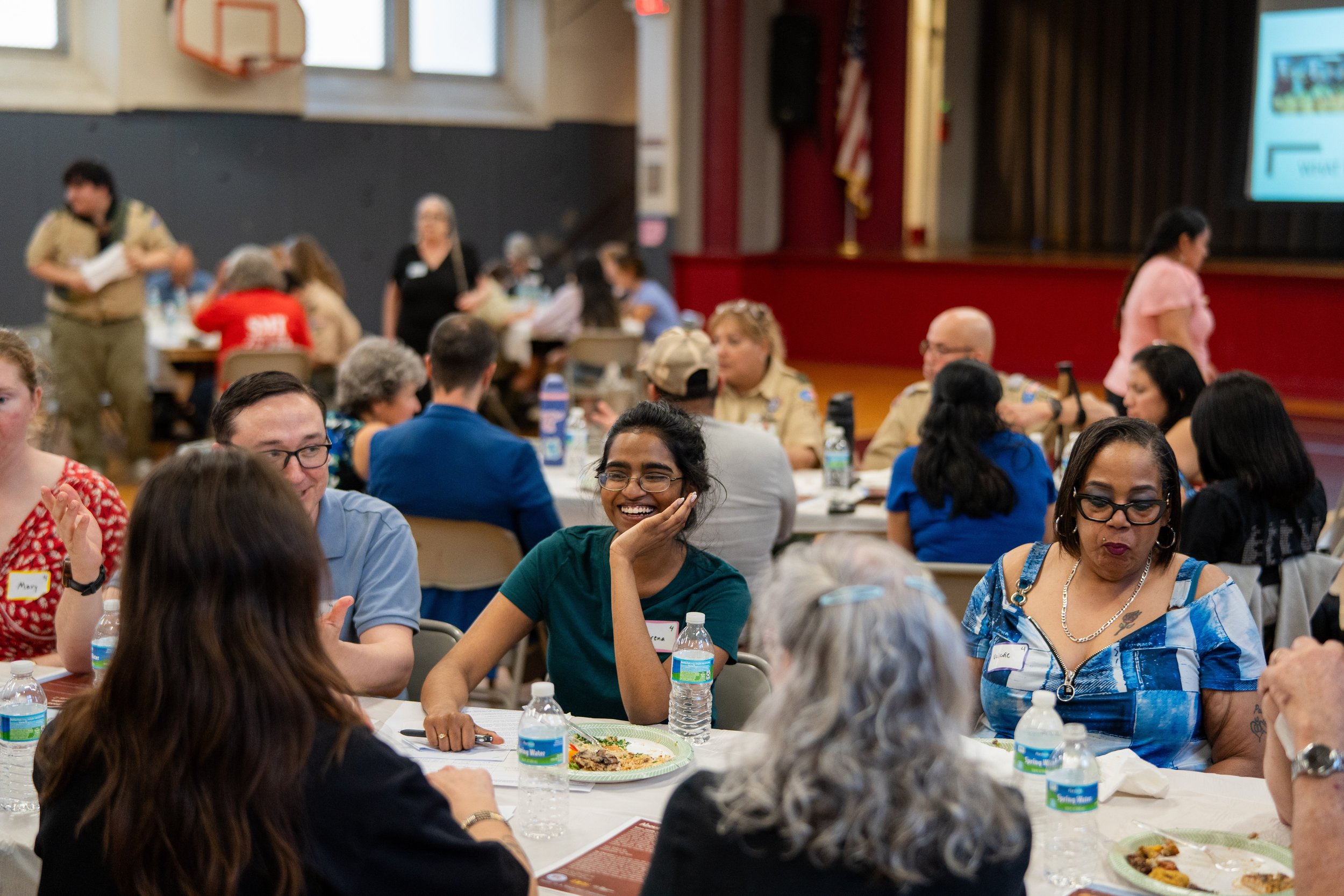
More than 110 people gathered at St. Martin of Tours Catholic Church in Northeast Philadelphia on April 15 for a Breaking Bread, Breaking Barriers dinner organized by The Welcoming Center. All photos courtesy of Michel Moutran
This particular dinner, the second in Northeast Philly, featured Middle Eastern staples from Bishos and Colombian dishes from On Charcoal. Facilitators from partnering organizations — including Keystone Civic Ventures, Feast of Justice, Catholic Social Services and the Northeast Philadelphia Chinese Association — led discussions with help from translators about what it means to be a good neighbor.
For the Food Trust’s Sarah McGonagle, the answer is more nuanced than it may seem. Having served individuals from different communities at a farm stand, she noted that miscommunication often stems from a lack of understanding of different cultural cues, gestures or facial expressions. “There is a whole world of communication that has nothing to do with what you say,” she said.
Another participant, Zoraida Figueroa, pointed out, “You don’t have to know a language to smile at other people.” Figueroa works with Boy Scouts’ Troop 100 at St. Martin de Tours, and her crew volunteered to set up for the night. She sees these dinners as crucial to strengthening connections and creating a sense of safety within communities.
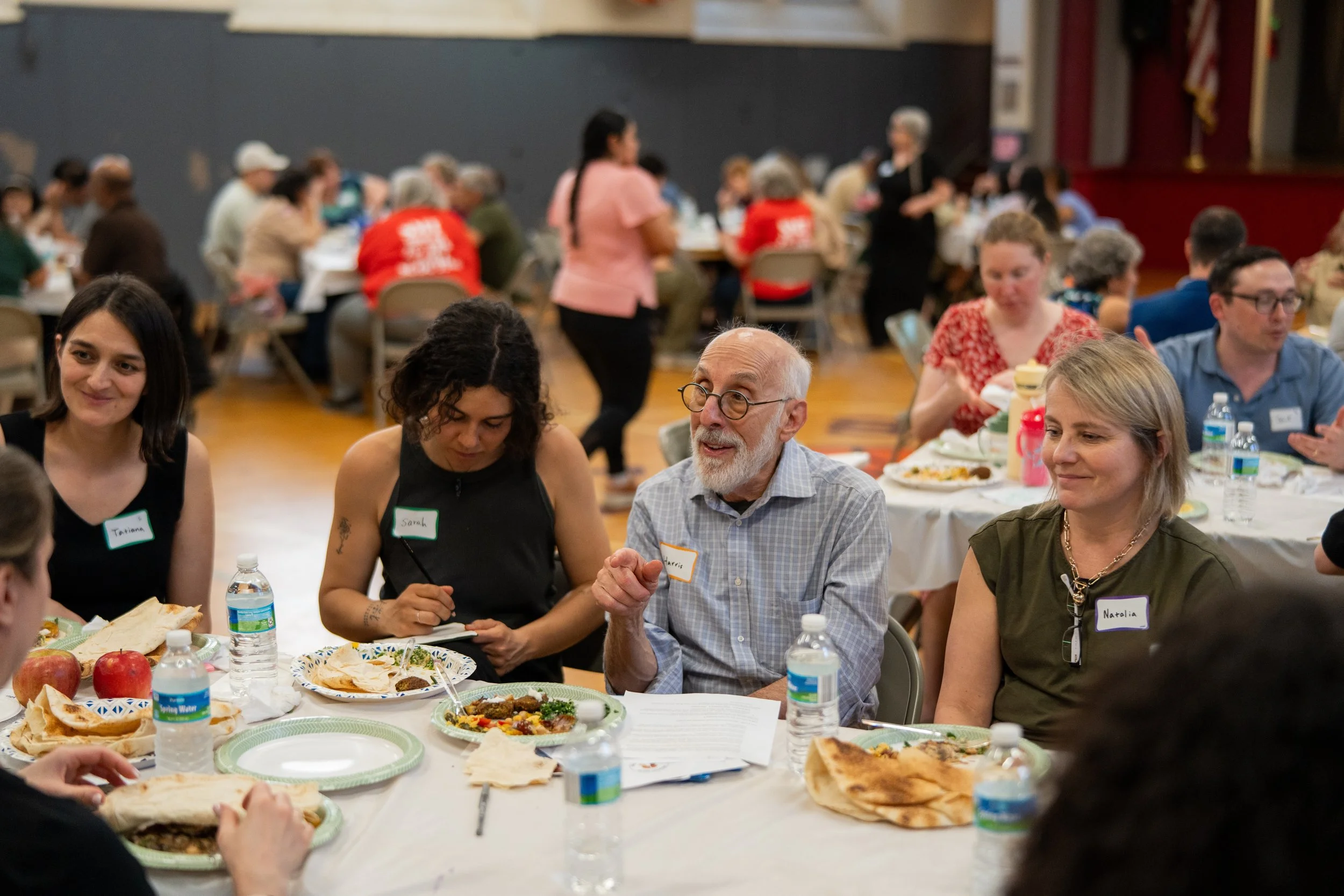
Members of Philadelphia’s Ukrainian community chat with other guests.
Ibrahim Ahmed attended the dinner with his family, and their experience reflects the kind of support The Welcoming Center aims to foster. The Syrian father of three fled Syria with his family during the war and spent years in Turkey before arriving in Philadelphia, where his daughter could receive a kidney transplant. As the Ahmeds began rebuilding their lives, having a shoulder to lean on in a new city was a relief, he said.
Tiziano, an immigrant from Ecuador who withheld his last name out of safety concerns, also described the hurdles his family faces in making connections in the city. He said fear determines their smallest decisions — whether to ask a neighbor for help or trust a stranger.
“We immigrants have learned to keep to ourselves. We keep an eye out because we are scared. We don’t want no problem with no one,” he said. At the dinner, Tiziano expressed feeling, for the first time in a while, that he could speak with others openly and without fear.
For Figueroa, who is Puerto Rican, fear was part of growing up in Philadelphia during the 1960s and 70s — what she called “the ugly,” when Puerto Ricans, and Latino immigrants more broadly, faced systemic discrimination and racism. Recently, a stranger called Figueroa and her daughter a racist slur. “I hadn’t heard that word in years; I thought we were past that,” she said. “And to see it happening again makes me thankful that my parents aren’t here to see it.”
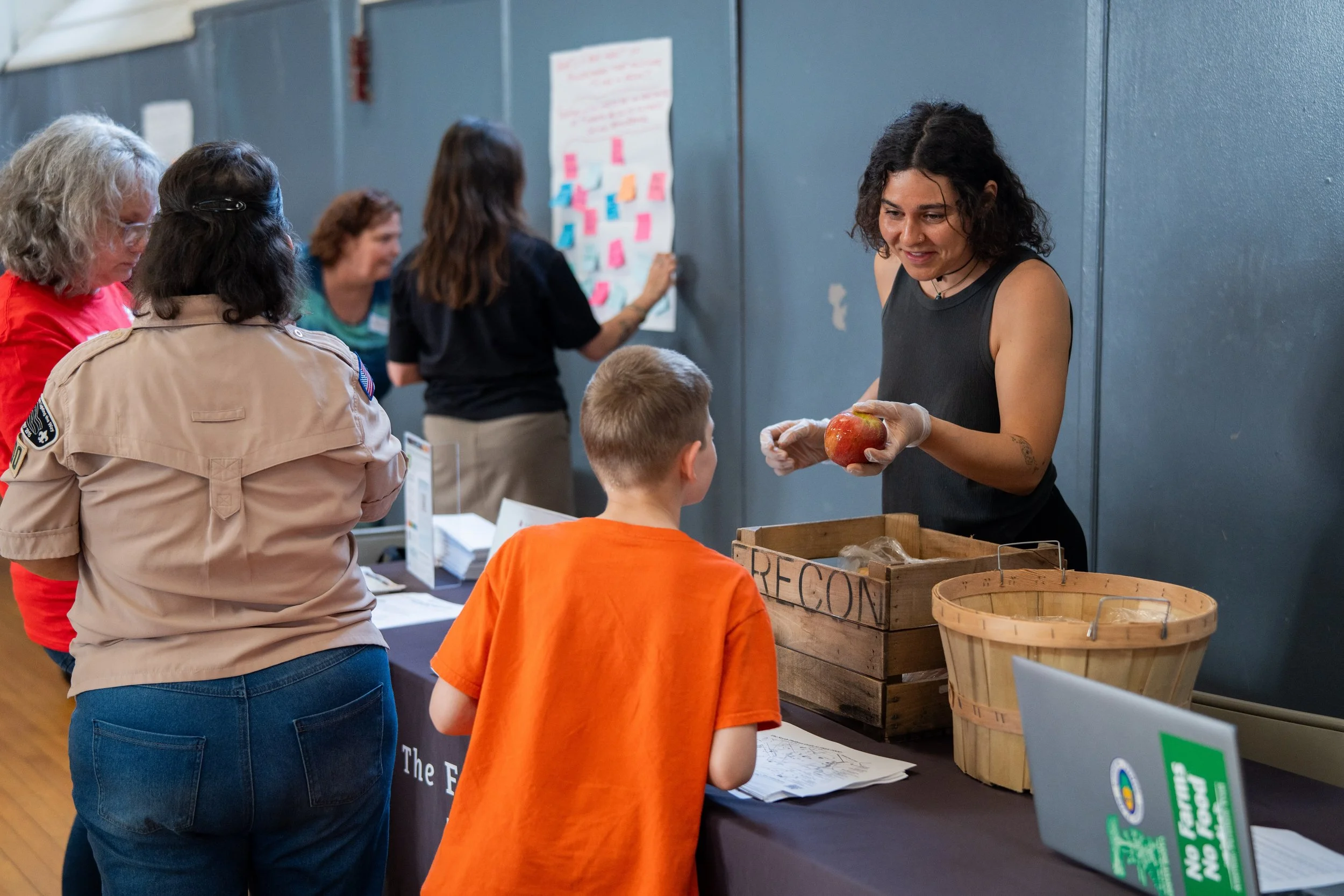
The Food Trust’s Sarah McGonagle, right, offers an apple to a young dinner guest.
Taj Sheikh, project manager of Breaking Bread, Breaking Barriers, addressed the deteriorating treatment of immigrants in the country, which obstructs the path toward social harmony in the city. “I feel overwhelmed by how brave those immigrants [are] who come out and allow themselves to be vulnerable in these conversations,” she said.
To ensure that the gathering is a safe space for participants, The Welcoming Center does not publicly advertise dates or locations, sharing them only through partner organizations.
Philadelphia resident Ted Northrop, who connected with the dinners through his work with Feast of Justice, said he wants the initiative to go further. Most of those attending, he noted, already support immigration. He suggested trying to invite people who hold anti-immigrant prejudices, in the hopes of challenging their misconceptions.
He spoke from experience. At one time, Northrop said, he identified as a “white Christian nationalist.” Then, in college, he ran out of money to do his laundry, and an African classmate offered to pay for it. He was surprised that a Black man from a “third-world country” would help an American. Soon, he said, the barriers he had built between himself and others dissolved. Now, he joins these dinners to learn about different cultures.
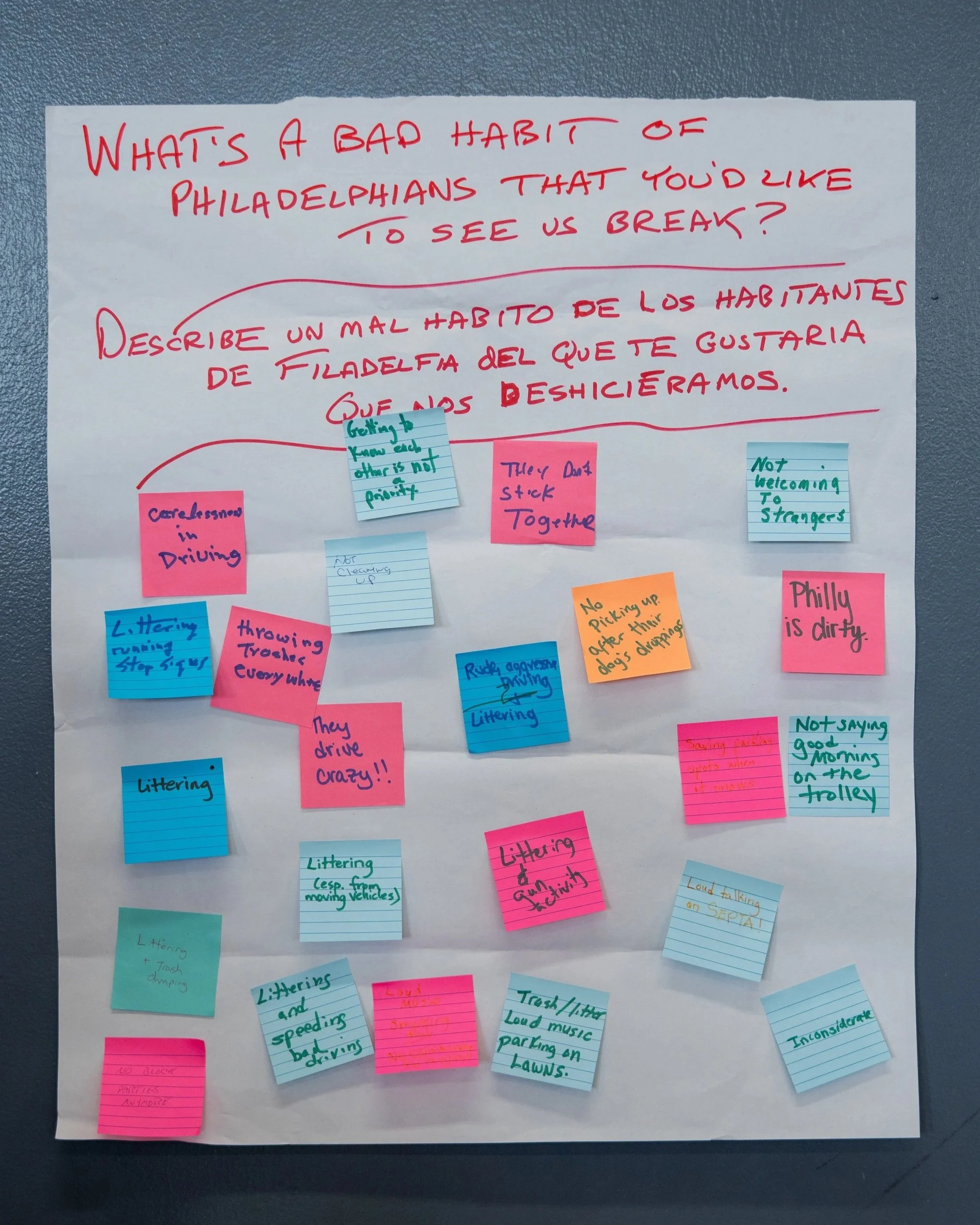
Participants shared their responses to prompts about living in Philadelphia.
At each of the dinners, sociologists from St. Joseph’s University take qualitative notes and conduct surveys on how participants’ perspectives on citizenship and immigration are evolving. By the end of the dinner series, the insights they gather will help shape a greater understanding of citizenship in Philadelphia.
As the evening went on, a group of children ran around kicking an apple across the hall, their laughter echoing through the walls. Figueroa remarked that all people need to see through children’s eyes.
“These kids have probably just met, but their skin color or language barriers didn’t stop them from playing together,” she said. “They know we’re all just humans.”
***
Elissa Odeh is a Palestinian journalist and storyteller based in Lansdale, PA covering Arab and SWANA communities in the U.S. She holds a B.A. in media and culture. She has written extensively for Al-Bustan News, exploring themes of identity and cultural pride through profiles and community features.

Al-Bustan News is made possible by the People’s Media Fund.