
For These Darfuri Activists in Philadelphia, Advocacy is a Family Tradition
By Amna Khalafalla
March 4, 2026
When Fatima Haroun speaks about her hometown of Jebel Marrah in Sudan, she describes a fertile, lush green land that was home to a vibrant community of farmers known for cultivating millet, mangos, guavas and a variety of fruits and vegetables. Hailing from South Darfur, Haroun’s family consisted of well-established farmers who farmed year-round and traveled outside their city to sell their ample harvest. “They did good for themselves,” she says.
Haroun immigrated to the United States in 1995 and has long advocated against the Darfur genocide as a member of the Philadelphia-based Darfur Alert Coalition, founded in 2005. She recalls that at one time, there was a sense of racial harmony in South Darfur, when Arab and African ethnic groups lived peacefully alongside each other.
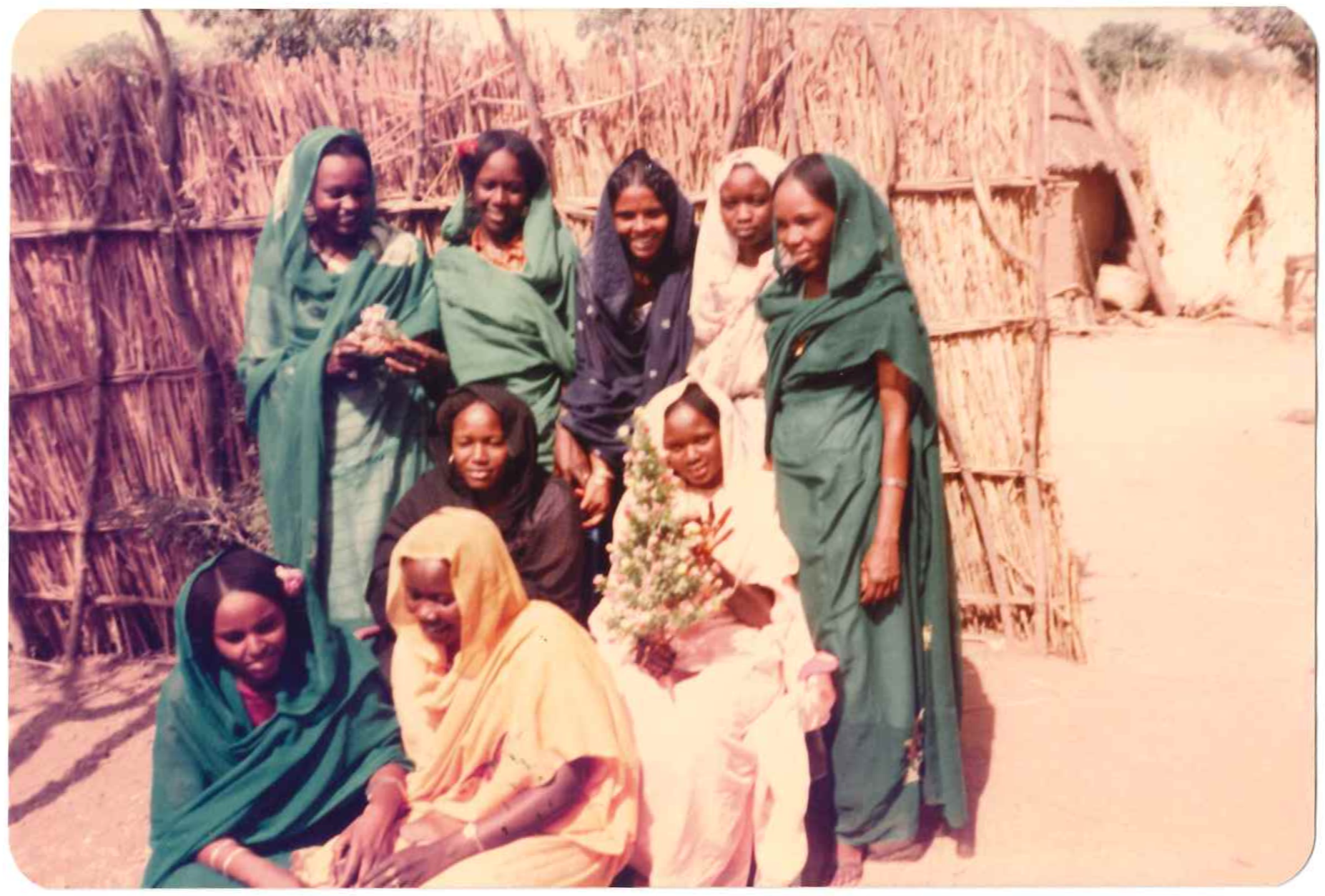
Fatima Haroun’s family in Darfur in the 1990s. Photos courtesy of the Haroun family
There was a mutual understanding that nomadic Arab tribes could leave their kids with their Fur neighbors, Darfur’s largest African ethnic group, so that the children could attend school while their parents were away herding animals. In Jebel Marrah, Haroun’s grandfather, a head of court and mediator, supported convicted people who served time for banditry, often Arab nomads who stole cattle or camels from the sedentary Fur. Upon their release, he would lend them livestock so that they could sell milk or butter until they became self-sufficient and could purchase their own livestock.
That all began to change with the creation of Al-Tajammu Al-Arabi, or Arab Alliance, in 1987. The formation of the group, an alliance of Darfuri Arab tribes, commenced a complex, decades-long ethno-racialized conflict that morphed into the genocide that is ongoing today. The Arab Alliance is the antecedent to the Janjaweed, which has since become the Rapid Support Forces, a pan-Arab militia initially armed by the central Sudanese government to rid Darfur of the presence of Fur and other African Darfuri tribes.
The Darfur conflict escalated. In 2003, the Sudan Liberation Army, a rebel group, launched attacks against government buildings in West Darfur, and the Sudanese government responded by arming the Janjaweed. Haroun began to feel a growing indignation about her family’s ongoing suffering at the hands of the government-backed armed group, so she began to mobilize and advocate for Darfur.
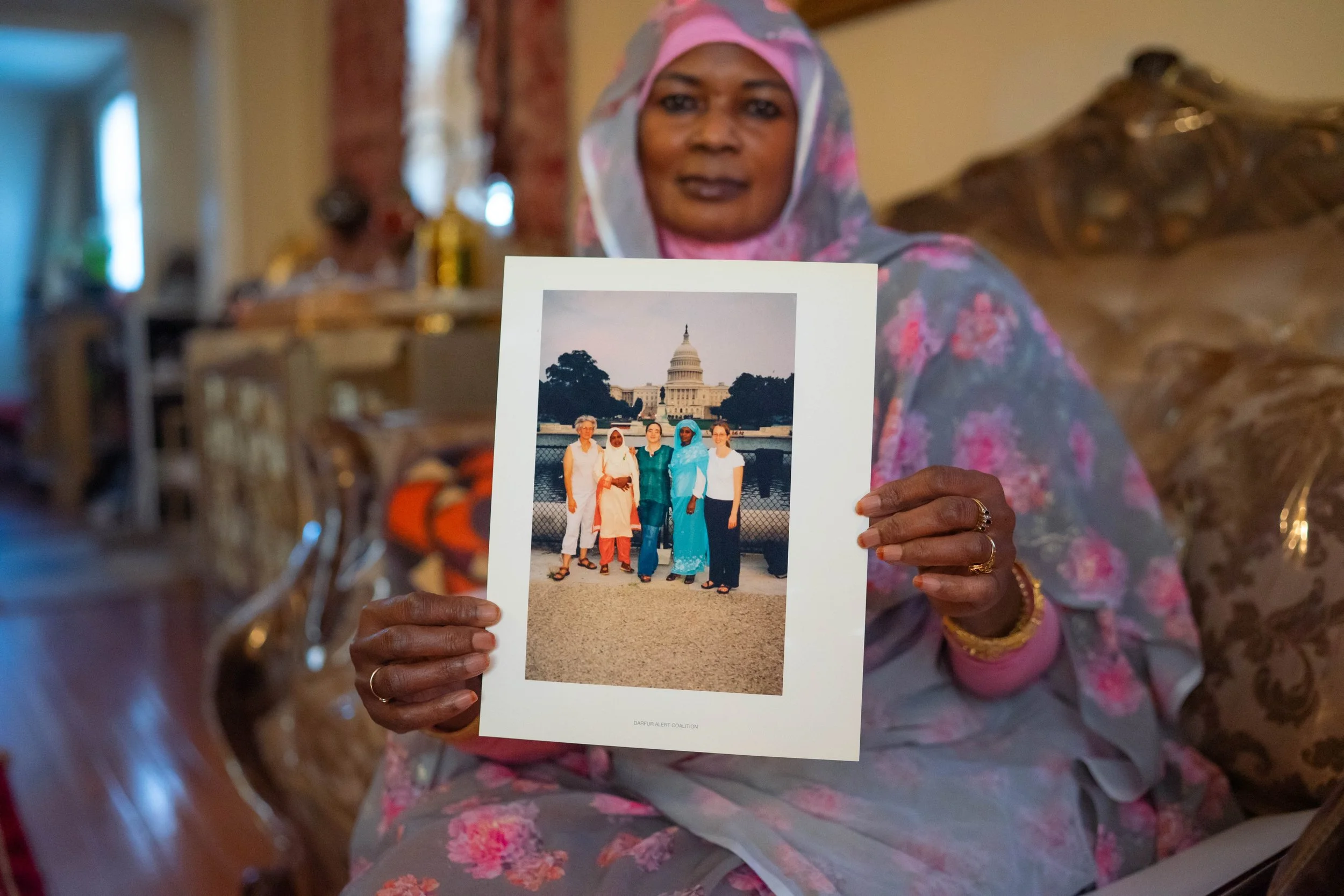
Fatima Haroun holds a photo of her fellow Darfur Alert Coalition members and allies in front of the U.S. Capitol following a vigil they organized for Darfur on July 21, 2005. Photo: Amna Khalafalla
Haroun attended her first advocacy event for Darfur in 2005 and went on to speak at many of these gatherings, giving testimony about the tragedies back home. At one event, Haroun met Lou Ann Merkle, an organizer, with whom she went on to found the Darfur Alert Coalition alongside Dr. Ali Dinar, Ibrahim Hamid and Dr. Mahdi Ibn Ziyad. With the Coalition, Haroun spoke regularly at churches, congressional hearings, synagogues and universities across the country to audiences comprised of of students, politicians and concerned citizens. Her advocacy work was time-consuming, and she often left her kids with her aunt so she could go to speak on Darfur.
Haroun also participated in high-profile events for Darfur: a student-led conference on Darfur held in 2005 at the U.S. Holocaust Museum; a 2009 rally outside the Sudanese Embassy in Washington D.C. organized by the Save Darfur Coalition; and a music video for Green Day’s “Working Class Hero,” part of an Amnesty International Campaign for Darfur, in 2009.
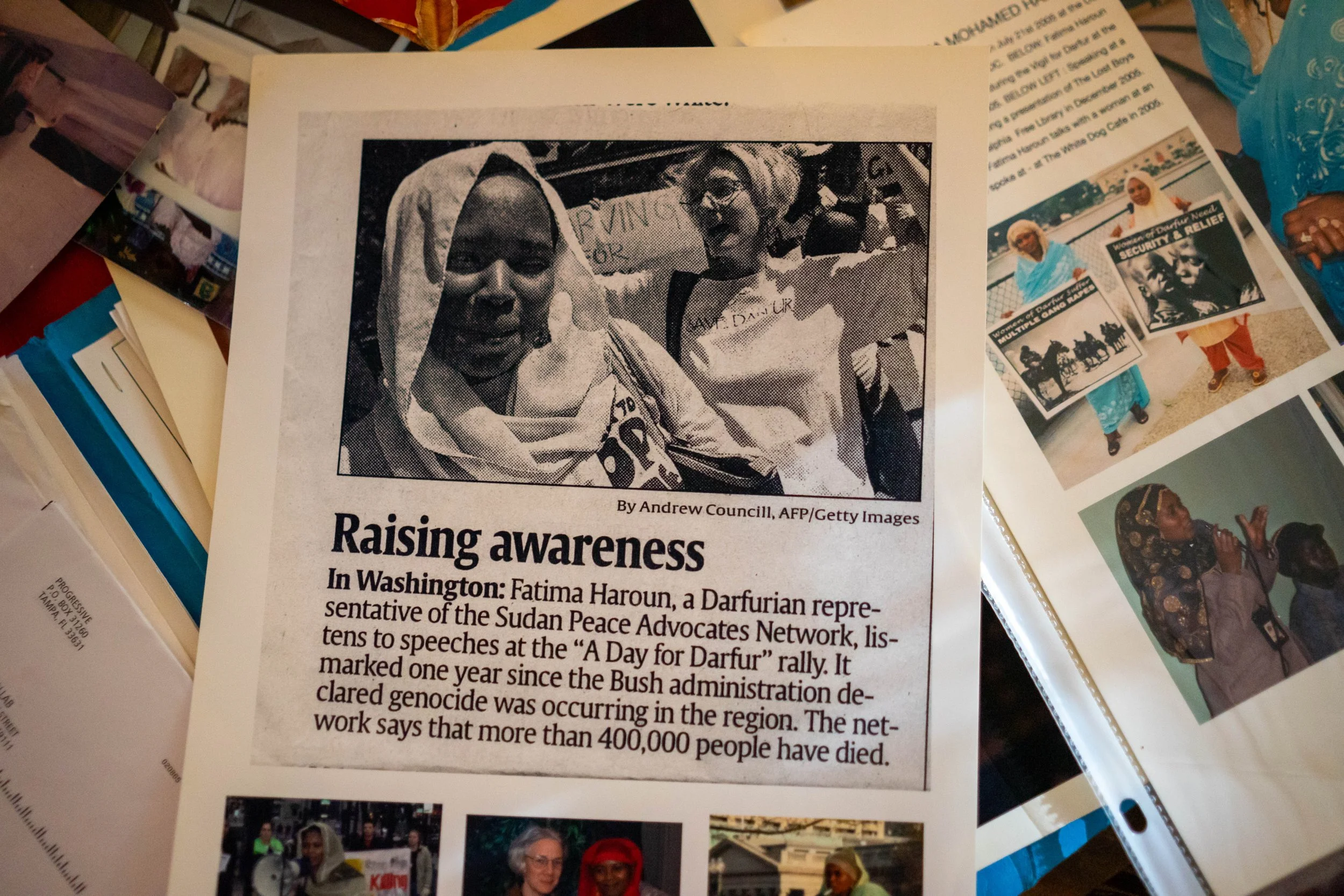
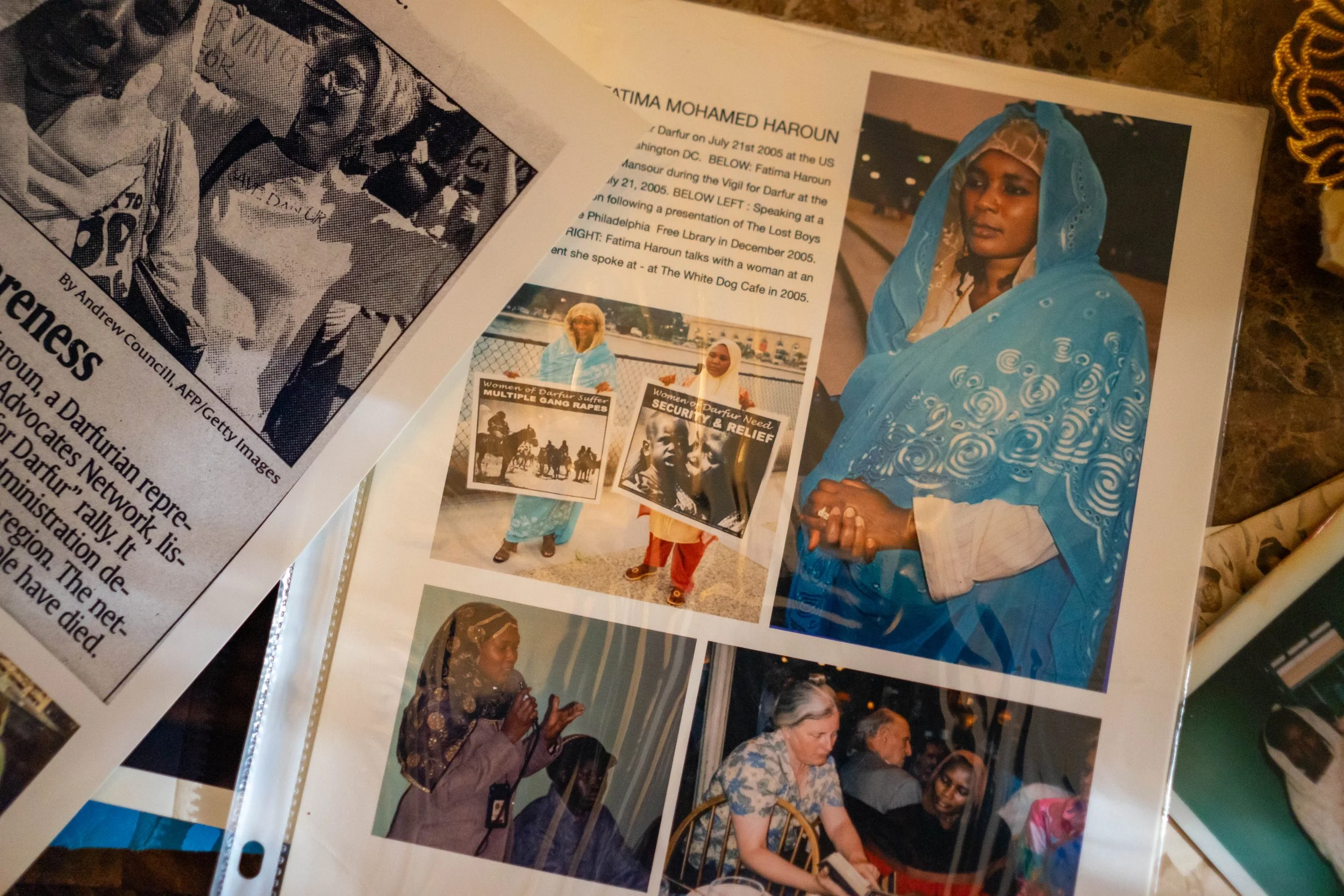
Fatima Haroun’s newspaper clippings featuring photos of her advocacy work during the early 2000s. Photo: Amna Khalafalla
Haroun often faced resistance for her advocacy work, including being confronted by pro-government members of the diaspora who challenged her at speaker events. In 2009, the Arabic news site SudaneseOnline published an article claiming that Haroun was not Sudanese and that she served anti-government organizations to spread lies about the Sudanese government. And while the current conflict in Sudan, which began in April 2023, has created some unity within the diaspora, Haroun has observed conflicting allegiances within her community, including some who now support the Rapid Support Forces.
In 2009, after five years of active participation with the Darfur Alert Coalition, Haroun decided to take a break to focus on her family. But although she is no longer engaged in advocacy, her daughters, Arwa Mukhtar (not pictured) and Shahla Mukhtar have continued her work.
As a child, Shahla Mukhtar noted an absence of Sudanese-led advocacy for Darfur outside her own family and relatives from Jebel Marrah. At the age of 12, she participated in her first protest, against a pro-government Sudanese official who had been invited to speak by a local group. Like her mother, Mukhtar witnessed conflicting political stances within her community, but she remained committed to advocating for Darfur, she said.
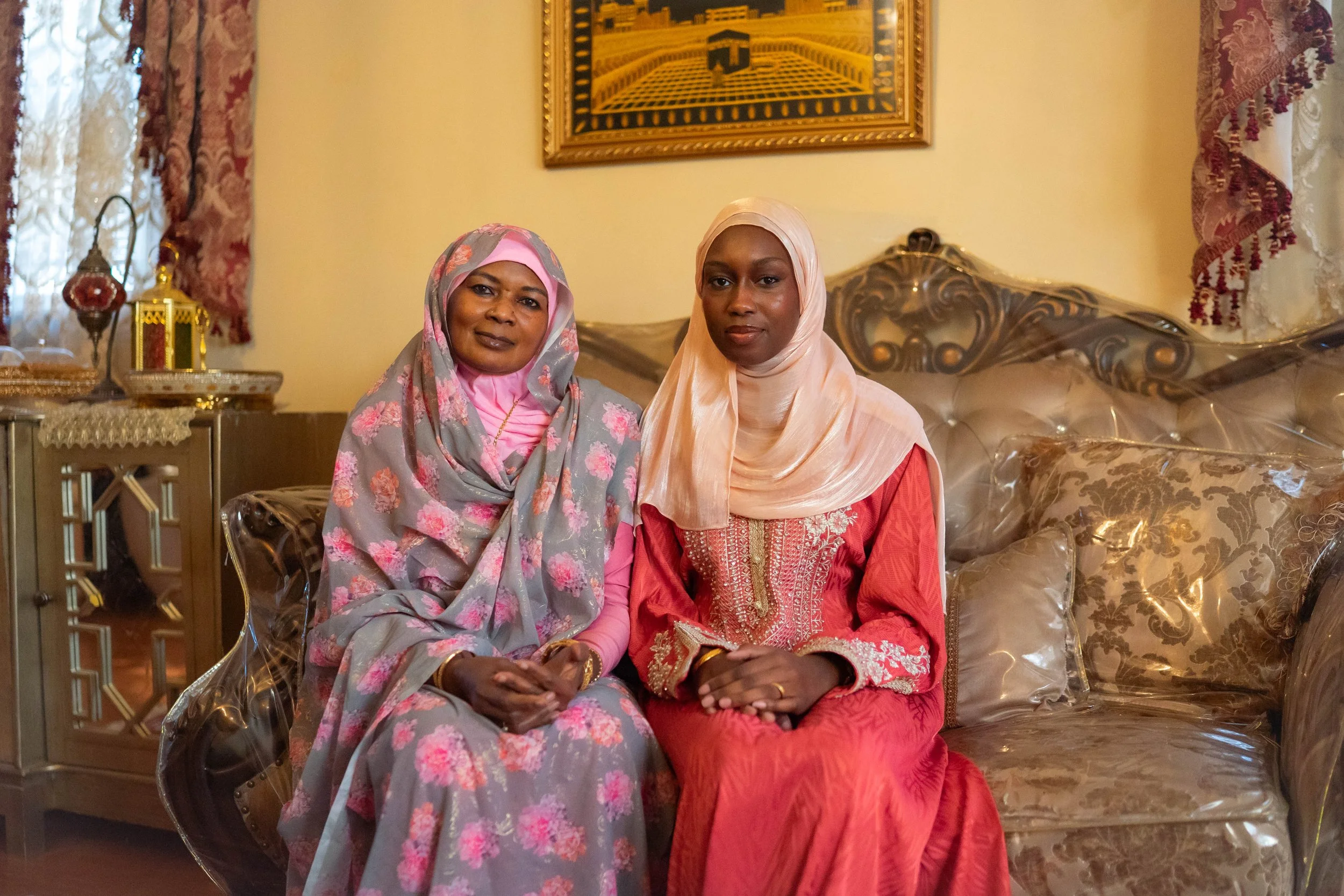
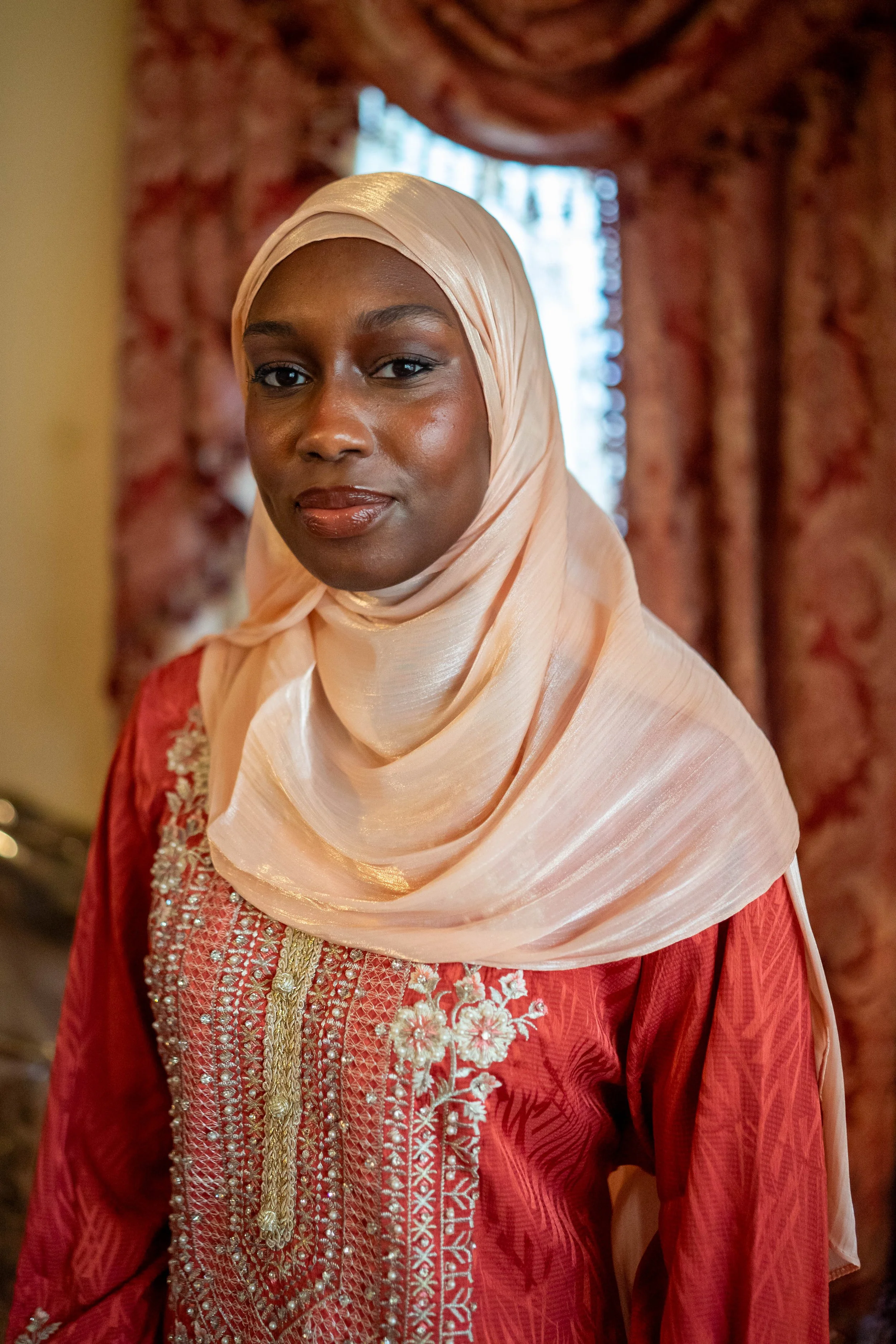
Above: Fatima Haroun in her home with one of her daughters, Shahla Mukhtar. Below: Mukhtar attended her first advocacy event at the age of 12. Photos: Amna Khalafalla
Both sisters now work with Llah Charity, a youth and volunteer-run charity established by their cousins in Harrisburg, Pennsylvania. The nonprofit’s mission is to empower communities by providing essential resources like food, water, health and education to those in need in Sudan, Egypt and Burkina Faso.
Llah Charity has hosted several events in partnership with Philly for Sudan, Philly for Congo and the Abolition School. The organization has seen a steady turnout from younger generations of Sudanese Americans, who often hold radically different political positions from their parents.
Fatima Haroun is delighted that her daughters have become involved in advocacy work and is hopeful for the future of Darfur and the whole of Sudan. She believes that their generation will continue to work for peace in Sudan, and that they will succeed.
***
Amna Khalafalla is a Sudanese American, Philadelphia-raised photo documentarian with a background in international development. She is currently working on a long-term project documenting Philadelphia’s community of Sudanese activists and is an Al-Bustan Journalism Fellow.

Al-Bustan News is made possible by a grant from Independence Public Media Foundation.