
Hilarious Habibis Bring Their Comedy Message to Philly: Arab Humor Isn’t Niche, It’s Just Funny
By Gawhara Abou-eid
November 24, 2025
Laughter echoed through Next in Line Comedy on November 15 as nearly 90 people gathered for the club’s first MENA stand-up showcase. The visiting act, Hilarious Habibis, was a Los Angeles-based, women-produced comedy show that was featured in Netflix Is A Joke Fest in 2024. On this particular night in Philadelphia, it became an accidental case study in something the comics insist on: Arab humor isn’t niche, exotic or inscrutable. It’s just funny.
That approach, the show’s producer-performers Lynn Maleh and Gena Jones say, guides everything they do.
“[Hilarious Habibis] is a stand-up comedy show with two hosts and a traditional length lineup, nothing too out of the ordinary,” Maleh says. “I think the point that's exciting for us is that it really is the same as any other comedy show.”
“People expect it to be one kind of show because of our backgrounds,” Jones says. “But we talk about everything: dating, terrible jobs… commercials. You just happen to be hearing it from voices you don’t normally get to hear. There’s no one definition of Middle Eastern or North African comedy. We’ve had experimental acts, traditional club comics; there’s a huge range.”
If anything, the Habibis brand is all about range, the kind that can swing from “9/11 joke after 9/11 joke” to an unexpected group therapy session, says Maleh.
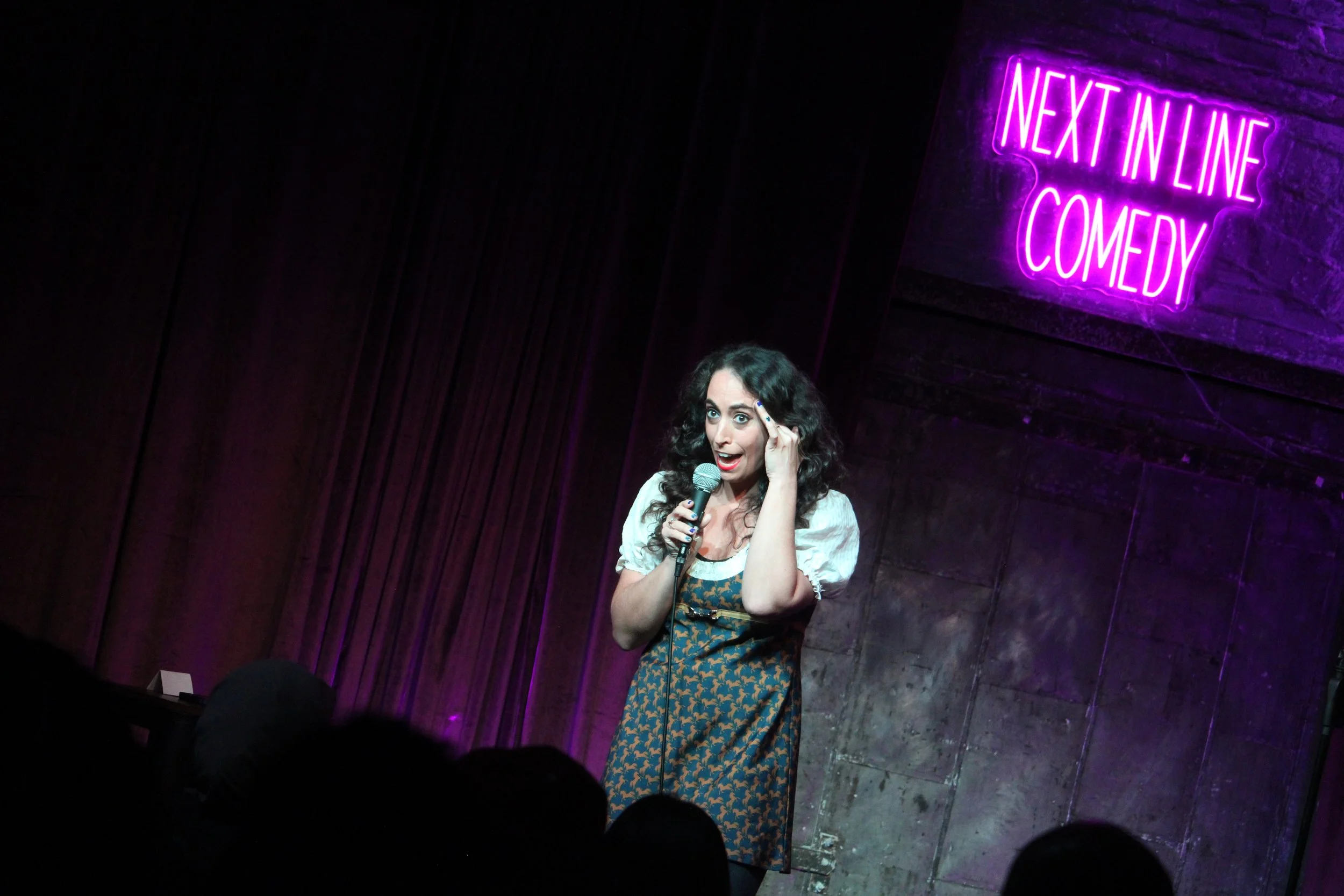
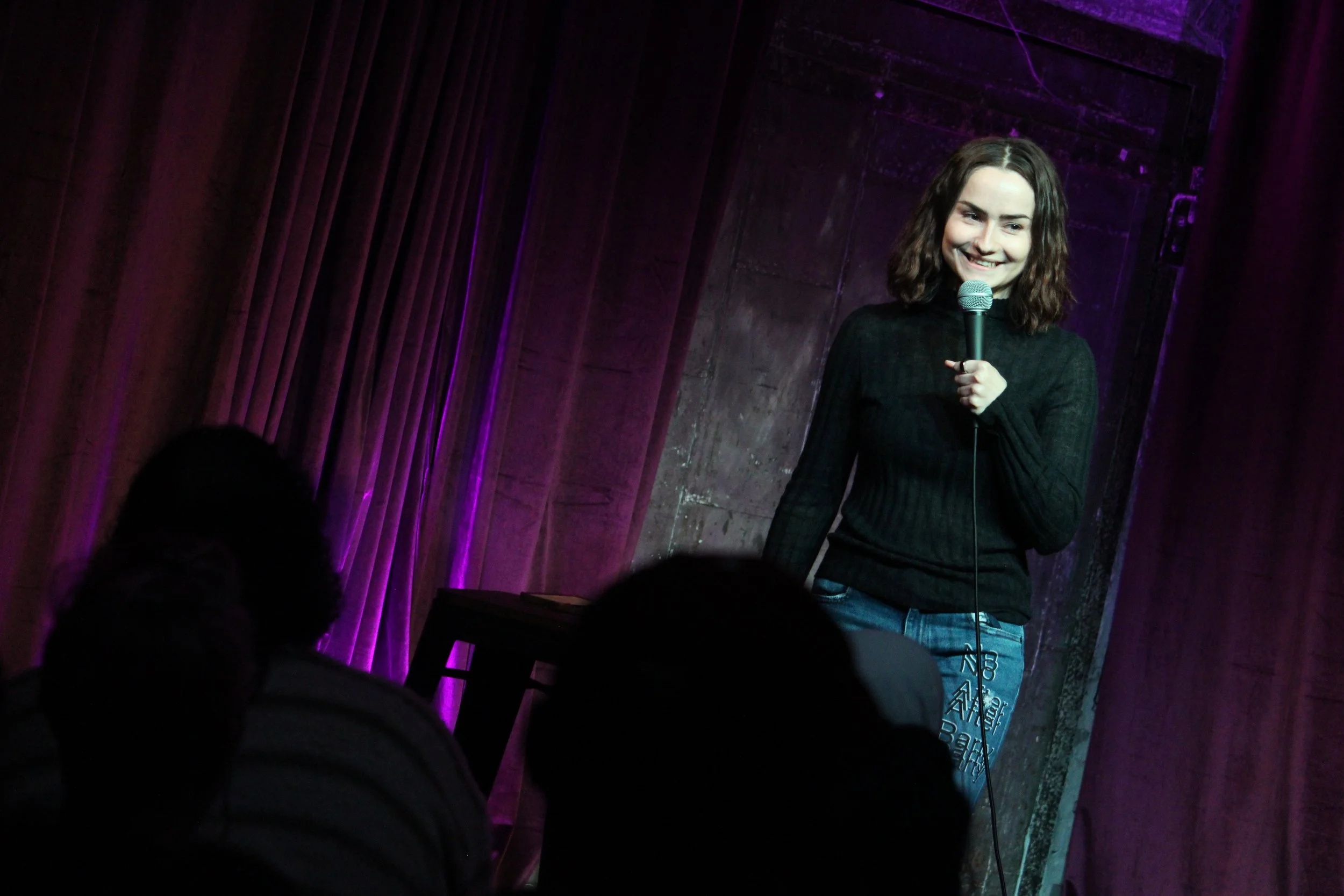
Lynn Maleh (above) and Gena Jones (below), the comedy duo behind the L.A.–based Hilarious Habibis, performing on November 15 at Next in Line Comedy in Philadelphia. All photos by Gawhara Abou–eid
Saturday marked the troupe’s first Philadelphia show, historic for both the performers and the venue. For Jones, coming back felt natural: she lived in the city for four years while in school.
“I always loved the mix of cultures in the city. I feel like people in Philadelphia are very open-minded and just very down for any type of thing.”
Maleh, who grew up in New Jersey, calls the city an energetic midpoint between her hometown and Jones’, and says the region’s Arab communities were already deeply welcoming.
Plus, when it comes to performing, neither comic expects Philly audiences to be shy or baffled.
“The audiences are so smart,” Maleh says. “They're so down. They're there to have a fun time.”
Both comics describe themselves as “medium energy” performers — an accidental match — whose collaboration began with a joke. Maleh heard one of Jones’ bits about being Syrian at an open mic and “had to talk to her.” The rest became a show-building friendship.
The chaos that fuels their material? Real life.
Jones calls herself “very experience-based”: She waits for “something strange or interesting or funny” to happen before she writes. According to Maleh, “… every comic can have the same observation, but no other comic can have your exact strange experiences.” Maleh keeps two sets in rotation: one for Habibis’ crowds eager for insider cultural references, and one for general audiences who may not grasp every nuance.
Pre-show preparation ranges from anxious rehearsal in the car to managing curly-hair humidity hell. Travel, logistics and audience wrangling pile on until the show starts. Then, “this beautiful brown community shows up… and you're just like, well, it was all worth it.”
At the Philly show, Maleh opened with a riff on her mother’s tendency to confuse all brown women. Anecdotes about Maleh’s mother, former Syrian women’s high-jump champion, highlight her pride, eccentricity and exacting household routines, including when hosting a high school foreign exchange student. The student, sent to experience “authentic” American life, ended up in “Little Arabia,” Maleh joked, navigating her family’s whirlwind of rituals from her father’s meticulous yogurt incubation to her mother’s teasing. It was a crash course in Arab-American life that shaped both the student’s experience and Maleh’s comedic voice.
Jones followed with observations from L.A.: celebrity culture, social media politics, navigating the city’s bus system — and the city’s oddities, like the “three-month waiting list to become a DoorDash driver” and how Samuel L. Jackson’s Candy Crush commercials are a recession indicator.

Comic Tarek Ziad’s set includes jokes about his Moroccan–American upbringing and being a gay Muslim.
Both comics balance satire with authenticity. Maleh shared a fan’s direct message (DM) complaining that her comedy wasn’t “Muslim-friendly, clean comedy.” She shrugged it off with a laugh before adding, “First of all, amazing that my mother hired this woman.” Jones shared her own DMs, including one from an Indigenous history professor who saw her tweets and invited her to deliver the keynote for a Palestine solidarity event. She mined the setup onstage by noting that she has “22 followers” and most of her political knowledge comes from “Bella Hadid’s Instagram.”
Following the Habibis’ set, a series of other comedians ran with the chaos, each bringing their own brand of diaspora absurdity. That energy hit immediately when Tarek Ziad took the stage and announced he had one too many coffees, a lot of curry and some wine to “hold in.”
Ziad’s delivery had the precision of someone filing a breaking-news report about his own life: his Moroccan-American upbringing, his relatives who treated slingshots as culinary tools (a nod to the rural habit of using them to knock fruit out of trees), and the way tourists curate a digital fantasy of Morocco while locals sometimes have to “catch their dinner.”
He also described growing up “extremely Muslim” and gay, comparing “hasanat,” or good deeds that will be rewarded in Heaven, to a Mario Party game.
“Muslims believe they were born to die,” he said. “‘Born to Die’ is a hit album by Lana Del Rey. Lana Del Rey is beloved by gay guys. Transitive property: I’m gay because I’m Muslim.”
Ziad’s material reflected a deeper mission — LGBTQ+ representation — shared by Maleh and Jones. The Habibis prioritize queer Arab voices in every lineup, acknowledging that finding performers can be challenging, not because they don’t exist, but because coming out publicly in MENA and Muslim communities can still be fraught.
But, Maleh said, “We make it a point to have at least one queer comic on every show.”
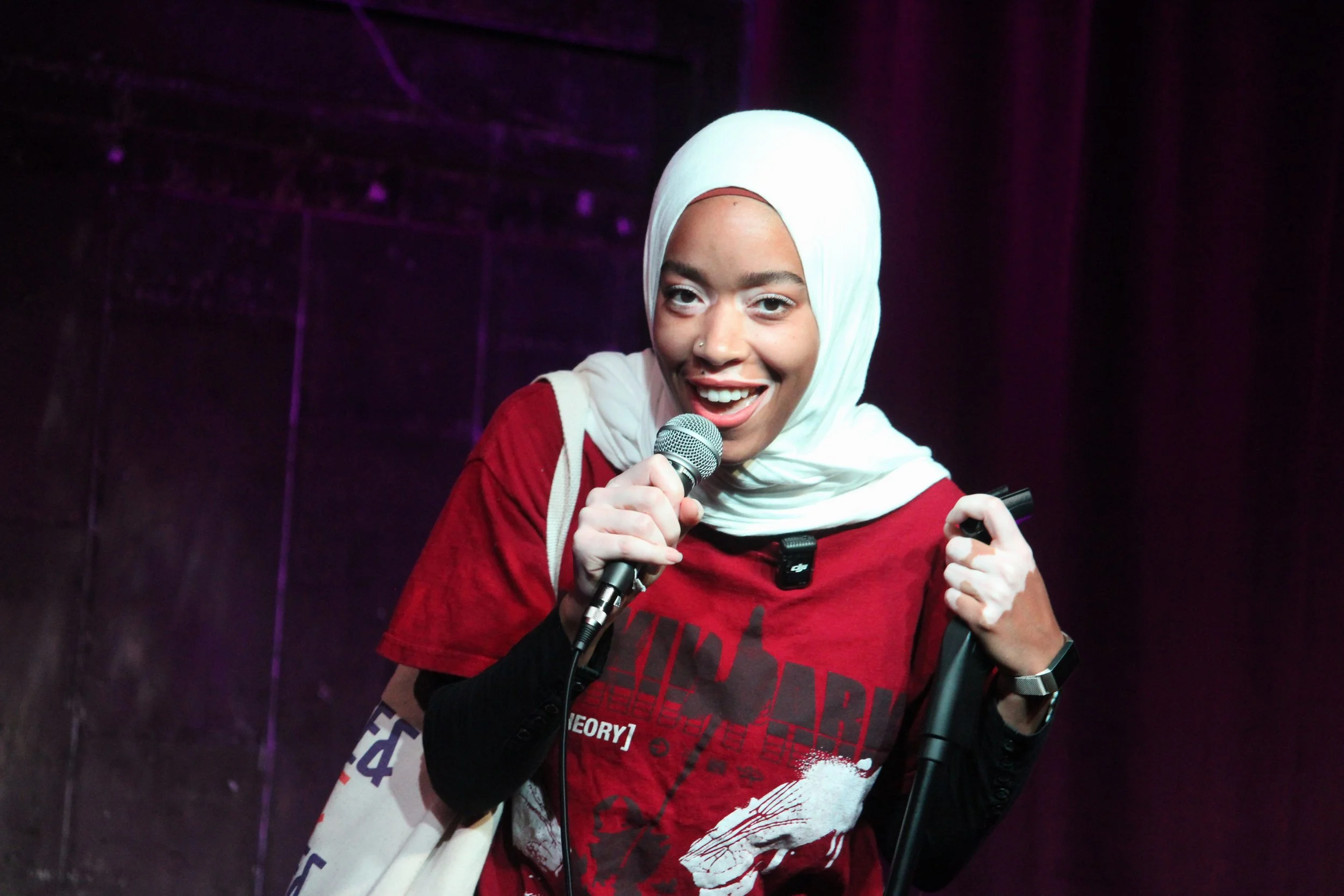
The show included an appearance by Delaware State Rep. Madinah Wilson-Anton (D-26).
Others, like Hanan Issa, a Lebanese-American comedian based in New York City, covered the vagaries of hetero life: marriage expectations and dating as a devout Muslim.
“I’m 26… my next life expedition… I’m looking to get married,” she says. “Because I’m Muslim… and Muslim people, we get married young. Because we’re trying to f—.”
Issa also mined the everyday absurdities of New York life: charming halal cart vendors for free food and ex-boyfriends who block her “on everything, including LinkedIn.”
“You can block me on Venmo, you can block me on LinkedIn… but we’re gonna talk on Judgment Day,” she said.
The showcase also featured Pakistani-born comic Usman Habib, Amber Born and — in a surprise twist — Delaware State Rep. Madinah Wilson-Anton (D-26). The keyed–in crowd, a mix of local Arabs and out-of-state visitors, was packed shoulder-to-shoulder.
After the show, Philadelphia native Joe McGowan, attending with his Jordanian–American wife Sima, commented on how so many of the jokes were reminiscent of things his wife says when she's on the phone with her family. Sima laughed hardest during Tarek Ziad’s set.
“Oh my God, the slingshot… we used to aim at everybody's butts,” she said, adding that people misunderstand just how funny Arab women, “hijabis” included, can be — and how acceptable “haram” jokes really are.
“Just because you wear a hijab, it doesn't mean you don't have a personality… [or] crack jokes.”
All evening, the sold-out venue felt like a diaspora-wide inside joke finally getting told out loud. It was a regular comedy show, as Maleh and Jones insist, just one where the punchlines come filtered through Arab mothers, Lebanese airports, queer Muslim logic, immigrant-family chaos and the shared relief of laughing the hard stuff out.
Or put another way: Philly showed up. The Habibis showed off. And everyone left with sore abs and at least one joke they probably shouldn’t repeat at work.
***
Gawhara Abou-eid is an Egyptian-American researcher and journalist from Lewisburg, PA and an Al-Bustan News media fellow. They hold a BA in International Relations from The George Washington University, with a concentration in International Security Policy. Gawhara has published research for the League of Arab States in Cairo, and their journalism has appeared in The Standard Journal and The News-Item.

Al-Bustan News is made possible by a grant from Independence Public Media Foundation.