
Sudanese Activist Amina Ibrahim Uses Henna to Tell Her Country’s Story
By Elissa Odeh
November 20, 2025
When Amina Ibrahim first picked up a henna cone at an iftar event during her freshman year at Drexel University, she had no idea it would become a bridge between her life in Philadelphia and her country, Sudan. What started as a simple experiment with cone dye four years ago has blossomed into a platform for storytelling, advocacy and political action.
“I wanted to bring the art of henna back to the community,” Ibrahim said. “It became this medium that brought people together for a good cause.”
Henna’s reddish-brown dye, derived from the leaves of the Lawsonia inermis plant, has been used for thousands of years across South Asia, the Middle East and Africa to adorn hands, feet and hair. In Sudan, it is known as “sibgha” and is sometimes combined with additives to achieve a darker stain. At Sudanese weddings, it is traditional to cover a bride’s hands with elaborate henna designs, while the groom typically has a simple circle on the palm of his hand, symbolizing the newlywed couple.
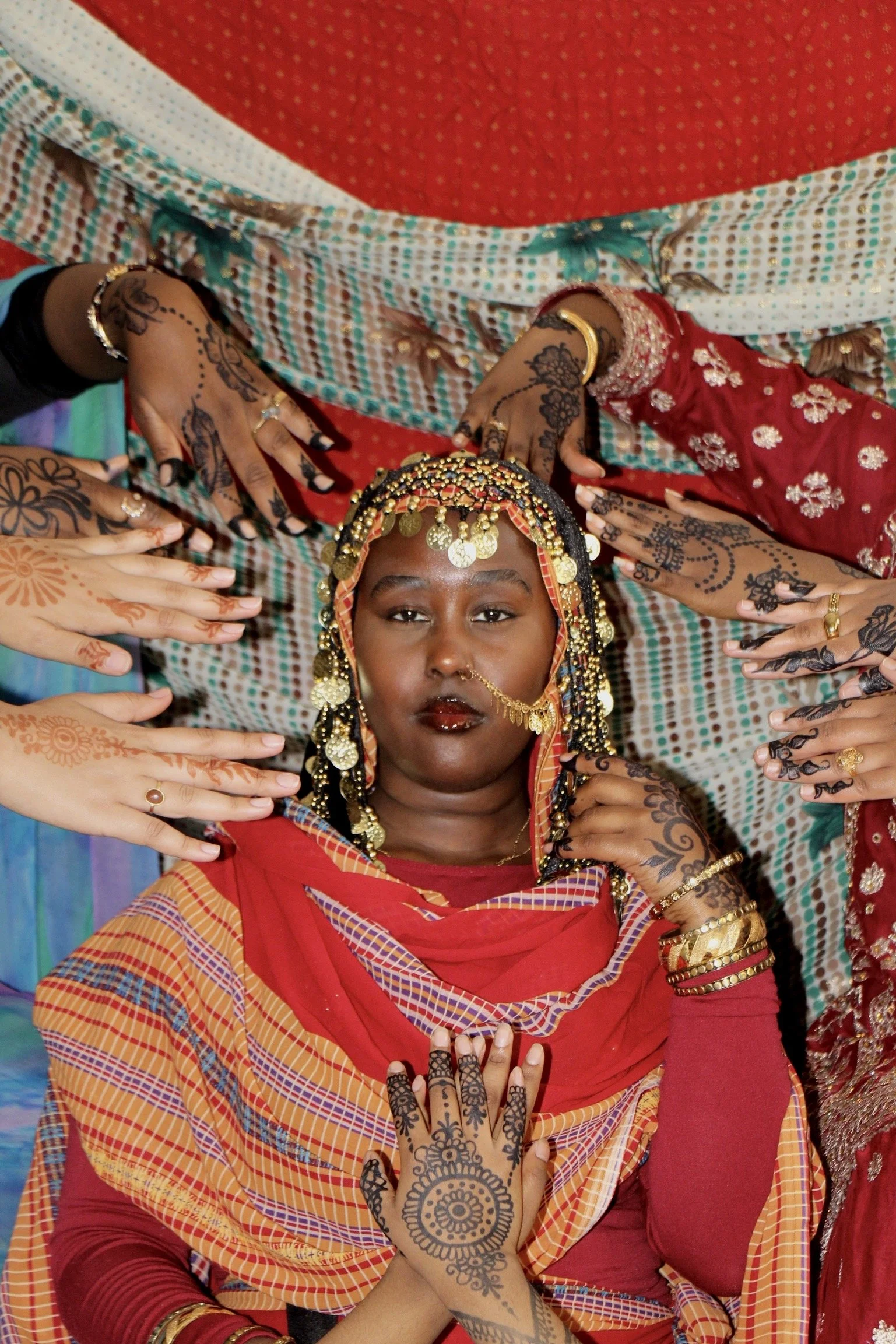
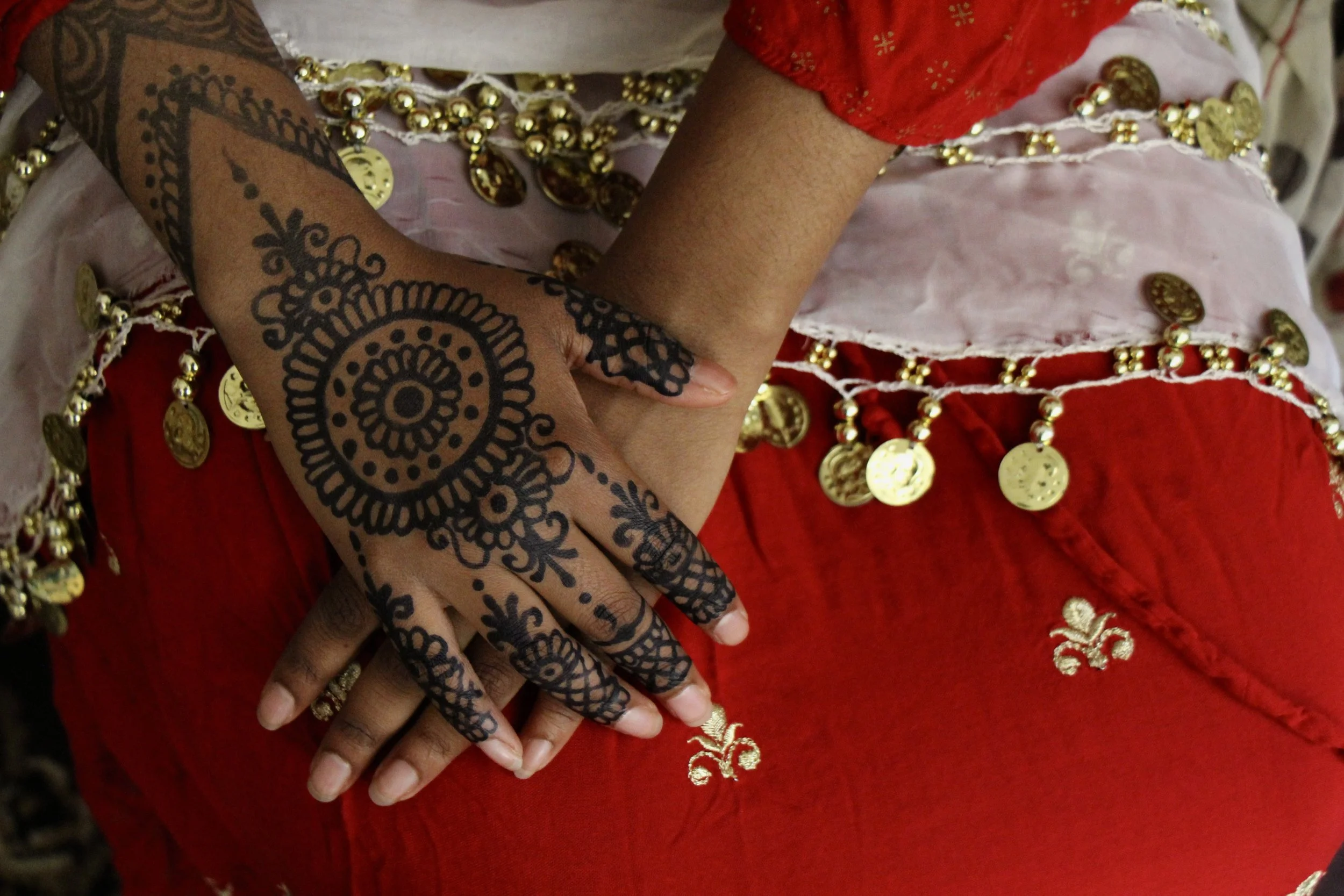
Above: Amina Ibrahim poses for a photo shoot with Philadelphia’s BlackStar Projects. Below: One of Ibrahim’s jagua designs from the shoot. Photos courtesy of Amina Ibrahim
“My family and I always get our henna done, whether for holidays, achievements, baby showers or weddings,” Ibrahim said.
While at Drexel, Amina hosted campus henna events to raise awareness about and fundraise for the crisis in Sudan. She adorned participants’ hands using henna and jagua, a natural dye native to South American cultures, engaging in dialogue on the ongoing devastation unfolding in Sudan.
“The World’s Worst Humanitarian Crisis”
Since April 2023, Sudan has been engulfed in a brutal war between the Sudanese Armed Forces (SAF) and a paramilitary group, the Rapid Support Forces (RSF), resulting in what the United Nations is calling the world’s largest humanitarian crisis, with some estimates putting the death toll as high as 150,000 and the number of displaced at 12 million. The RSF has also reportedly engaged in a staggering list of war crimes, according to Amnesty International and other observers.
In July, Eatizaz Yousif, Sudan Country Director for the International Rescue Committee, stated: “Families are starving, children are wasting away, and entire communities are being pushed to the brink of survival. Sudan has more people living in famine conditions than the rest of the world combined.”
Ibrahim has family members in Sudan who have been displaced, with her cousins now among the 1.2 million Sudanese refugees living in Egypt.
“My cousins haven’t seen their mother in over two years,” she said, explaining that their mother remains stuck in Saudi Arabia due to Egypt’s strict entry restrictions for Sudanese nationals. “They only see each other through video calls.”
Turning Art into Advocacy
Grappling with the pain in her community, Ibrahim turned her grief into action. She collaborated with several organizations on campus, including Drexel’s Muslim Student Association and the African Student Association, using her henna practice as a tool for advocacy and aid.
“It’s one thing to go to protests and give presentations, but to be able to help my people through henna — and for this business to be recognized as advocacy, as power for the people — that’s something truly meaningful.”
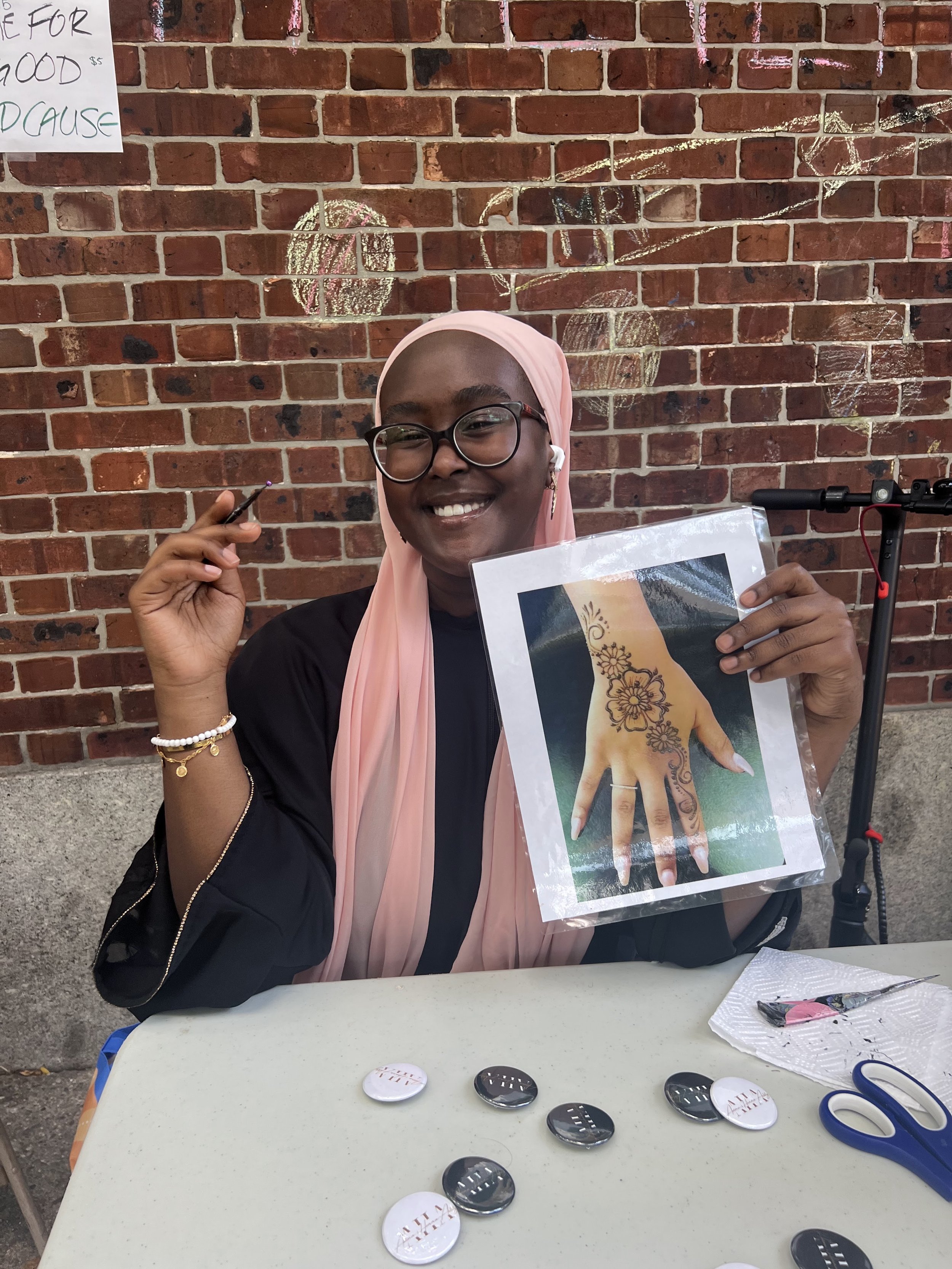
In June 2024, Ibrahim organized a henna event to raise funds for Sudan and the Democratic Republic of Congo with Drexel University's African Student Association. Photo courtesy of Amina Ibrahim
Beyond her work with henna, Ibrahim has also taken her advocacy to the streets. At a rally and vigil at Philadelphia’s City Hall on November 2, she delivered a speech urging attendees to bear witness to the suffering in Sudan and to the ways that military support and resource exploitation by the United Arab Emirates have exacerbated the crisis.
“I am proud to be Sudanese, and I refuse to allow the narrative of Africa being a poor continent to be pushed,” Ibrahim said. “Sudan is a rich country, rich in its people and culture. My Sudan is not a helpless land and my people will not be forgotten.”
Beyond Sudan, Ibrahim utilizes her henna artistry to educate others about humanitarian crises worldwide.
“I’m Sudanese through and through, but I still bleed for Palestine, for Somalia, for Nigeria and for Congo,” she said. “We have to come together as people and recognize how interconnected our struggles are, so we can engage in each other’s fight for freedom.”
Ibrahim hopes that suffering is not normalized as part of the experience of her people and other marginalized communities, saying, “We do not exist to bleed and suffer.”
Meanwhile, as she waits for a ceasefire to be finalized, Ibrahim remains steadfast in amplifying her people’s voices in everything she does.
“My culture doesn’t die just because my people are.”
***
Elissa Odeh is a Palestinian journalist and storyteller based in Lansdale, PA covering Arab and SWANA communities in the U.S. She holds a B.A. in media and culture. She has written extensively for Al-Bustan News, exploring themes of identity and cultural pride through profiles and community features.