In Chester County, Arab Women Gather for Turkish Coffee, Emotional Support and Reminders of Home
Story by Gawhara Abou-eid
Photos and additional reporting by Amna Khalafalla
May 8, 2026
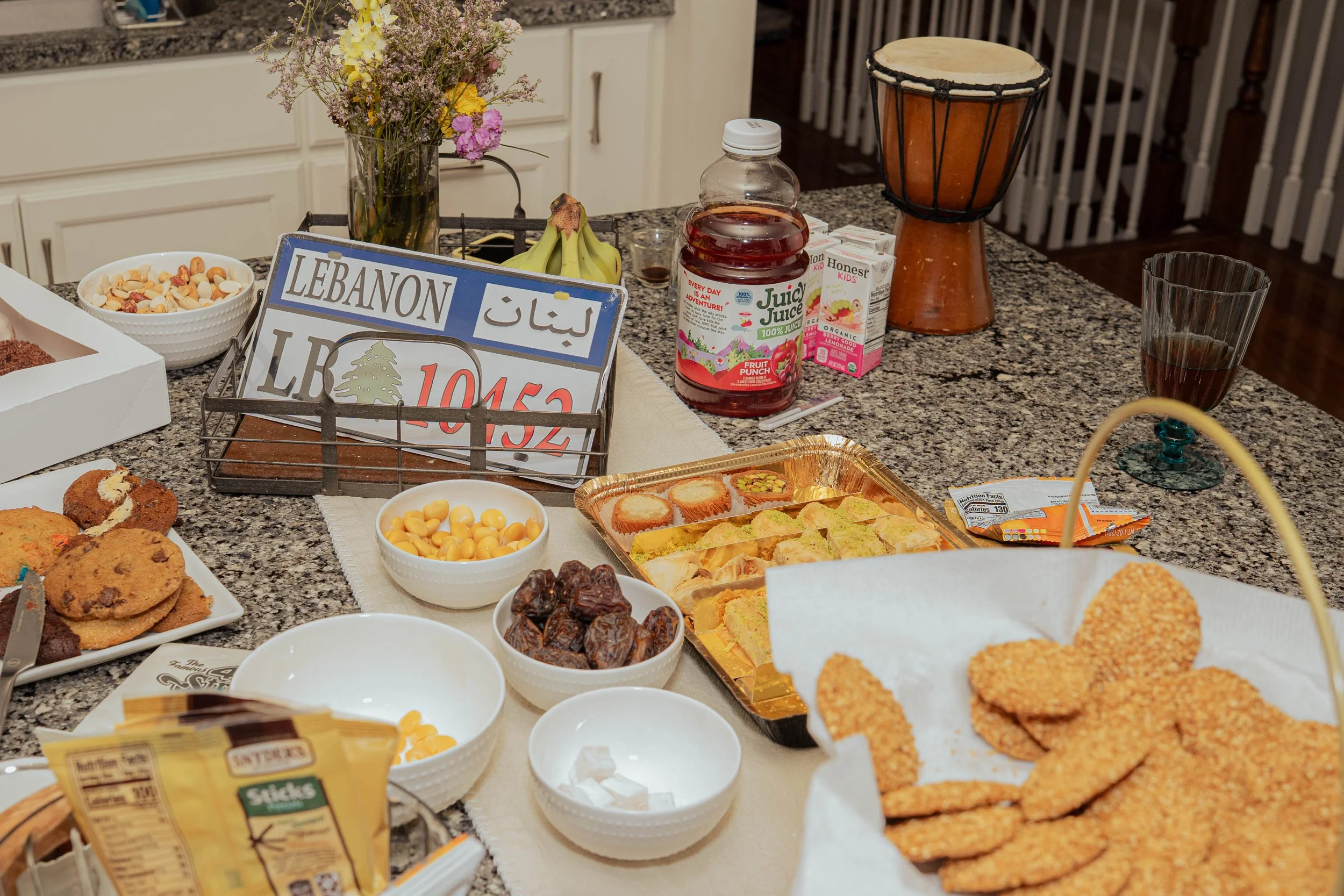
In Chester County, Rana Sakr hosts a gathering of SWANA women over Turkish coffee, personal items and foods that remind them of home.
On a rainy Saturday in late April, a small group of women gathered at Rana Sakr’s home in Chester County. They brought mugs, traditional foods and personal items that reminded them of their own cultures. The informal gathering, centered around Turkish coffee, invited participants to connect and “share thoughts of peace” amid the ongoing wars and conflict affecting many of their home countries.
Sakr shared an illustrated book about Lebanon, hoping its pages could momentarily transport the group away from the realities weighing on them and into shared memories of home.
“I believe in books. I believe in empowering through education,” Sakr said. “You open it, it’s illustrated, you see a lot about the cultures and you close your eyes and you’re there. I’m hoping it’ll be helpful for others to remember lovely aspects of their homeland.”
Sakr, whose name means ‘looking up to the sky’ in Arabic, is Lebanese-born; she became a U.S. citizen in 2017 after leaving Lebanon to further her education. Among those who attended the gathering was Hala Hashem, who is from Tyre — known in Arabic as Sūr — in southern Lebanon.
“Not to make this sad, but it was basically destroyed,” she said, referring to the Israeli missile strikes that have demolished much of the south and displaced around one million residents. She said she has not been able to return to Tyre due to the ongoing strikes, instead staying in Beirut during a recent visit to Lebanon.
“All of my family is in Lebanon, my mom, my grandmother, my uncles, my dad, everybody,” Hashem said. “They all fled to Beirut.”
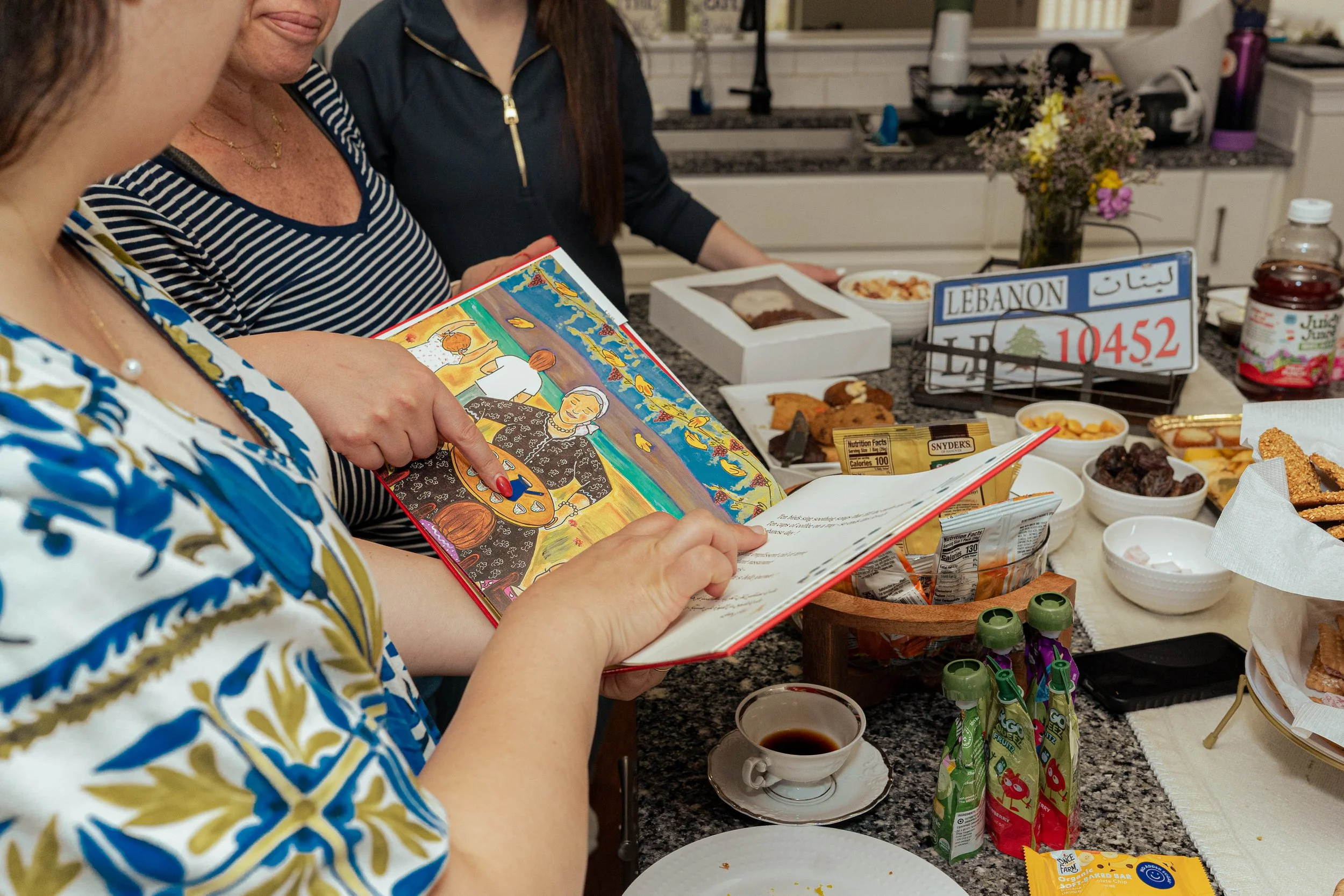
Sakr shares “Lebanon A to Z: A Middle Eastern Mosaic,” a book about the geography, culture and traditions of her country of origin.
Hashem brought barazek, sesame-based cookies sometimes topped with pistachios to the gathering. Mia Fernandes, originally from Beirut, brought a decorative Lebanese license plate marked with the country’s total land area. Zeina Basha brought baklava, describing the traditional regional sweet as “a beautiful way to unite us all.”
The group also shared rahat al-halkoum, or Turkish delight, turmus, a large bean commonly available as street food in the Levant and Egypt, and sfouf, a turmeric cake traditionally made for special occasions and during periods of fasting.
The Turkish coffee meet-up grew out of Sakr’s work building connections in Chester County through the FrancoNetwork, a grassroots initiative she coordinates. Her volunteer efforts reflect both her personal background and her professional focus on community and mental health.
In Lebanon and across parts of the SWANA region, French remains one of the primary languages, in addition to Arabic, in education systems and daily life. Many Arab immigrants in the U.S. navigate both linguistic and cultural spaces simultaneously. Sakr said the FrancoNetwork’s programs, though conducted in French, have brought together members from more than a dozen countries, creating a space where cultural exchange extends beyond language into shared experiences of migration, identity and belonging.
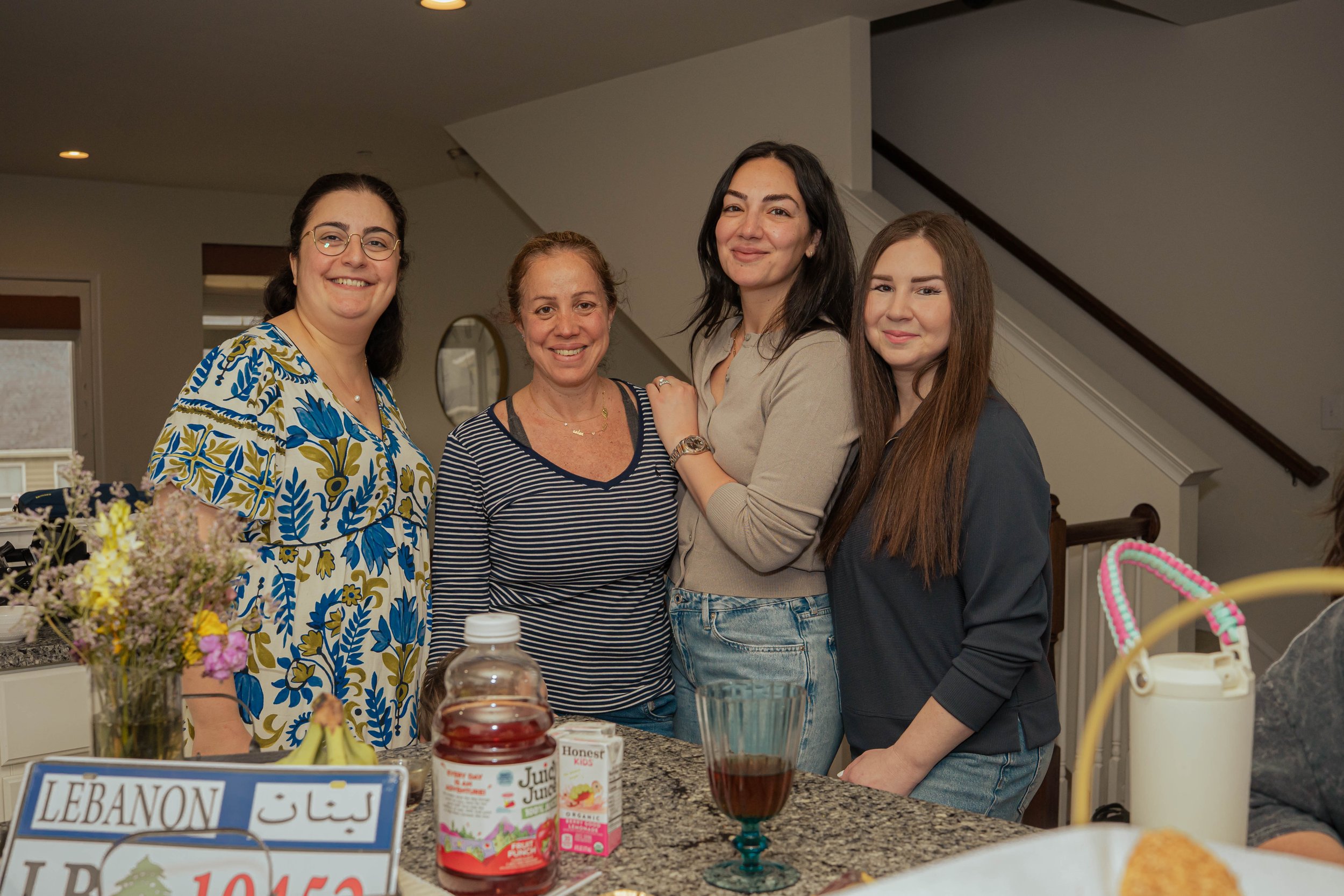
Left to right: Rana Sakr, Mia Fernandes, Hala Hashem, Zaina Basha
An endocrinologist trained in Paris, Sakr is currently pursuing a master’s degree in public health at West Chester University. She has lived across the U.S. and settled in Pennsylvania in 2020 with her husband and two children. When she arrived, she said, opportunities for multilingual and multicultural engagement felt limited until she moved out of Philadelphia.
She began volunteering at the Kennett Library in 2021, launching French language immersion programs that gradually expanded into what became the FrancoNetwork, which now has more than 200 newsletter subscribers. The initiative incorporates programs for different age groups, including a conversation group, a young adult program, a virtual book discussion and offerings for children, all built through word of mouth and community partnerships.
Through those efforts, Sakr said she identified a broader need that extended beyond French language programming.
“The need is connection. Wanting to know more about the other and connect with the other. That is why this group exists,” she said.
While French-speaking networks generally have structures and institutional support, Sakr observed that similar representation for area Arabic-speaking communities remained less defined. The coffee gathering was her first attempt to create that space, separate from but informed by the FrancoNetwork.
“I’m using the pillars of what I have seen work,” she said. “There are lots of worry texts, like, ‘Are your parents OK?’ So I just thought, why not just come together, support each other?”
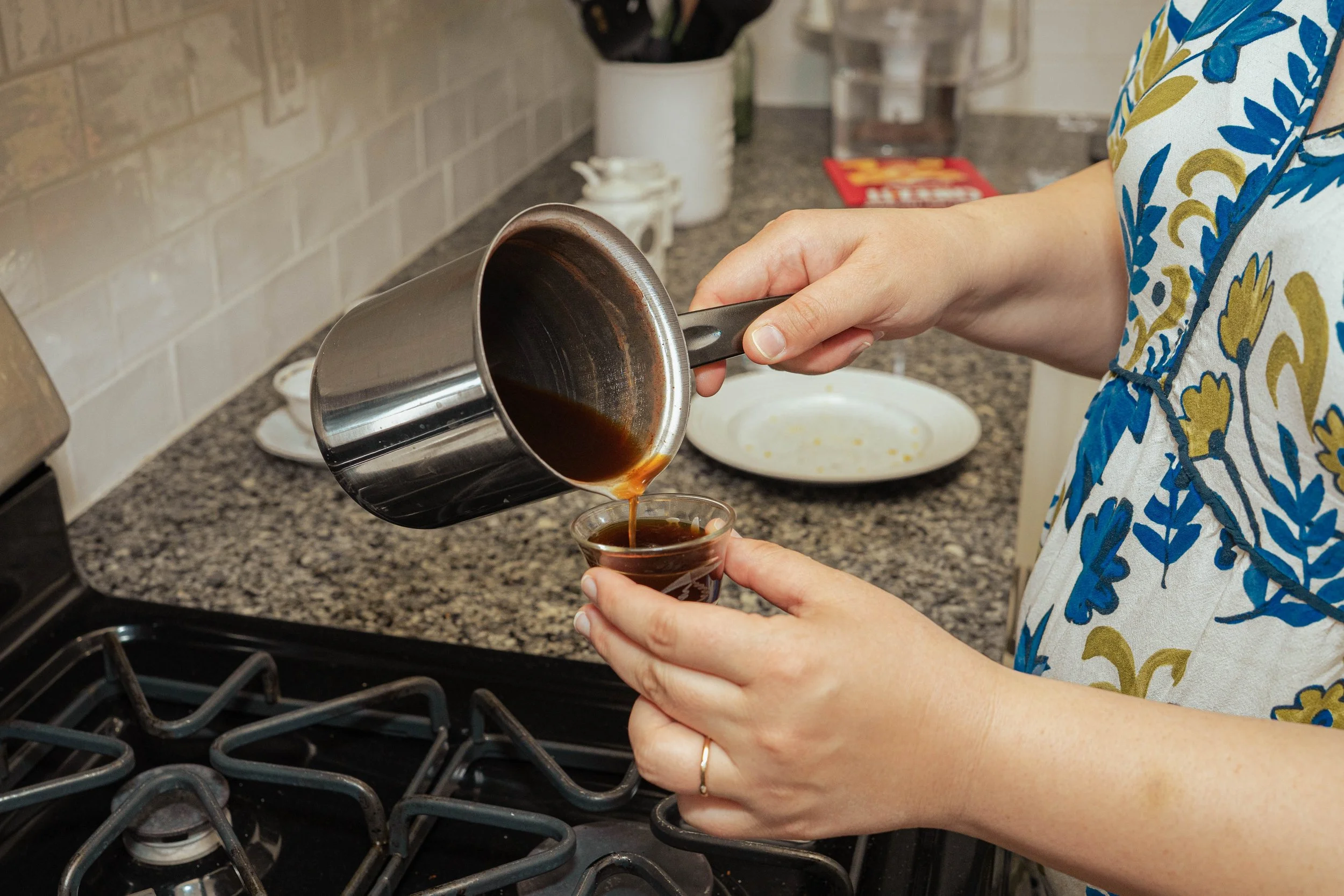
Sakr prepares Turkish coffee.
Sakr chose Turkish coffee as the focal point for the gathering, describing it as both accessible and symbolic across cultures. As conversations unfolded, she pointed to the role of connection in moments shaped by uncertainty. She said members of the group found ways to stay connected with each other’s families, such as checking in with a friend in Iran during anti-government protests that began in late 2025. Sakr also supported her friend Hala during a period of intense worry when Hala’s mother was displaced from her home in Lebanon.
There is emotional strain in following developments from afar, staying in close contact with family members and navigating uncertainty about their safety while continuing daily life in the U.S. Sakr emphasized the importance of creating a sense of belonging, particularly during times like these.
“It’s not because I’m hypothetically sensitive to war… it’s because war impacts my life today,” Sakr said. “There are humans behind this word ‘war.’”
Research has found that community belonging reduces isolation and strengthens emotional well-being. And as a physician involved in community health and mental health education, Sakr believes that such gatherings can offer meaningful emotional support. “It is really about trust building. Taking time, getting to know your neighbor.”
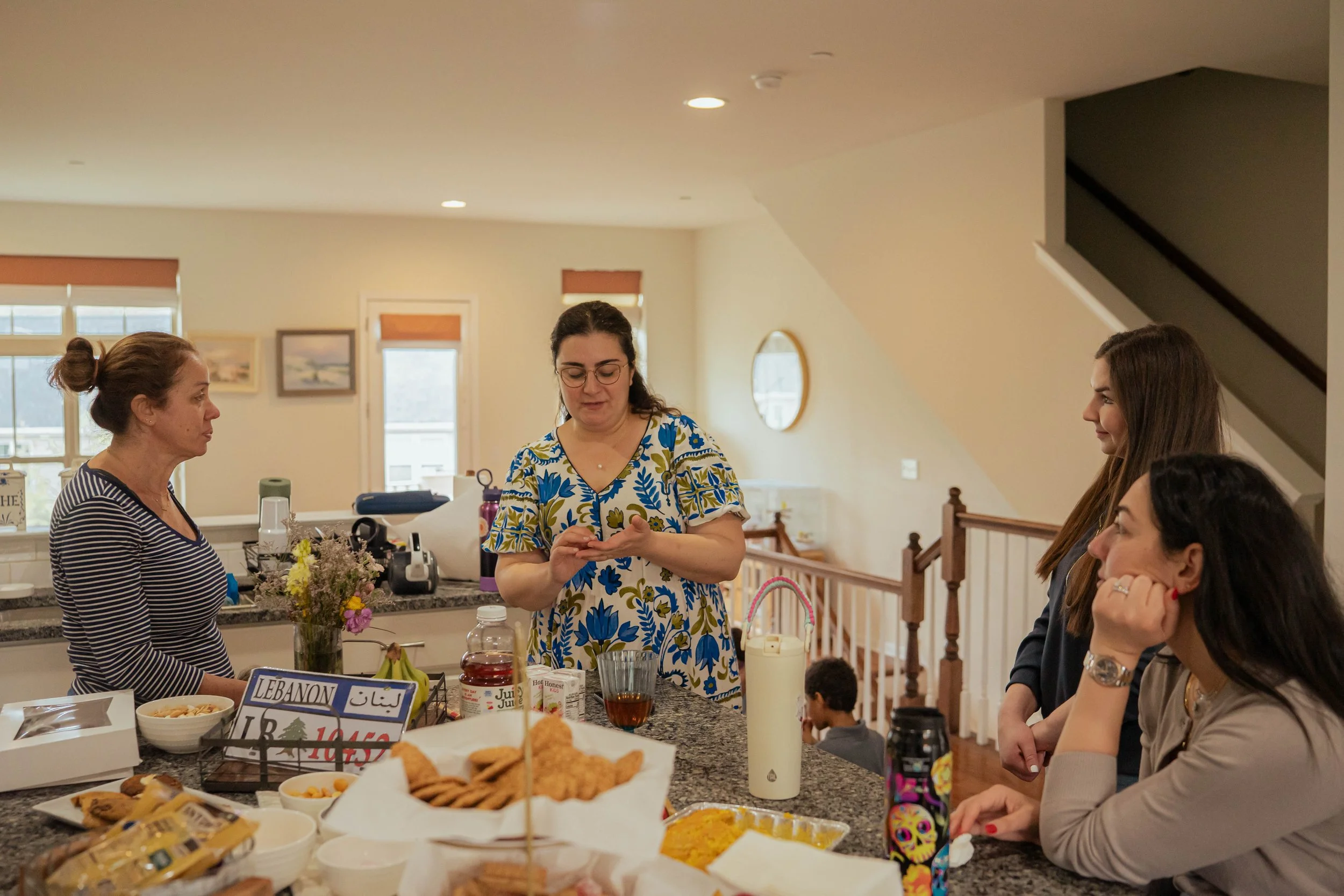
As a physician involved in community health and mental health education, Sakr believes that such gatherings can offer meaningful emotional support.
Sakr said the idea for the meet-up developed organically through relationships built over time, including friendships formed through the FrancoNetwork among international residents adjusting to life in a new environment. Those connections often provide informal support systems, from shared conversations to practical help.
“I am hoping to put together a community invitation for calligraphy, music and instrumental play,” Sakr said, alluding to potential future programming that could expand on the gathering’s themes.
For now, she remains focused on what can be done within existing resources and relationships. “If I was doing this six years ago, nobody would show up,” she said. “The reason why I can today is that I have put together years and years of community trust-building.”
The war in Lebanon remains at the forefront of Sakr’s mind and shapes the urgency behind her efforts to gather people together.
“I was hoping by today that the war would be over. It’s not,” she said. “But, still, we get to chat and get to be together.”
***
Gawhara Abou-eid is an Egyptian-American researcher and journalist from Lewisburg, PA and an Al-Bustan News media fellow. They hold a BA in International Relations from The George Washington University, with a concentration in International Security Policy. Gawhara has published research for the League of Arab States in Cairo, and their journalism has appeared in The Standard Journal and The News-Item.
Amna Khalafalla is a Sudanese American, Philadelphia-raised photo documentarian with a background in international development. She is currently working on a long-term project documenting Philadelphia’s community of Sudanese activists and is an Al-Bustan Journalism Fellow.

Al-Bustan News is made possible by the People’s Media Fund.