
Pennsylvania’s Independent Voters May Soon Be Able to Vote in Primary Elections
By Gawhara Abou-eid
April 27, 2026
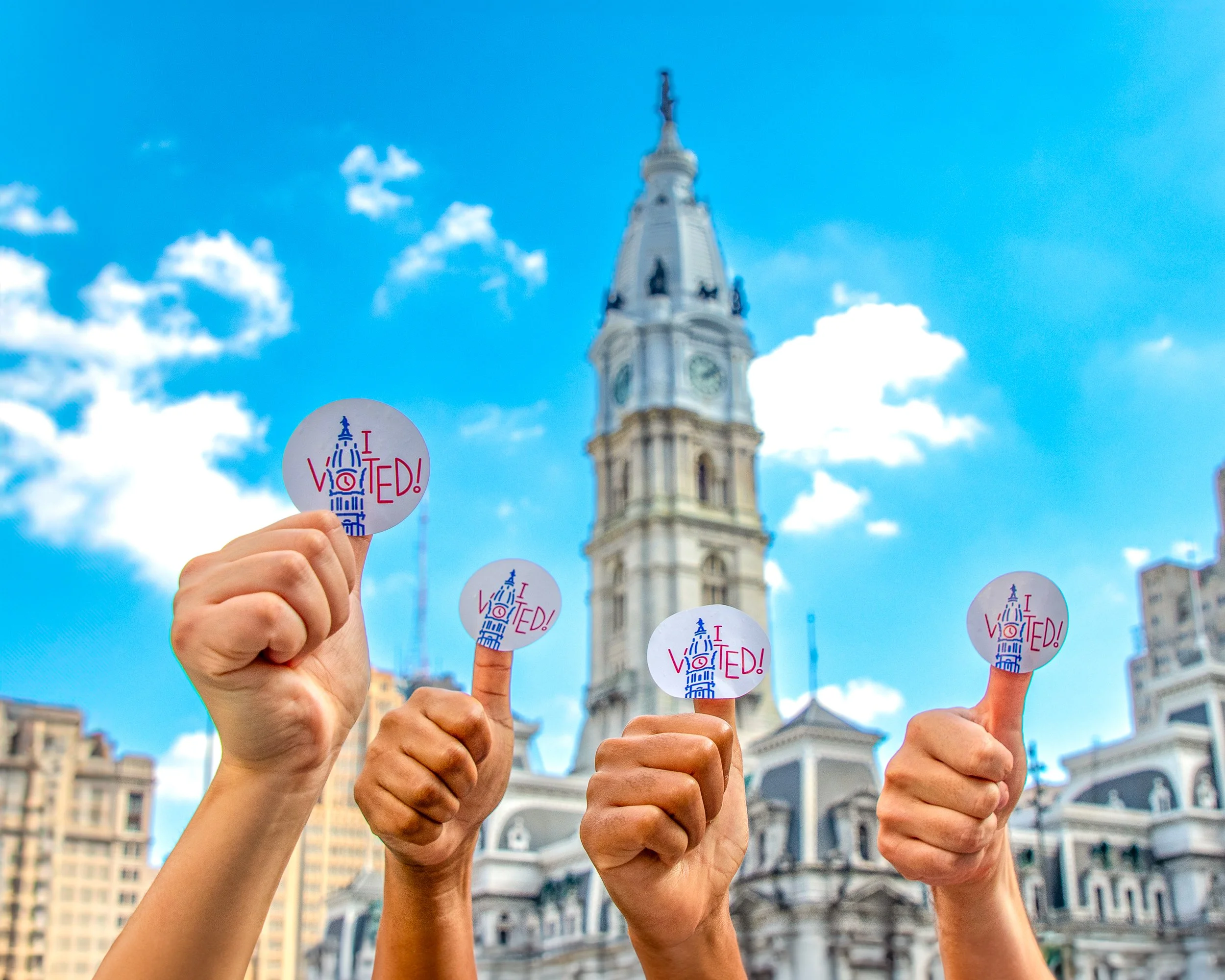
Source: City of Philadelphia
State Lawmakers are debating a bill to open primary elections to unaffiliated voters amid court challenges and low voter turnout. The proposal, known as House Bill 280, would allow the state’s roughly 1.4 million unaffiliated voters to participate in primary elections by choosing either a Democratic or Republican ballot without formally joining a party.
The bill represents a shift from Pennsylvania’s long-standing closed primary system. The effort comes as the state prepares for its May 19 primary, which will include the races for governor, lieutenant governor, representatives in Congress and the Pa. General Assembly. Supporters of the bill say the change could increase participation in both primary and general elections, particularly in areas where turnout has lagged.
State Rep. Jared Solomon, a Democrat who co-sponsored the legislation alongside Republican colleague Marla Brown, said unaffiliated voters currently help fund primary elections despite being excluded from voting in them.
“1.4 million Pennsylvanians pay to prop up the primary system here in Pennsylvania,” Solomon said. “So, if you're an independent voter, you can drive by all the places that house elections. You can go up and feel the church, or civic center, or school, where the election machines are. But the one thing you can’t do is actually vote. That just doesn't seem fair. That just doesn't seem democratic. That just doesn't seem American.”
Solomon, who grew up in Northeast Philadelphia and now represents the 202nd District, said his push for the change is rooted in his 2016 unseating of a long-serving incumbent, which shaped his views on institutional reform and expanding participation in party politics.
“It gave me a sense, both from my military experience and also my experience running outside of the establishment, the importance of institutional reforms, the importance of bringing new voices into the party,” he said. “In fact, I was a new voice. I had to run an outsider campaign, in many ways, a campaign that no one wanted me to run.”
“Solomon pointed to persistently low turnout in parts of Philadelphia, including sections of West and North Philadelphia, as a driving factor behind the proposal, citing the need to expand access to the ballot. ”
Under the proposed changes, only registered voters without party affiliation would gain the option to participate in a party primary of their choosing, while still remaining unaffiliated. The bill would not create a fully open primary system like those used in states like California, but instead a limited, “semi-open” structure.
The push reflects broader national trends. According to the National Conference of State Legislatures, all states use primaries for at least some offices, with systems ranging from closed to fully open formats. Pennsylvania is among only eight states that operate closed primary systems. Variations include top-two and top-four systems, as well as runoff requirements in some states.
Solomon pointed to persistently low turnout in parts of Philadelphia, including sections of West and North Philadelphia, as a driving factor behind the proposal, citing the need to expand access to the ballot. Official city election data show turnout in some wards to be in the high teens to low 20% range, with overall turnout in the 2025 primary election around 16%. Turnout was also slightly lower in Philadelphia during the 2024 presidential election compared with previous cycles.
“We have the opportunity to change that by welcoming in these voters, a vast majority of them young voters, a diverse coalition from Hispanic and Black voters to veterans, and bringing them into the political process so they become part of the fabric of our democracy,” Solomon said.
Groups such as Muslim and immigrant voters are part of that expanding electorate. According to the 2020 U.S. Religious Census, Pennsylvania is home to roughly 150,000 Muslim residents. Data from the Migration Policy Institute show that more than 1.09 million residents are foreign-born, or about 8.3% of the population. In Philadelphia, that share rises to about 15.7%, or roughly 243,000 people, according to the Pew Charitable Trusts.
A May–July 2024 survey by the Council on American-Islamic Relations of nearly 2,900 Muslim voters ages 18 to 65 and older found that 59.7% plan to support third-party or independent candidates, compared with 25.7% backing Democrats and 6.4% Republicans. The survey also found that 82% of respondents intend to vote, despite broad dissatisfaction with major party leadership. Respondents identified healthcare, economic stability, education and human rights as top concerns, and many said neither major party adequately addresses them.
This gap in representation may help explain the strong support for candidates outside the two-party system. Solomon added that because more than 80 percent of elections in Pennsylvania are effectively decided in primaries, excluding unaffiliated voters can limit their influence not just in preliminary contests but in determining final outcomes, particularly in heavily partisan districts.
The Potential Paths to Change
The legislation is currently awaiting action in the state House after advancing out of committee on a party-line vote. Previous efforts have drawn some bipartisan backing. In May 2025, the Pennsylvania House State Government Committee advanced HB 280 by a 14-12 vote, with support from several Republicans, including Reps. Brown, Russ Diamond and Jeremy Shaffer, according to official legislative roll call records. A separate effort to open primaries also passed the Pennsylvania Senate in 2019 with broad bipartisan support, according to the League of Women Voters of Pennsylvania.
Solomon said there are three potential paths to change: legislative approval, court action or internal decisions by political parties to open their primaries. A December 2025 lawsuit filed in the Commonwealth Court, initially filed that July in the Pennsylvania Supreme Court, challenges the constitutionality of Pennsylvania’s closed primary system. The case, brought by Ballot PA Action and several independent voters, including radio and television host Michael Smerconish and David Thornburgh, former head of the Philly-based nonprofit Committee of Seventy, argues the current rules diminish the political power of unaffiliated voters in violation of the state constitution.
The issue is gaining urgency as the number of independent voters continues to rise. Solomon described unaffiliated voters as the fastest-growing segment of the electorate, now accounting for about 16 percent statewide, with increases seen across all 67 counties.
“They're critical in determining national and state campaigns. It's what political pundits are always talking about: ‘Where are the independents, where are the independents?’ Well, we should want to engage them earlier here in the process and try to bring them into the system as opposed to pushing them away,” Solomon said. “Their views are far left, progressive, far right, MAGA and everything in between. I don't think these voters are easily categorized. But what I do know is that, as a Democrat, I want to be able to compete for their voice and vote in the primary.”
The bill’s future remains uncertain as lawmakers work to build support in the House and Senate, while a separate court challenge moves forward that could also determine whether Pennsylvania must change its primary system. Polls for the upcoming primary will be open from 7 a.m. to 8 p.m., with voter registration due by May 4 and mail ballot requests due by May 12. The general election is scheduled for Nov. 3, with an Oct. 19 registration deadline and an Oct. 27 mail ballot request cutoff.
***
Gawhara Abou-eid is an Egyptian-American researcher and journalist from Lewisburg, PA and an Al-Bustan News media fellow. They hold a BA in International Relations from The George Washington University, with a concentration in International Security Policy. Gawhara has published research for the League of Arab States in Cairo, and their journalism has appeared in The Standard Journal and The News-Item.

Al-Bustan News is made possible by the People’s Media Fund.