
Cinema, Etcetera | Why Iranian Audiences Rejected Jafar Panahi’s Latest Film — and Why It Matters
By Joseph Fahim
February 13, 2026
Iranian director Jafar Panahi is undoubtedly the most high-profile and acclaimed SWANA filmmaker working today. He has won a slew of top prizes at Europe’s major film festivals: Locarno’s Golden Leopard for "The Mirror" (1997), Venice’s Golden Lion for "The Circle" (2000), and Berlin’s Golden Bear for "Taxi" (2015). Last year, Panahi made history when he won the Palme d’Or at Cannes for "It Was Just an Accident," currently showing in North American cinemas. With that victory, he became the first filmmaker since the legendary Italian director Michelangelo Antonioni in the 1960s to claim all four of cinema’s major festival top prizes.
"It Was Just an Accident" arrived in the United States amid considerable fanfare: a distribution deal with Neon, the indie powerhouse behind last year’s five-time Oscar winner "Anora," a widely publicized panel discussion hosted by Martin Scorsese at the New York Film Festival and universally glowing reviews.
With two Oscar nominations and countless prizes around the world, the film has been touted as Panahi’s crowning achievement — and one of the very best films of 2025.
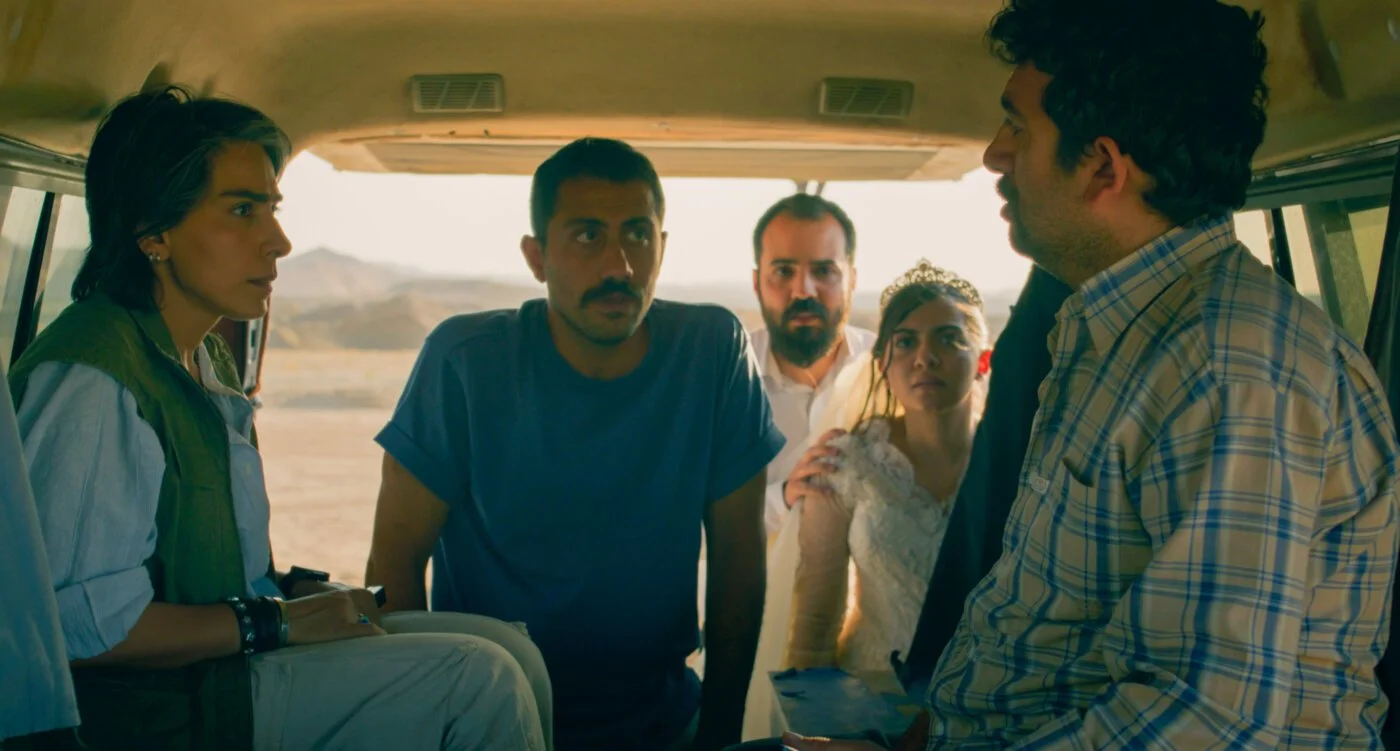
A scene from Jafar Panahi’s 2025 film “It Was Just an Accident.” © Jafar Panahi Productions / Les Films Pelleas
Full of anticipation, I finally saw Panahi’s eleventh feature with a mostly Iranian audience in Los Angeles before Christmas. The premise gripped me from the outset: a mechanic encounters a client with a limp whom he suspects is his cruel former prison warden. After kidnapping the man, the mechanic gathers a group of former political prisoners who were tortured by the presumed jailer to determine if any of them could detect his identity. The problem is that none of them can be certain the abducted man is, in fact, the warden.
Formulated as a thriller, "Accident" engages with complex themes: the morality of retribution, the weight of collective trauma and the difficulty of moving forward when justice remains unserved. These questions feel all the more urgent because the jailer’s identity is withheld, turning the film into a tense guessing game for both the characters and the viewer.
The section below contains spoilers.
Until its final third, "Accident" largely justifies the praise and accolades showered upon it. But then, for reasons that remain baffling, Panahi chooses to reveal the jailer’s identity — and allows him to deliver an awkwardly written speech defending his actions and justifying his allegiance to the Islamic Republic. The moment is didactic, contrived and painfully on the nose. Worse, it rings false.
The speech, and the absence of any counterargument from the former detainees, results in a conclusion that inadvertently belittles and flattens the plight of the Iranian opposition, robbing the ideological and ethical rift between dissidents and the regime of its complexity and nuance.
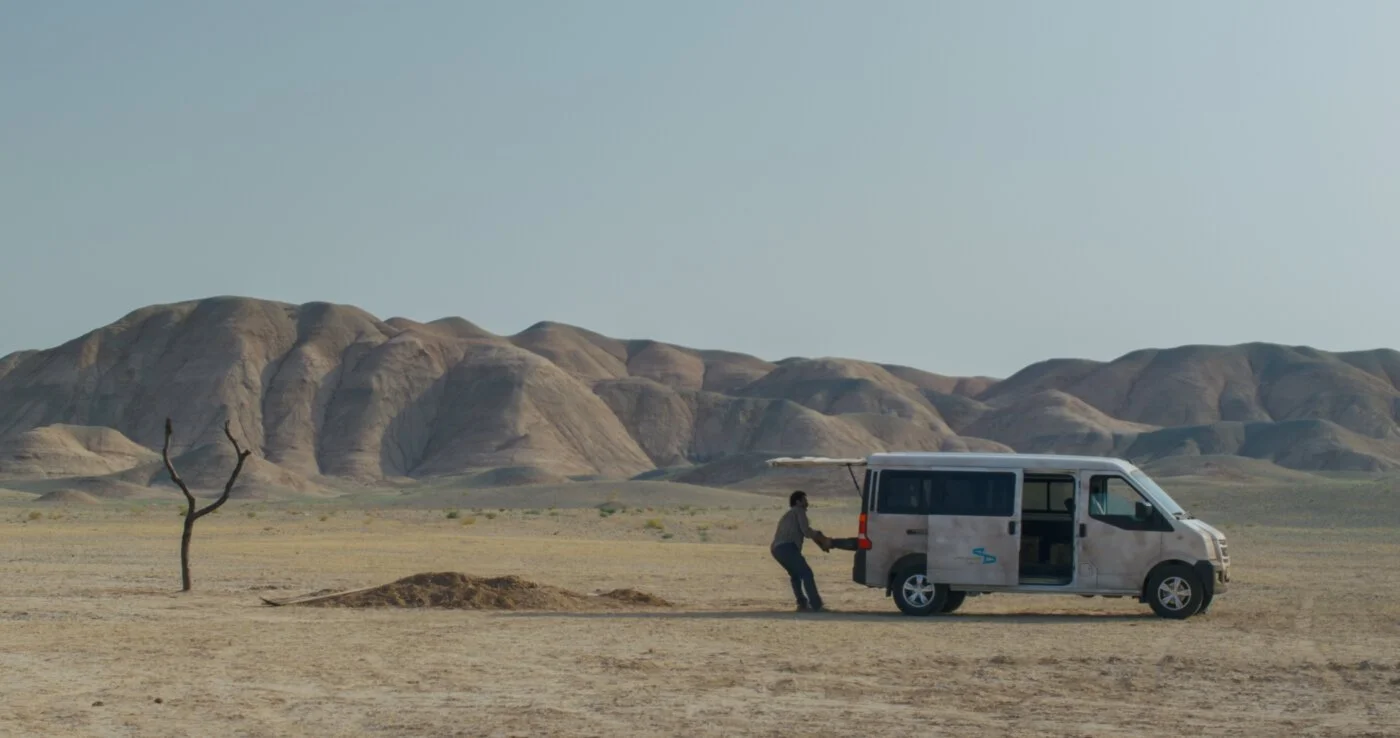
© Jafar Panahi Productions / Les Films Pelleas
I was not the only one dismayed by the superficiality of the film’s final message. The Iranian viewers I watched the film with shared the same frustration; several also remarked on the weakness of the acting. The English subtitles, they added, were imprecise and obscured just how clunky the dialogue is in the original Persian.
Several Tehran-based leftist friends, the constituency for whom "Accident" is ostensibly intended, expressed similar grievances. They emphasized that the film was poorly received in Iran not because of Panahi’s dissident stance, but because of how simplistically it renders the current political climate. Critics in the Western press, however, have overlooked the film’s shortcomings, choosing not to investigate its reception among Iranians, or whether it speaks meaningfully to the country’s highly volatile conditions.
"It Was Just an Accident" was the second widely celebrated Iranian film in recent years that I personally found objectionable. In 2024, I was similarly exasperated by Mohammad Rasoulof’s critically adored "The Seed of the Sacred Fig," which won the Special Jury Prize at Cannes and garnered an Oscar nomination. The film centers on a conflicted judge who suspects his wife and two rebellious daughters of stealing his gun amid the 2023 protests sparked by the killing of 22-year-old Mahsa Amini while in the custody of the morality police.
Like Panahi’s film, "Sacred Fig" squanders its promising premise, abandoning moral complexity in favour of proselytization. The films present a rigid view of the regime’s dutiful employees as men (no women, notably) too self-centered to recognize the flawed morality of their beliefs.
Both films are also among the most facile entries in the filmmakers’ otherwise rich oeuvres. Both are pointedly addressed to Western audiences. Both are deliberately provocative, yet devoid of the subtlety, latent fury, and potent visual and narrative symbolism that distinguished their earlier work. Most disappointing, they allow their protagonists — the opponents and sceptics of the Islamic Republic — to occupy an unassailable moral high ground, while regime sympathizers are denied comparable interiority or ethical ambiguity.
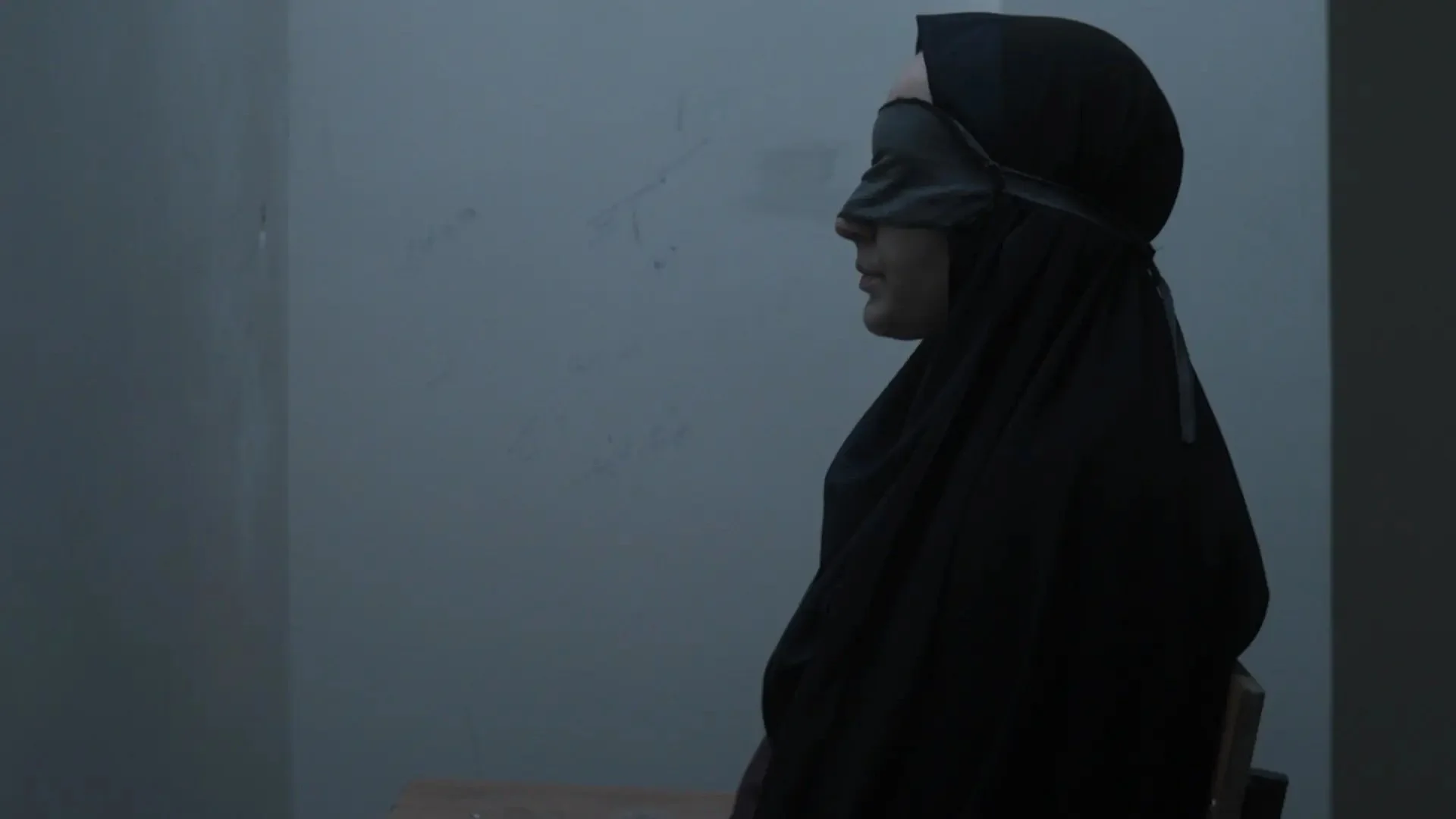
“The Seed of the Sacred Fig” (2024), directed by Mohammad Rasoulof. © NEON
For those who have experienced dictatorship and political oppression firsthand, it is difficult to digest the one-dimensional characterization and uncomplicated worldview of "Sacred Fig" and "Accident." If only the regime’s aides held such tidy convictions to explain their brutality. If only the opposition were so noble, unified and selfless. If only the world were that black and white.
Both films were international hits, attracting viewers sympathetic to the plight of Iran’s left. But the hostile reception in Iran suggests that these films were not made for Iranians, who have found neither catharsis nor empowerment in them. Rather, Iranian audiences recognized their posturing and their reduction of thorny themes into simplified gestures designed to appeal to international spectators.
Not many internationally acclaimed films fare well in their country of origin. Some are too liberal for their conservative societies; others employ challenging cinematic languages that alienate mass audiences. That is not the case with "Sacred Fig" and "Accident," both of which are far more accessible than their makers’ previous films. And since Iranian audiences largely share the filmmakers’ unabashedly anti-regime politics, their rejection of the films cannot be interpreted as a rejection of the films’ politics.
The integrity of Rasoulof and Panahi is not in question. Both are great artists who have struggled and sacrificed immensely in their battle against a brutal regime with no qualms about killing its own people. The filmmakers’ ethics, however, should not make their work immune from criticism. Perhaps it is unrealistic to expect critics to be fully immersed in the social and political realities of every culture represented in the films they discuss. But rather than take political discourse at face value, we must first try to understand the broader context that produced it.
***
Joseph Fahim is a film critic, curator and lecturer. Currently Al-Bustan’s film curator, he has curated for and lectured at film festivals, universities and art institutions in the Middle East, Europe and North America. He also works as a script consultant for various film funds and production companies; has co-authored several books on Arab cinema; and has contributed to news outlets, including Middle East Eye, Middle East Institute, Al-Monitor and Al Jazeera. In addition, his writing can be found on such platforms and publications as MUBI’s Notebook, Sight & Sound, The Criterion Collection, British Film Institute and BBC Culture. His writings have been translated into eight different languages.

Al-Bustan News is made possible by a grant from Independence Public Media Foundation.