
Art as Resistance | For Philly’s Iranian Americans, Nowruz Offers Both Joy and Mourning
By Lauren Abunassar
April 1, 2026
If you ask Neema Kashi one of his favorite traditions of Nowruz, the Persian New Year, the Iranian American will talk about the fires of Chaharshanbeh Suri. Typically celebrated on the eve of the last Wednesday before Nowruz, the celebration sees bonfires lit en masse, celebratory singing and dancing, and partygoers leaping over the flames to mark a period of renewal. For Kashi, it is an image that perfectly encapsulates the holiday’s spirit of hope and resilience.
“It’s a symbol of giving all your negative energy and evil to the fire and letting the fire’s light and warmth come to you,” Kashi said. “And it’s a sight unlike anything.”
Kashi was no stranger to these magical scenes growing up. Raised in the suburbs of Philadelphia, his family hosted hundreds of guests every year for the holiday. There was dancing and spoon banging, feasting on tahdig and sweet pudding, decorating the Haft-sin table. You did not have to be Persian to find your way to Kashi’s house for Nowruz. His school friends would arrive on the promise of a “crazy party,” and Kashi would watch them take part in his beloved traditions alongside family, perhaps not understanding the meaning behind each tradition but sharing in the communal fervor nonetheless. It was a joy, Kashi said, to see others embracing a piece of the culture he loved so dearly.
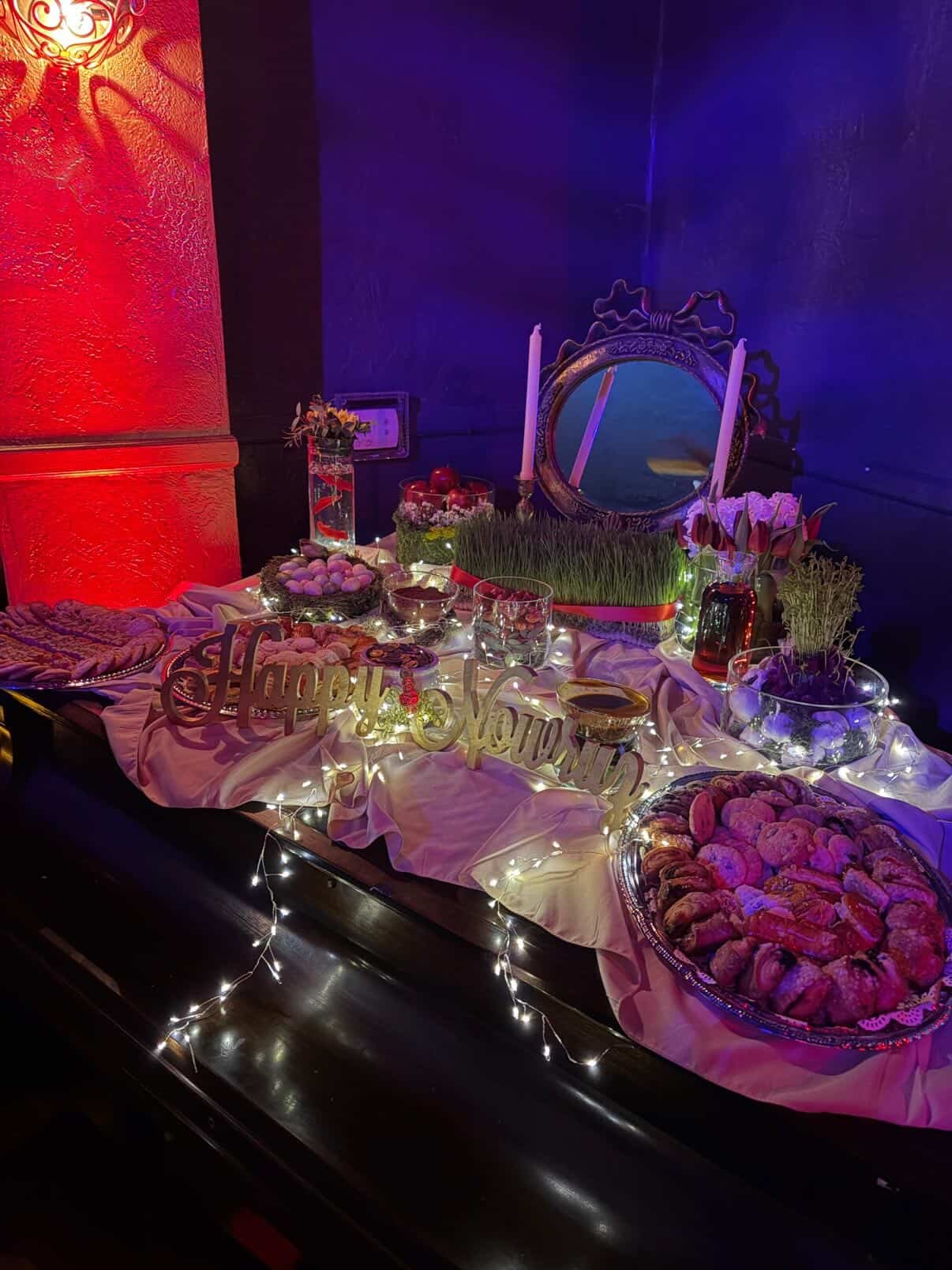
The Haft-sin table at the 2026 Nowruz party at Ruba Club on March 21. Photo courtesy of Neema Kashi
But this year, those rituals hold a different kind of weight. As the U.S. and Israel have escalated strikes on Iran and the death tolls have risen, many in the Iranian diaspora are grappling with how, or if, one should embrace celebratory rituals — even beloved ones — in the face of such collective grief and uncertainty.
Teeyam Moussavi, a Philadelphia-based Iranian American, feels a similar mix of conflicting emotions. “On one hand, you don't want to face erasure of your own culture [or celebrations that have] always been a sign of resistance and …of renewal,” he said. “But you also don't want to be tone deaf to the experiences and the horrors of everything happening.”
Still, for Moussavi and Kashi, the question of whether or not to celebrate Nowruz never occurred to them. Instead, they considered what celebration could look like now, which required reflecting on celebrations past.
When Kashi moved from the suburbs into the city years ago, he craved the comfort of the Persian community he had grown up with and the unfettered joy of their gatherings. So he decided to recreate this community himself. One way to do that? Rent a venue and throw a really big Nowruz party.
The first of what would become Kashi’s signature annual celebration was an homage to those childhood Nowruz gatherings. There were platters of food and Haft-sin tables adorned with apples, vinegar, candles and sprouts. There were Persian music ensembles and a swarmed dance floor. Whether or not you grew up celebrating Nowruz, it was, at its core, a really good time. So Kashi kept up the tradition, and last year’s party welcomed over 400 attendees.
“I also want to be able to show people that the Middle East and Iran are more than what you see in headlines,” Kashi said. “We're not scary people. We're an ancient culture that's been around and inspired culture around us for thousands of years. That’s really where a lot of my motive comes from [in planning these Nowruz parties]. Trying to change the narrative around my culture.”
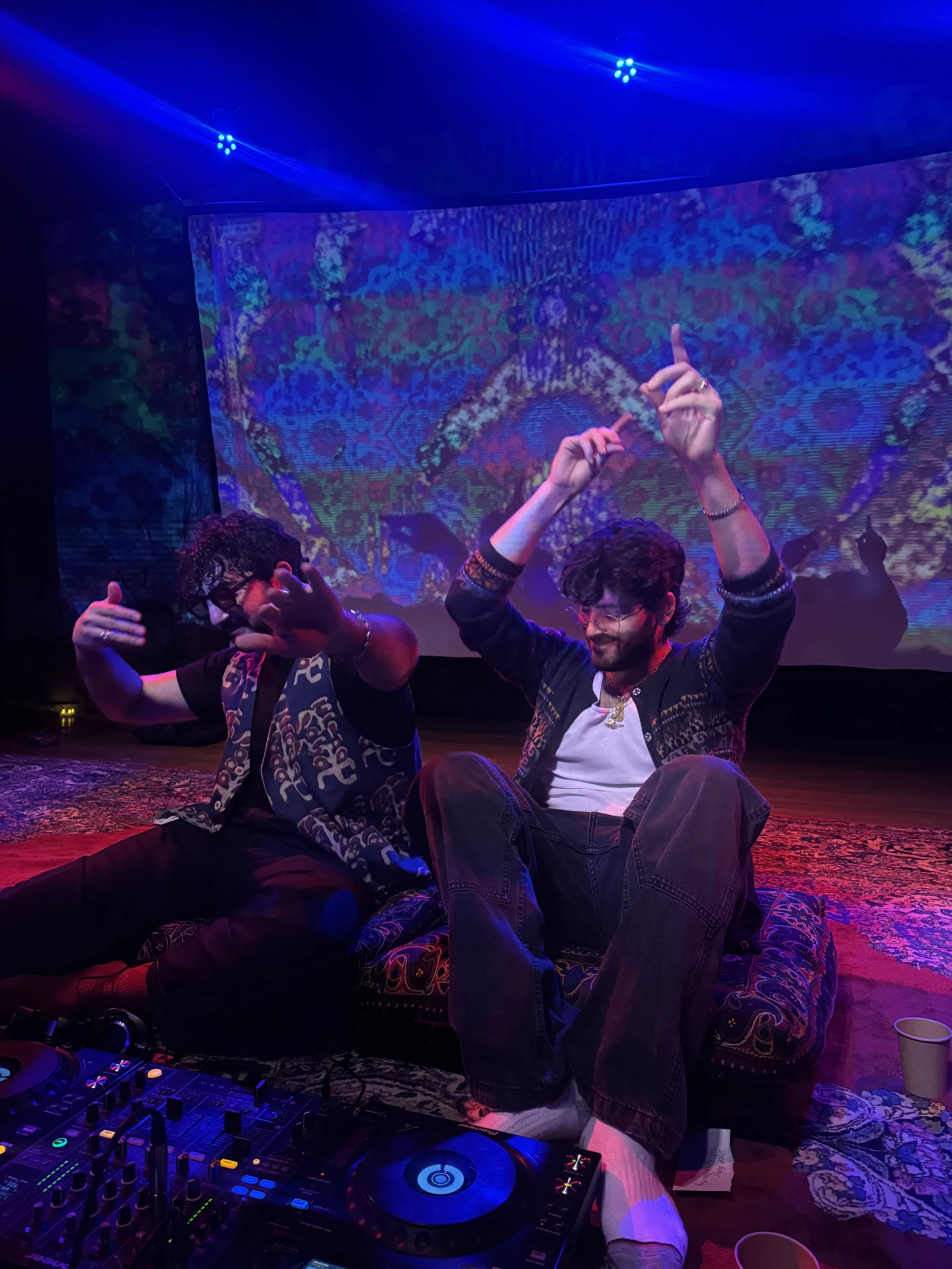
DJ Teeyam Moussavi (right), who goes by Baba Pishi, also helped plan this year’s Nowruz party. Photo: Iman Keyvani
Moussavi, a Philly DJ who goes by Baba Pishi, also finds meaning in celebrating the innate art and beauty of Persian culture. A transplant from New York City, Moussavi first met Kashi when Kashi messaged him to invite him to a dinner party. Missing his tight Persian communities in New York and in the Bay Area where he grew up, Moussavi was excited to find other Iranians to gather with. It wasn’t long before he learned about Kashi’s Nowruz parties.
Moussavi had beloved Nowruz memories as well: DJ’ing Technowruz at Nowadays bar in New York. Eating mountains of delicious food. And once, in fifth grade, his great aunt promised to give him $100 if he could deliver a speech in Farsi in front of everyone at their Nowruz celebration. When he succeeded, he watched the envy in his cousins’ eyes as she “made it rain one-dollar bills” on him. He had always been drawn to the magic of Nowruz, so it was not a hard decision to start performing at Kashi’s parties.
“When I played at last year’s party, I don't know what happened to me,” Moussavi said. It was the first time he had incorporated traditional Persian music into his set, and he experienced a surreal feeling of being transported as he watched people move to the music. It confirmed his understanding of the dance floor as a place that holds both cathartic release and cultural remembrance.
“That’s something special to have when you’re around such similar people. There’s these societal cues you don’t have to worry about as much… It’s incredibly important to express ourselves through some things that don't need to be communicated, but rather felt,” he said.
This year, Moussavi was eager to help Kashi organize “Philly Norooz 1405,” which took place on March 21 at Ruba Club in Northern Liberties. As the two lined up a roster of Persian performers, they watched the RSVP list tick steadily into the hundreds. “I wanted people to come and expect what they had last year,” Kashi explained: the infectious joy, spirited dancing and shared hope. But then, everything changed.
On February 28, Israel and the U.S. attacked Iran with airstrikes that killed, among others, Iran’s Supreme Leader Ali Khamenei. Devastating consequences have followed. That same day, a U.S. tomahawk strike destroyed the Shajareh Tayyebeh elementary school in Minab, killing over 170 people — mostly schoolchildren. Since then, the U.S. and Israel have struck over 90,000 civilian sites, including schools, residential buildings and hospitals. Current death tolls estimate around 2,000 Iranians dead.
Diasporic Iranians like Kashi and Moussavi are feeling the anguish that has swept over the region. Kashi picked up on this grief when speaking with community members about the Nowruz celebration. “I felt there was a sense of guilt. It’s hard for us to have fun when someone else is suffering,” he said.
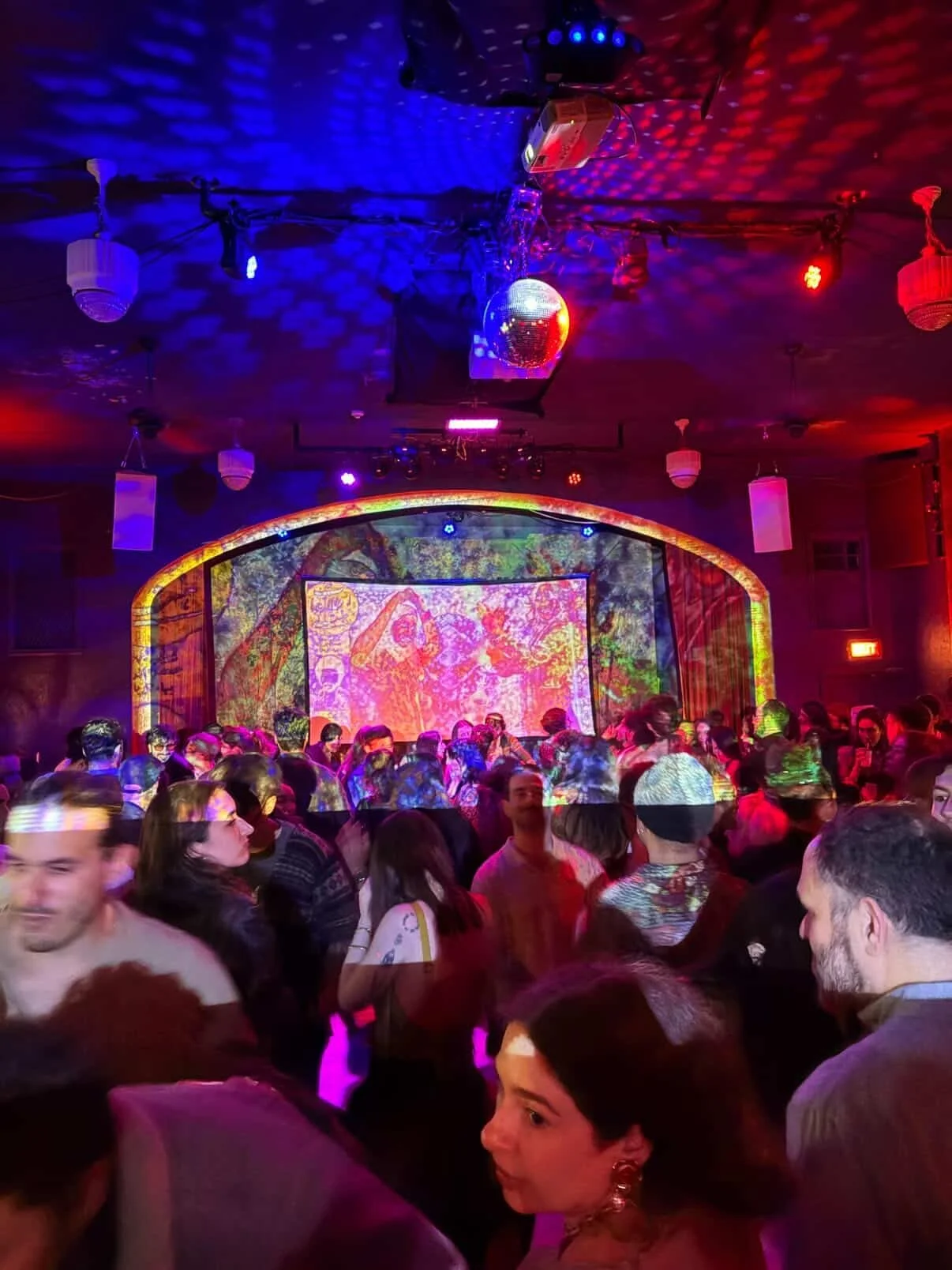
According to Kashi, this year’s gathering would offer more intimate spaces for people to come together, share food and simply be in community.
Still, the prospect of providing a space for the community to mourn and heal together had become all the more important. Kashi decided to release a statement saying that the event would not have its usual celebratory flair.
“Our thoughts are with those who are suffering,” it read. “And yet our culture has endured for thousands of years through moments far more difficult than this one. Nowruz itself is a reminder of that resilience.” The evening would underscore this resilience, offering more intimate spaces for people to come together, share food and simply be in community. Though Kashi typically charged for tickets in order to pay his performers, he decided to make this year’s event free.
Community response was swift. People reached out offering to donate food. Performers insisted they would participate even without the promise of pay. It was a reminder for Kashi of how his community steps up when people are in need.
Being in a room together is also a way for diaspora Iranians to untangle complicated tensions, according to Kashi. In the lead-up to Nowruz, he saw these tensions firsthand in a community caught between political trauma and fear for those on the ground in Iran. “It’s divided a lot of Iranians,” he said. “Because while they feel a regime change is possible, what does that actually entail?” In other words, can you be anti-regime and not want to see your people bombed?
In the face of mourning, catastrophe and turmoil, Nowruz arrived as it always has. And as Kashi and Moussavi’s celebration kicked off last Saturday, it felt like a reminder that it would come again — and that culture sits squarely in the hands of its protectors, not its attackers.
“Joy doesn't cancel grief,” Moussavi said. “And grief doesn't mean we stop living.”
***
Lauren Abunassar is a Palestinian-American writer, poet and journalist. Lauren holds an MFA from the Iowa Writers’ Workshop and an MA in journalism from NYU. Her first book, Coriolis, was published in 2023 as winner of the Etel Adnan Poetry Prize. She has been nominated for a National Magazine Award and is a 2025 NEA creative writing fellow.

Al-Bustan News is made possible by Independence Public Media Foundation.