
How Olive Oil Journeys from Palestinian Groves to Philadelphia Kitchens
By Ragad Ahmad
July 2, 2025
In the hills of Talooza, a small village in the West Bank, the family of 23-year-old mechanical engineer Yazeed Al-Tayeb tends to groves of ancient olive trees, their branches heavy with the fruit that connects generations of Palestinians to their ancestral land. But getting the liquid gold from those olives onto tables in Delaware County, where Al-Tayeb and his family live, requires navigating a complex web of logistics, permits and conditions that have become increasingly fraught and dangerous since October 2023.
At the heart of this transnational olive oil network sits one man: Jamal Al-Zaghloul, who has earned the nickname "the FedEx of the West Bank" among Philadelphia-area Palestinian families. For over twenty years, Jamal has specialized in shipping olive oil from Palestine to the United States through his trading company Tawakkal ‘ala Allah (which translates to “trust in Allah”), leveraging expertise he initially gained while importing goods from China.
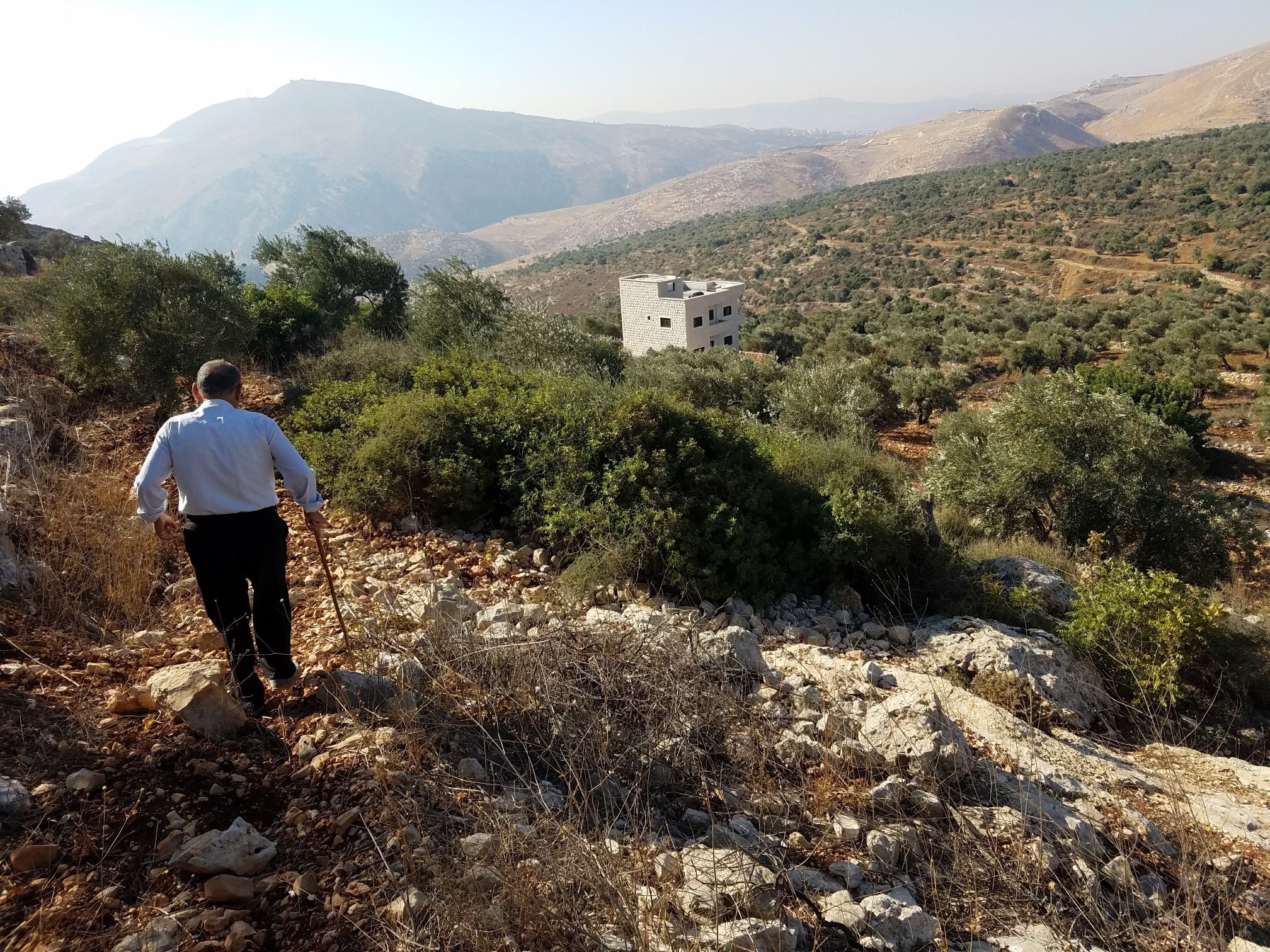
Yazeed Al-Tayeb’s grandfather counts the olive trees in his grove in Talooza during his morning walk. Photo courtesy of Yazeed Al-Tayeb
The path Jamal has carved is both practical and meaningful. Olive oil travels around 40 miles from villages like Talooza to Turmus Aya, then 85 miles to Haifa, before making the month-long, 6,750–mile ocean journey to America. What once cost families $600 per tank and took three months through traditional shipping services like DHL now costs around $230 and a third of the time to arrive through Jamal's network, making a connection to the homeland accessible to working-class Palestinian families in Philadelphia.
"The entire Palestinian community in Philly works with Jamal to get their olive oil pressed and sent here," explains Al-Tayeb, whose family discovered Jamal's services during a particularly challenging harvest season in 2012, when a general strike left hundreds of olive harvests unpressed while the family was in the U.S..
For Palestinian Americans like Al-Tayeb and 22-year-old student Johara Shamaa, whose ancestors hail from Deir Debwan and Burqa, near Ramallah, the olive oil represents far more than a kitchen ingredient. It's a tangible connection to the villages that form the basis of their identity—the distinct plots of land and the family traditions that span generations.
Shamaa—whose family in Burqa combines oil from both her mother's and father's villages, creating a literal blend of family identities—remembers harvesting olives for oil as a child while growing up in Palestine. Their olive trees in Deir Debwan are known for producing particularly oil-rich fruit, which is pressed at a family-owned facility in Burqa before being shipped to a drop-off location in Ramallah.
Shamaa and her family immigrated to Philadelphia 10 years ago. Today, they rely on their access to olive oil from Burqa and Deir Debwan as a tangible link to home. The specificity of the oil’s origin matters deeply to families like Shamaa’s. They don't want just any Palestinian olive oil—they want oil from their own trees, pressed by their own relatives, carrying the distinct taste of their particular piece of land.
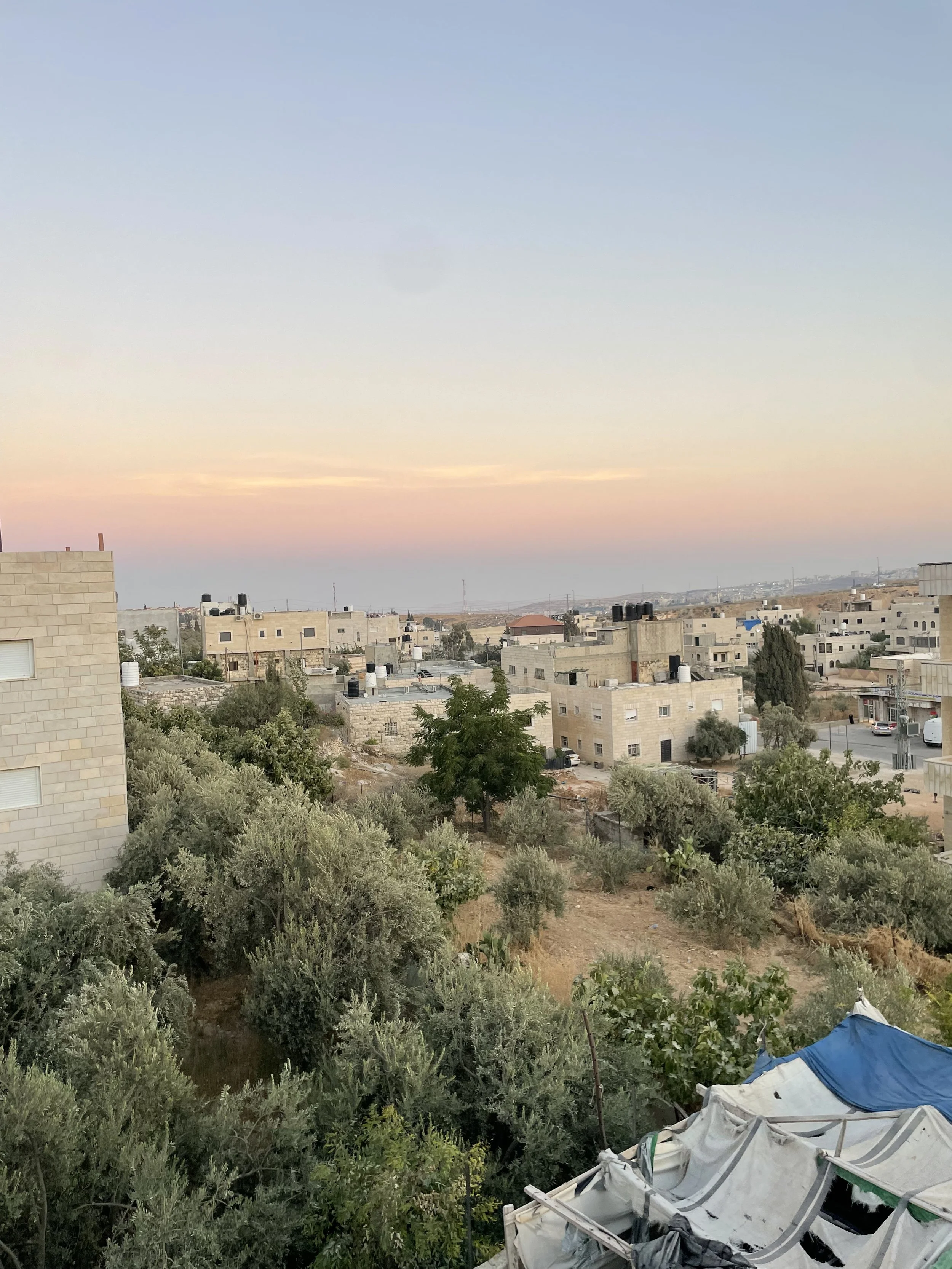
A grove of olive trees in Jaba’ owned by Kholoud Ishada’s in-laws. Photo courtesy of Kholoud Ishada.
The olive oil trade creates a powerful economic incentive for Palestinian families to maintain their agricultural land. 46-year-old Kholoud Ishada from Lifta, whose husband's family farms near Ramallah in Jaba’, says that shipping olive oil "encourages her husband's family to tend to their land."
When Ishada and her husband first arrived in Philadelphia in 2005, they didn't bother with shipping olive oil, relying instead on soda bottles filled with oil that they carried back from annual visits. But after Kholoud's Palestinian ID was revoked in 2014 for holding an American passport, limiting her ability to travel to Palestine during harvest season, the family began using Jamal's shipping service to stay connected to their land's harvest.
The arrangement is mutually beneficial: diaspora families get olive oil from their own trees at reasonable prices, while families in Palestine have the economic incentive to continue cultivating ancestral lands. But this formerly streamlined operation has become more and more fraught since October 2023: settler attacks, economic pressures and restricted mobility for Palestinians are doing increasing damage to the Palestinian olive oil trade.
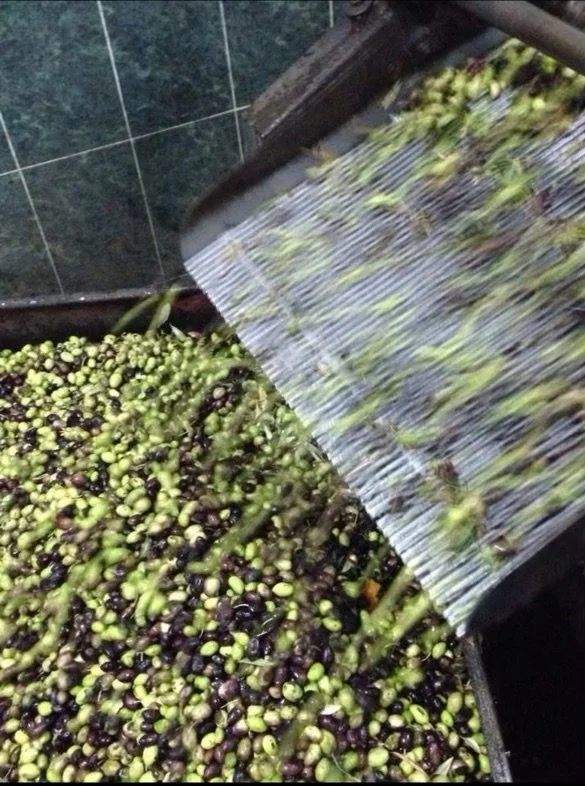
A machine presses olives for oil. Photo courtesy of Yazeed Al-Tayeb
Al-Tayeb's family has seen their production drop from between 100 and 200 tanks per year to just 50. According to Shamaa, entire villages now work together to cultivate olive trees, moving collectively from land to land to protect farmers from settler attacks during harvest season. While effective in providing protection, these necessary interventions have severely slowed down farmers, who must now wait for the availability of an entire village to make their way to their olive groves. Shamaa’s family in Philadelphia didn’t see the 2023 harvest’s oil until the summer of 2024, months later than usual. Some families, like Ishada's, have been unable to press their own olives at all due to settler aggression and road closures, forcing them to purchase oil from other families and villages.
Even when families are able to press their olives, Jamal's shipping schedule has also been affected by the increased presence and violence of the occupation since the genocide in Gaza began. Shipments that used to be biweekly now travel once a month, operating on a first-come, first-served basis.
Despite these challenges, the olive oil network continues to function through community connections. Families learn about Jamal's services through word-of-mouth recommendations, and pick-up locations have expanded from a warehouse in Patterson, New Jersey, to include Masjid Al Hidaya in Philadelphia, making the oil more accessible to the area’s Palestinian community.
"As a second-generation diasporic Palestinian, it's important not to give up on the land, even when you have been displaced," Al-Tayeb says. "Olive oil is the last connection some of us have to the homeland."
***
Ragad Ahmad is a Palestinian–American Muslim born and raised in Philadelphia. She currently studies Peace and Conflict Studies at Swarthmore College, where she explores issues of decolonization and climate justice.