
Rayan Elnayal is Building Futures in Her Art and Her Profession
By Ben Bennett
August 8, 2025
Rayan Elnayal sits at a desk in her studio wearing a pair of large, over-ear headphones. The London sky outside is muted and grey, a stark contrast to the artist’s vivid works.The London sky outside is muted and grey, a stark contrast to the artist’s vivid works.
Elnayal is discussing her latest exhibition “Digital Sanctuaries,” which opened at Al-Bustan Seeds of Culture in July. The series of 3D prints depicts two versions of a Sudanese home, one based on traditional architecture and the other a futurist vision.
“I spent a lot of time just speculating,” Elnayal said. “Why does futurism have to look a certain way? And what does futurism look like to me?”
Elnayal is a Sudanese artist, designer and educator based in London. She co-founded Space Black, a creative studio run by Black built-environment professionals in London focused on creating more equity in the design world.
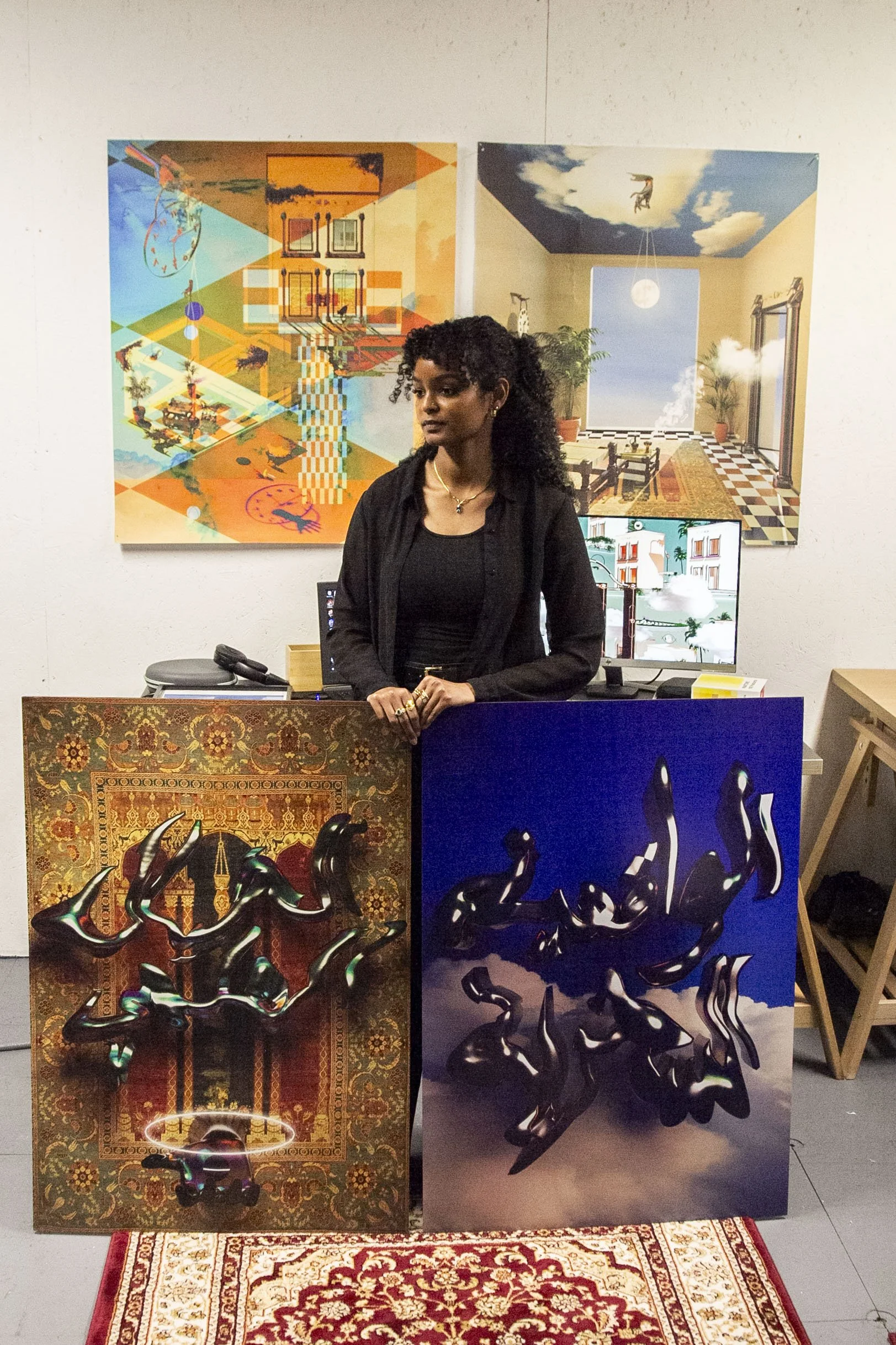
Sudanese British designer Rayan Alnayal, with examples of her futurist artwork on the wall behind. All photos courtesy of Rayan Elnayal
Informed by her architectural training and her heritage, Elnayal’s art envisions a different, personal kind of futurism in Sudan. And at Studio Black, she doesn’t just imagine what a better future for designers might be, she creates it.
While pursuing an architecture degree at the University of Greenwich, Elnayal discovered that the study of futurism was typically Eurocentric, influenced by Scandinavian and Bauhaus design traditions. It focused on control and speed, rejecting the past and imagining a harsh, fascistic world where technology and efficiency reign supreme.
Elnayal’s works offer a different exploration, one that isn’t cold and sterile but bright and inhabited. In “Digital Sanctuaries,” she invites the viewer to explore her very individual vision of futurist Sudanese spaces.
“What are the spaces I’d imagine I’d like to inhabit?” she said. “It’s kind of really personal in that way.”
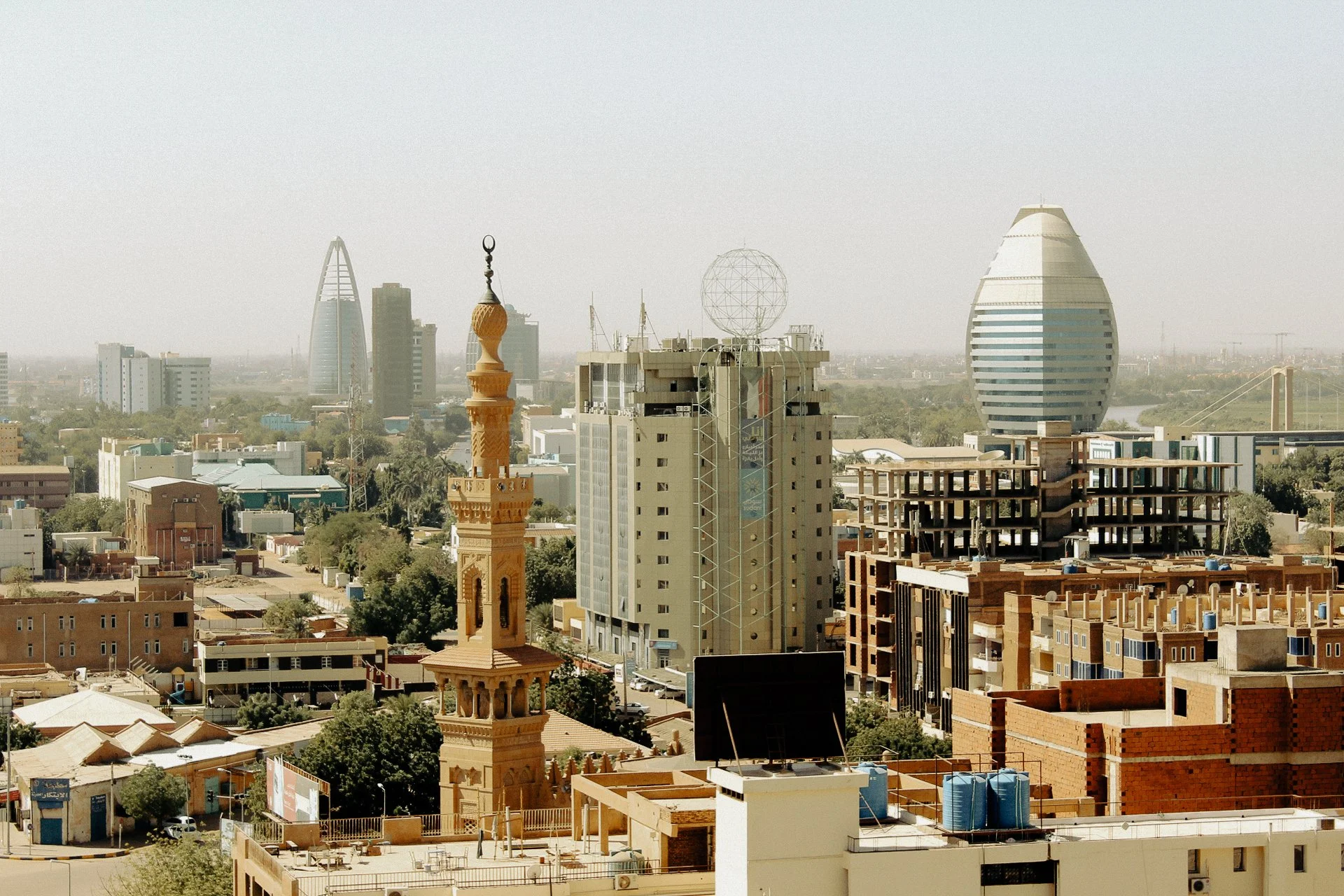
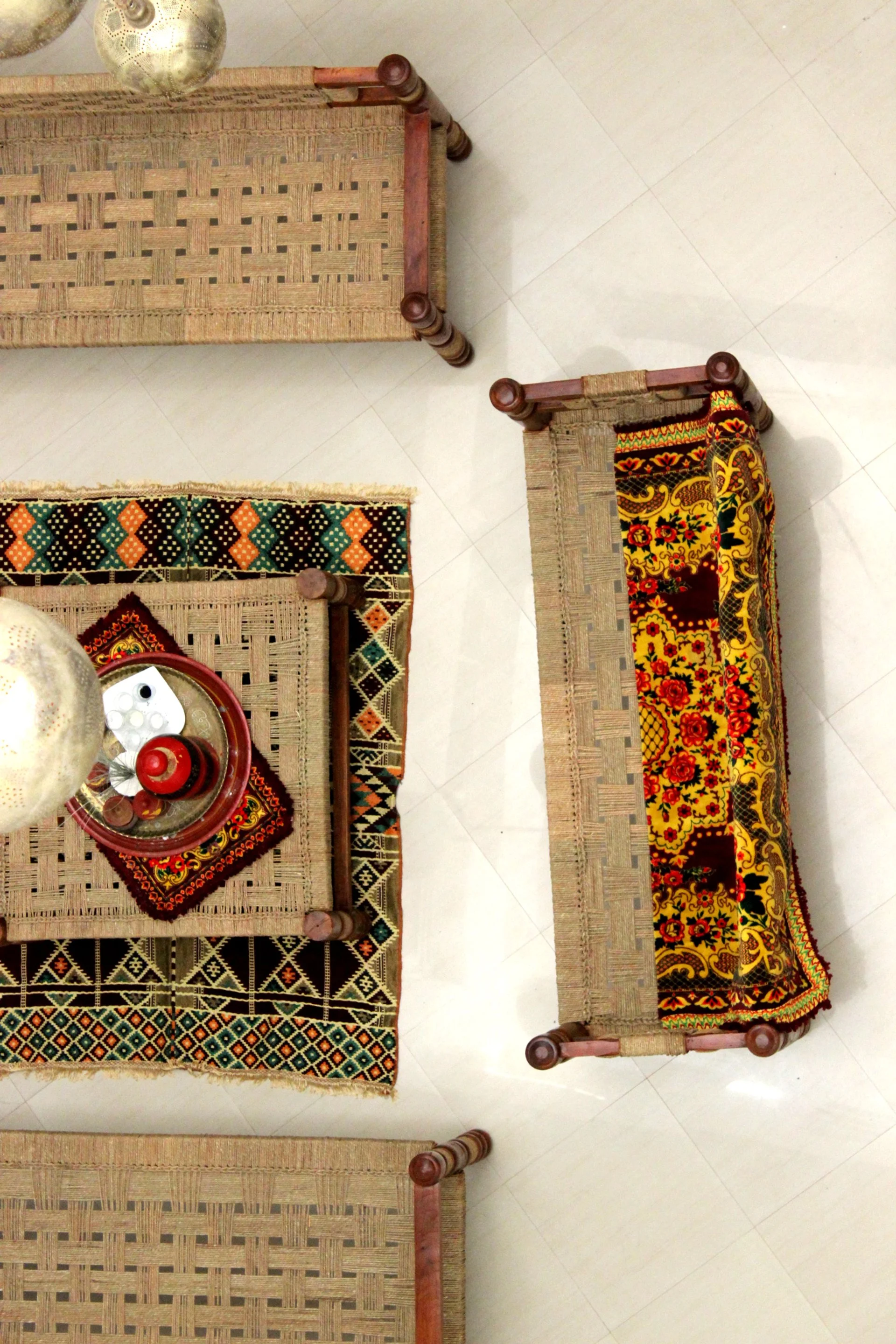
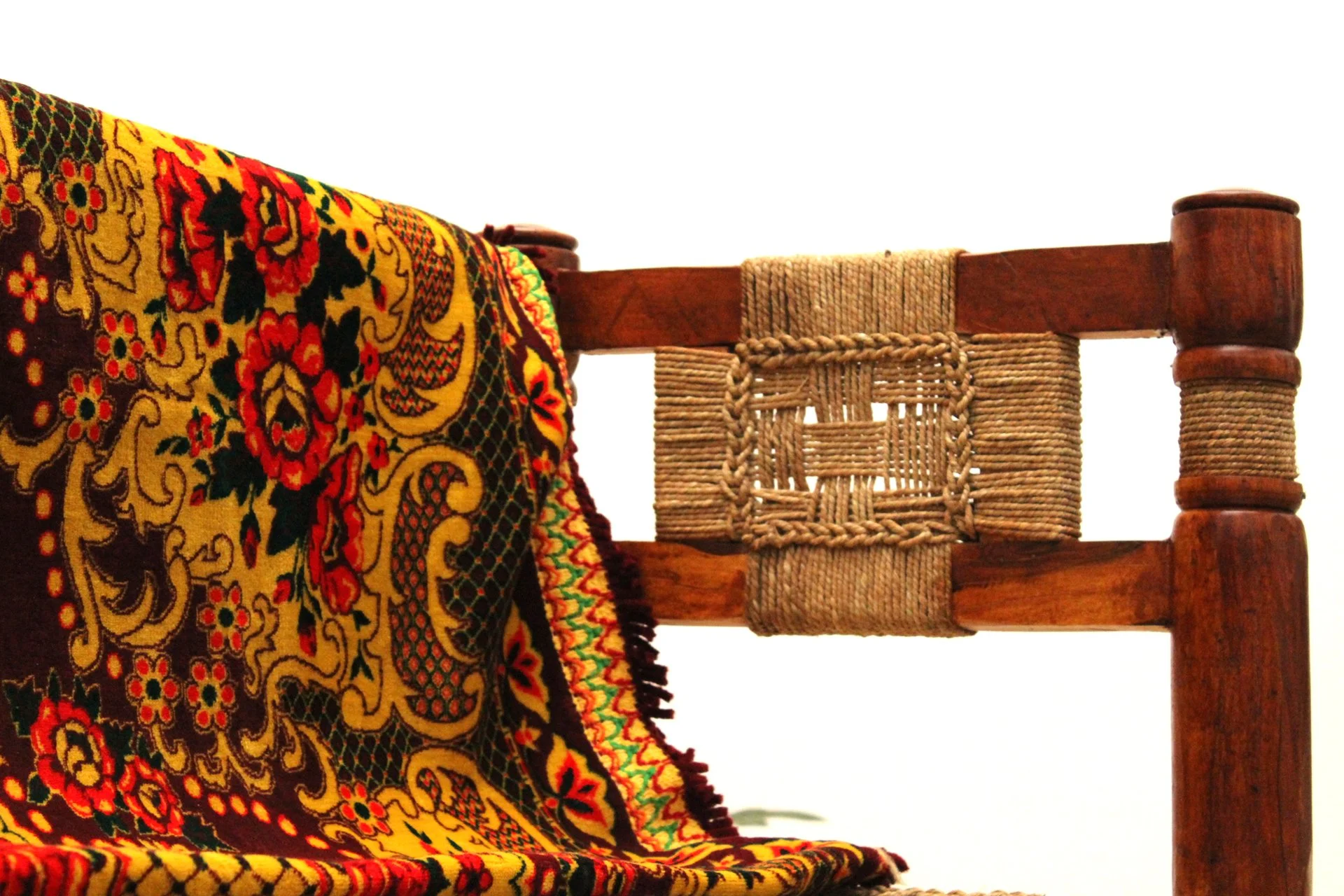
Elnayal’s art reaches into the past. During trips to Sudan, she takes photographs that provide inspiration for her futurist designs. Above: the Khartoum skyline; below: the living space and furniture in a Khartoum home
Born and raised in London, Elnayal lived much of her life in Sudanese spaces, where she ate, shopped and spent time with friends. She went to a Sudanese Saturday school. And before the war began in 2023, she took many trips to visit her family in Khartoum, Sudan, sometimes up to a month at a time.
The visual elements of her work feel so tangible because they are, at least in part, based in reality: photographs taken of family members’ homes, architecture she draws inspiration from. Her art reaches into the past, recounting a memory.
Elnayal admits that her singular version of futurism might feel foreign next to conventional models. However, this isn’t the first time she has broken from convention. After graduating from university in 2019, Elnayal worked as an architectural assistant at David Morley Architects in London. She found that she didn’t agree with a lot of the modes of practice in a conventional firm, where, according to U.K. architecture magazine RIBA Journal, 64% of architects are white males.
“It was quite difficult to practice, to carry on creating, while still being in a traditional practice,” she said.
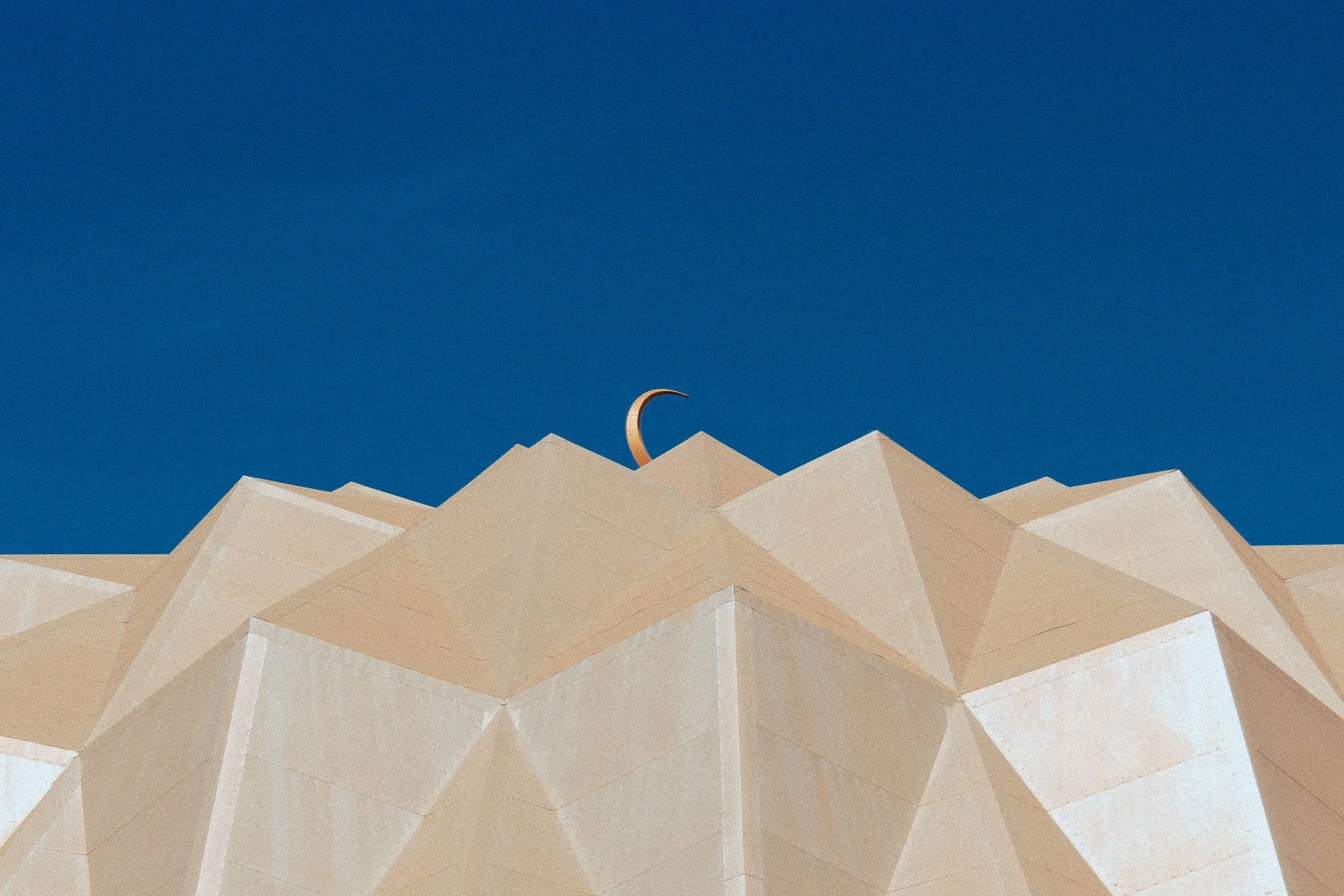
The roof of Al-Nilin Mosque
At the height of the COVID-19 pandemic in 2020, Elnayal met Heba Tabidi, an engineer and DJ. Both women were frustrated with the exclusionary nature of the built environment in London.
So Elnayal decided to take a risk—and a pay cut—and leave the world of traditional architecture behind. With Tabidi, she founded Space Black and focused on creating a more equitable future, both for young designers and for people already established in the industry.
According to Elnayal, design and other creative practices are almost completely neglected in the U.K. education system. She and Tabidi want to make design careers more accessible, providing tools and working with aspiring professionals.

A rooftop sign in Khartoum
“We channeled [into Space Black] all the things that we would have liked to see when we were studying,” Elnayal said.
This includes making design conversations in professional settings less intimidating and more inclusive. Space Black offers educational day programs and events, to take a more fun approach to what is traditionally a daunting atmosphere. Elnayal believes that even if someone is not a trained architect or engineer, their opinion is still valid, and they should be allowed in these discussions.
“I was used to a lot of these conversations being in very formal spaces and very exclusive to architects,” Elnayal said. “That’s not what we like.”
Looking forward, Elnayal is content keeping Studio Black a small group, focused on continuing collaboration with other creatives and paying them equitably. She doesn’t want the team to become anything like larger design firms, which rely on underpaid and overworked junior level associates, and even unpaid interns, though the practice is banned in the U.K.
“We can definitely be part of building better futures,” Elnayal said. “No matter how cringe that sounds.”
***
Ben Bennett is a Chinese-American visual journalist based in Philadelphia and an Al-Bustan Media Fellow. He is a recent graduate of American University's journalism program, where his coverage focused on underserved communities and the intersection of politics and popular culture.