
The St. Maron Lebanese Festival Serves Up Food, Music, Dance and Joy
By Elissa Odeh
June 5, 2025
Thousands of people gathered over the weekend at St. Maron Maronite Catholic Church in South Philadelphia for the 49th annual Lebanese Festival, a three-day event featuring traditional food, live music and dance.
Organized by St. Maron’s parishioners, the festival has become a highlight of the year for both the Lebanese American community and Philadelphians interested in Middle Eastern culture.
“These three days of the festival are my favorite,” said Father Andrawos Tabchi, St. Maron’s pastor, who was a constant presence during the weekend, moving through the crowds and greeting attendees. “I forget about all my problems and duties and enjoy our beautiful community.”
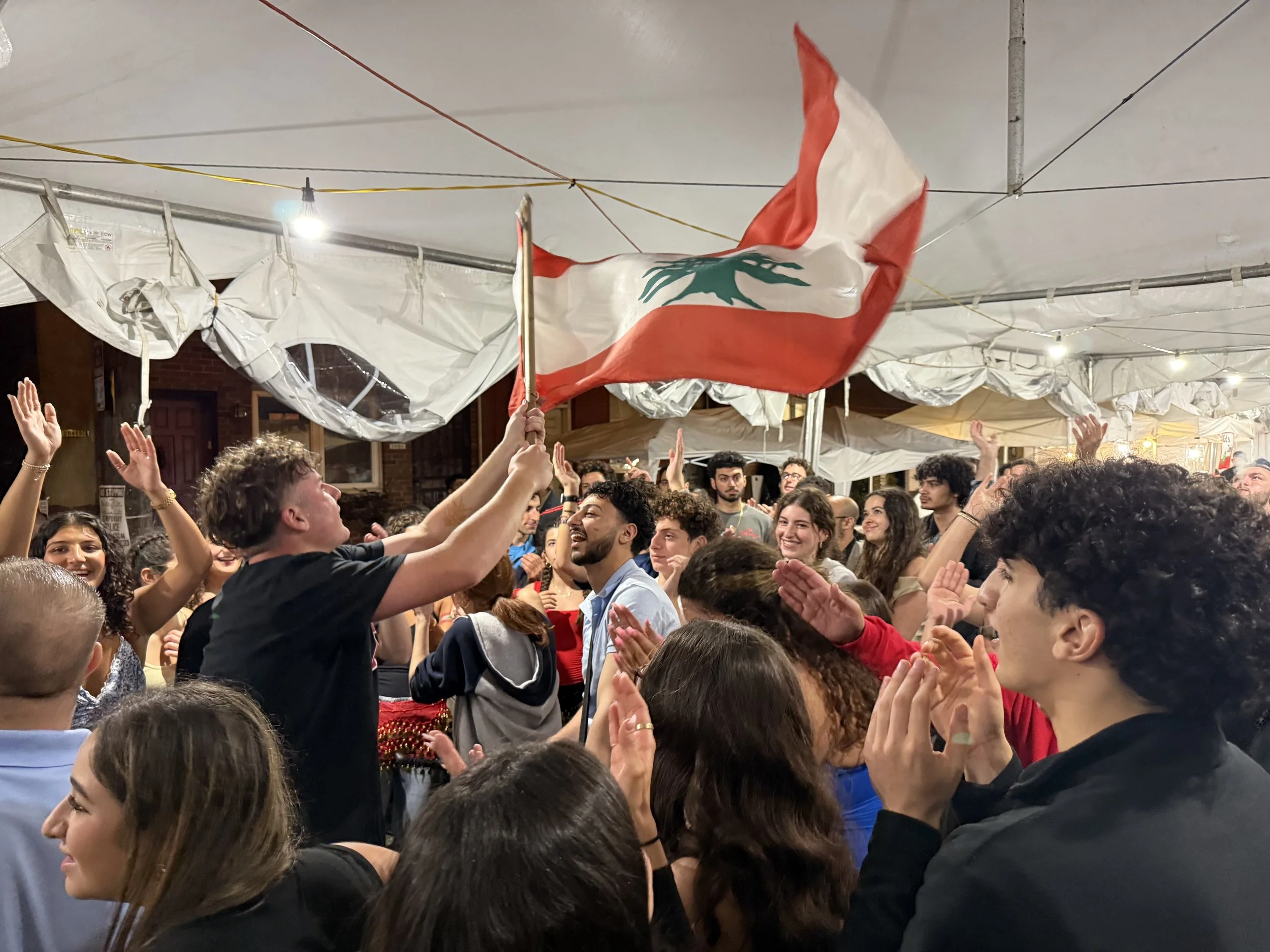
As the crowd cheered, festival-goers waved the Lebanese flag and danced in communal celebration of heritage. All photos courtesy of St. Maron Maronite Catholic Church
This year’s turnout included visitors from more than eight different states, some of them, Father Tabchi noted, having driven for many hours to be there.
“This gives us the responsibility of representing the beauty of Lebanon,” he said. “It is a big burden, but we carry it with joy because we can share our culture with Philly’s diverse population.”
The festival is run entirely by volunteers who begin planning, preparing, rehearsing and cooking months in advance.
Tony Frangie, now in his fourteenth year as festival chairman, started volunteering at the festival 35 years ago and has seen the event grow and evolve. “It went from being a small celebration of the local Lebanese community in Philly to one that is attended by thousands,” he said. “You can see people from all different religions and countries coming together.”
Local Irish resident Connor Donnelly visited St. Maron three years ago and has stayed with the church ever since, having joined the congregation and immersed himself in Lebanese culture. As part of his service to the church, he helps out during the festival.
“There is a very strong sense of community,” Donnelly said. “I feel at home here as an immigrant among my Lebanese friends.”
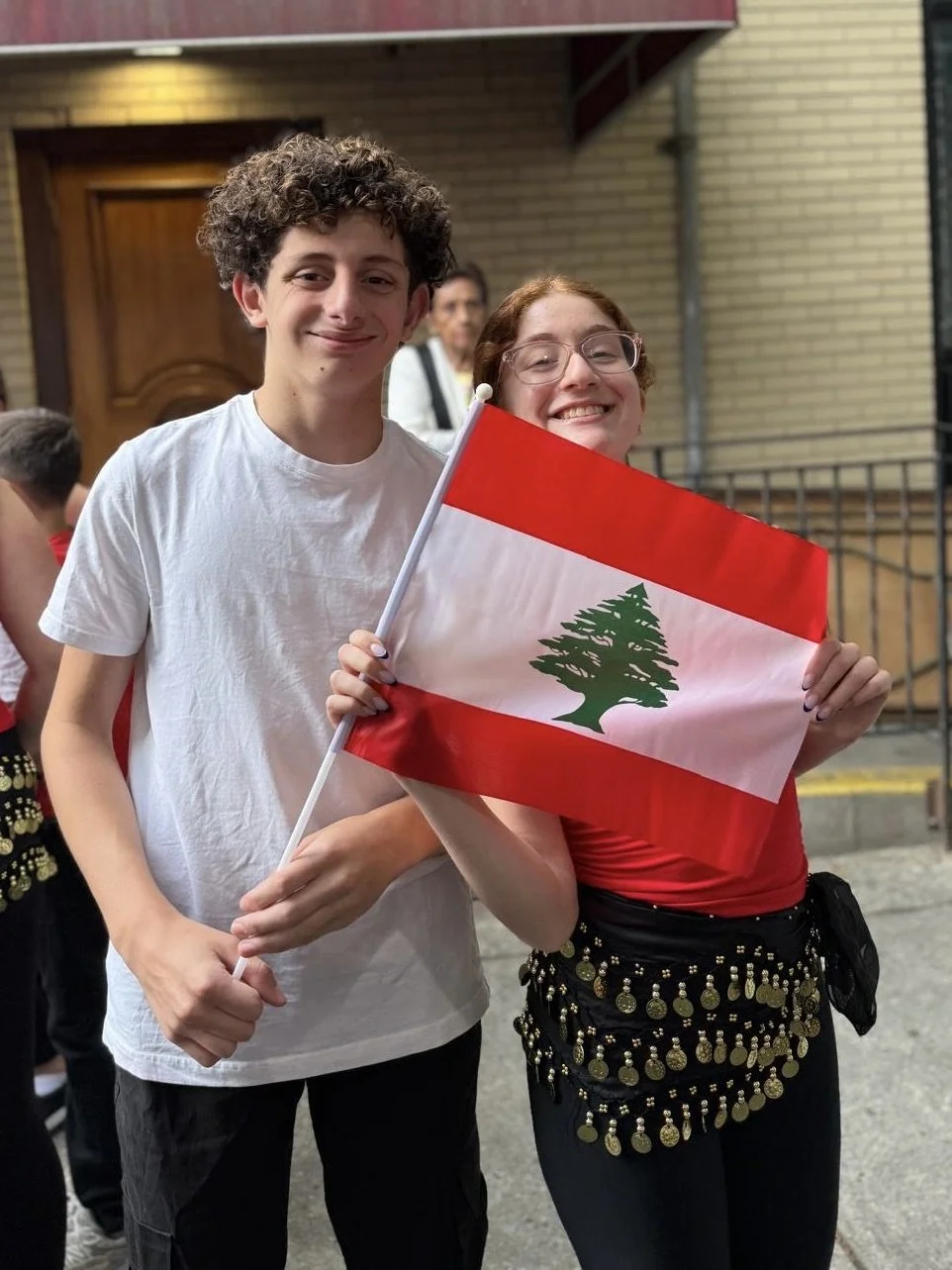
St. Maron’s youth parishioners contributed to many aspects of festival operations.
St. Maron’s youth play a central role in the success of the festival, assisting with everything from managing the souvenir stand to making cotton candy and popcorn, in addition to performing the popular Levantine folk dance, dabke.
“We’re working to keep our youth rooted in their culture by giving them real responsibility—whether through church services or the festival,” Father Tabchi said. “Our youth are both the present and the future. If we don’t invest in them now, we won’t be able to harvest anything later.”
Rebecca Samarani, a 14-year-old Lebanese American, was among those watching the dabke dancers. Born and raised in the United States, she sees the festival as not just entertainment, but a way to feel connected to her heritage. “The music and the food remind me of who I am,” she said. “It’s such a beautiful experience to dance with your community and have a good time.”
The music and dance always attract big crowds. This year, Lebanese singer Ziad Imaz performed a mix of Arabic folk and upbeat pop hits. The enthusiastic audience clapped along to the beat of the darbuka drum player accompanying the dabke dancers. As night fell, the courtyard pulsed with energy as attendees joined the dabke line, turning the evening into a communal celebration of shared heritage.
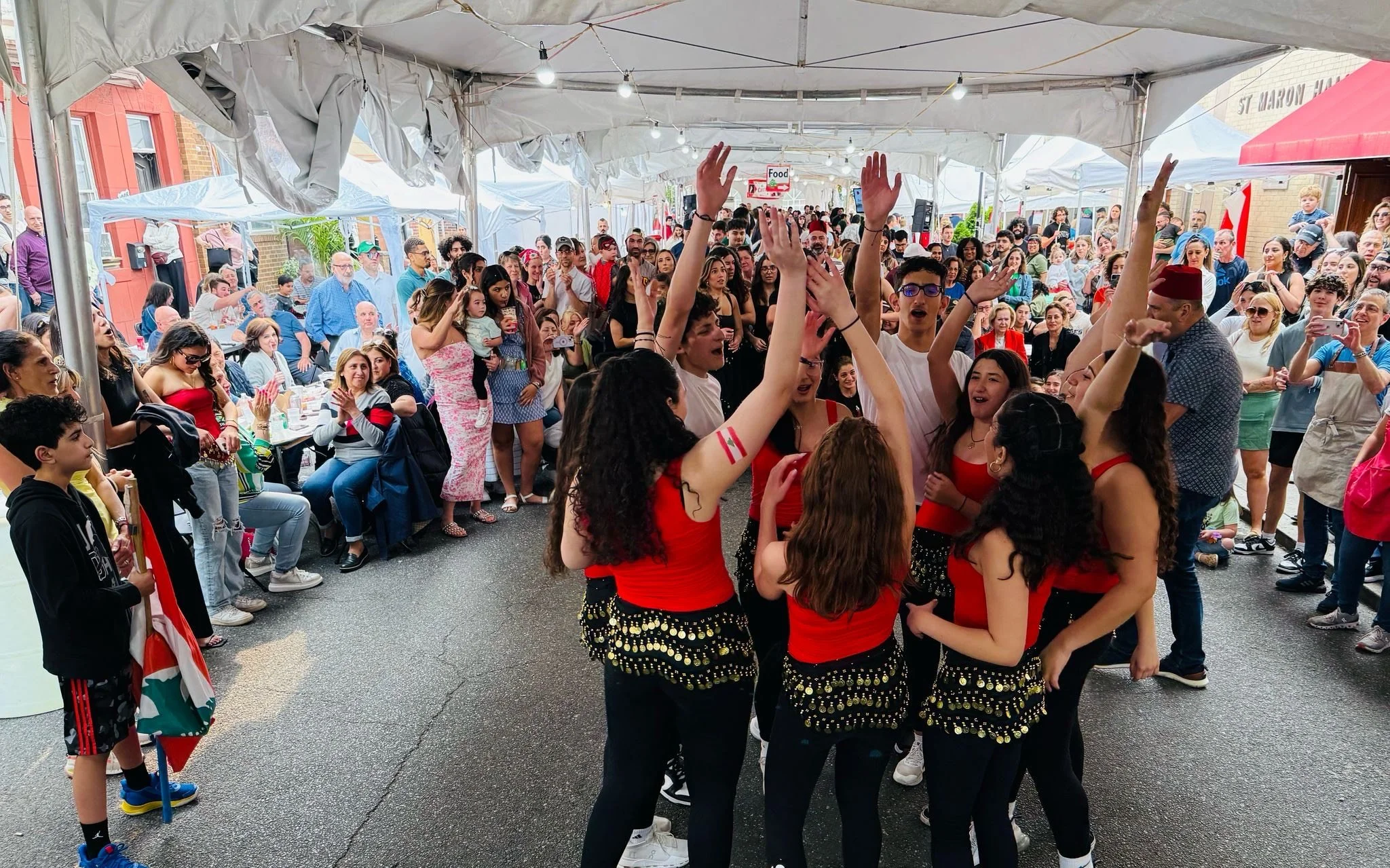
The youth-led dabke performance drew loud cheers and applause from a packed audience under the main tent.
The food was also a big draw. The church’s courtyard buzzed with volunteers serving platters of shawarma, kibbeh, grape leaves and baklava. At the food tent, trays were stacked with a variety of Levantine staples, including hummus, baba ghanouj, falafel and kofta. For many visitors, it was their first encounter with Middle Eastern food.
First-time festival attendee Ian Bowler enjoyed both the welcoming atmosphere and the traditional dishes. “My favorite was the chef’s special manoushe [flatbread with za’atar, onions and tomatoes], and the beef shawarma was delicious as well,” he said. “My only regret is not saving enough room for dessert.”
Behind the plentiful food and full plates was a months-long effort by parishioners working tirelessly in the kitchen. Micheline Dib, who has volunteered at the festival for 15 years and led the kitchen for the past decade, said everything hinges on collaboration. Volunteers begin preparations months in advance, buying ingredients, rolling grape leaves and kibbeh balls and freezing dishes ahead of time. During the festival weekend, the kitchen crew works nonstop to keep food flowing to the crowds. “It is like we are working 12-hour shifts for three days,” Dib said. “It wouldn’t be possible without all of us working as a team.”
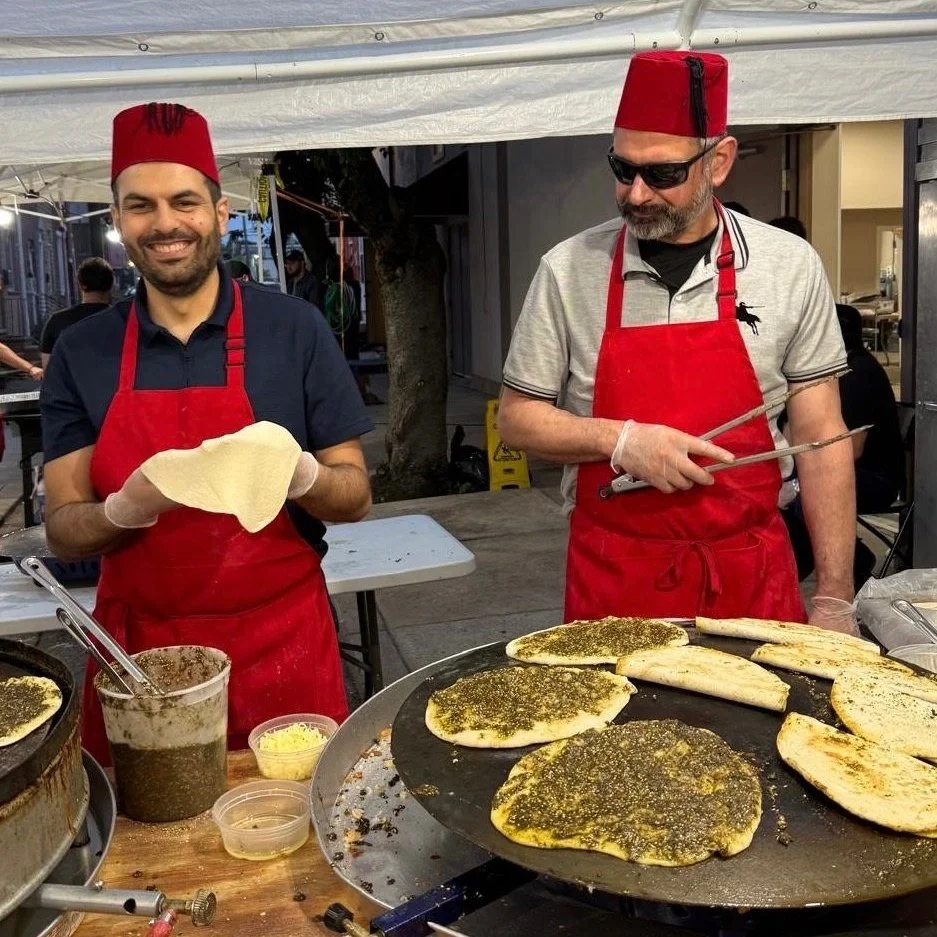
Church volunteers prepared manoushe—flatbread topped with za’atar and olive oil—at a food stand.
Despite their exhaustion, volunteers could be seen smiling into the night. “These are the best three days of my life every year,” Tony Frangie said. “Even if I’m tired, I know I’m working with everyone as one big family to support our church.”
As the festival wound down on Sunday night, a cheer came from the kitchen: “Sold out!” Micheline Dib smiled. “All the exhaustion goes away knowing we fulfilled our goal and had yet another successful festival,” she said.
The proceeds from the weekend will go toward supporting St. Maron’s operational needs, youth programs, building maintenance and future expansion projects. But for Father Tabchi, the event’s real value lies in the joy that it brings to everyone, from babies to elders, as they come together to volunteer, dance, share food and celebrate their culture.
“When I see the smiles of our children and our volunteers, who have been working for hours but doing so with joy, when I see the children dance dabke and hear attendees say they’ll be back next year—it fills my heart with gratitude,” Tabchi said. “I hope people carry the joy they experienced at the festival with them wherever they go.”
***
Elissa Odeh is a Palestinian journalist from Lansdale, PA. She graduated from West Chester University with a BA in media and culture and a minor in journalism. Her work has been published in Lehigh Daily, Daily Local, and the New Orleans Review.