
In the Occupied West Bank, Eid Offers Little to Celebrate
By Haifa Ali
June 19, 2025
For Palestinians across the occupied territories, Eid—observed around the world as a holiday of renewal and community—has become a stark reminder of loss, separation, and the impossibility of celebration amid ongoing genocide and occupation.
Yaqeen Shilbae, a 23-year-old refugee from Haifa who grew up in Tulkarm’s Nour Al-Shams refugee camp, remembers when childhood innocence shielded her from the harsh realities surrounding her community. In the days before the holiday, the camp would be transformed. "You could feel the joy of Eid in the air," Shilbae says. Shopkeepers displayed new clothes in their windows and the scent of cardamom and rose water drifted from every home as families prepared their traditional Eid sweets.
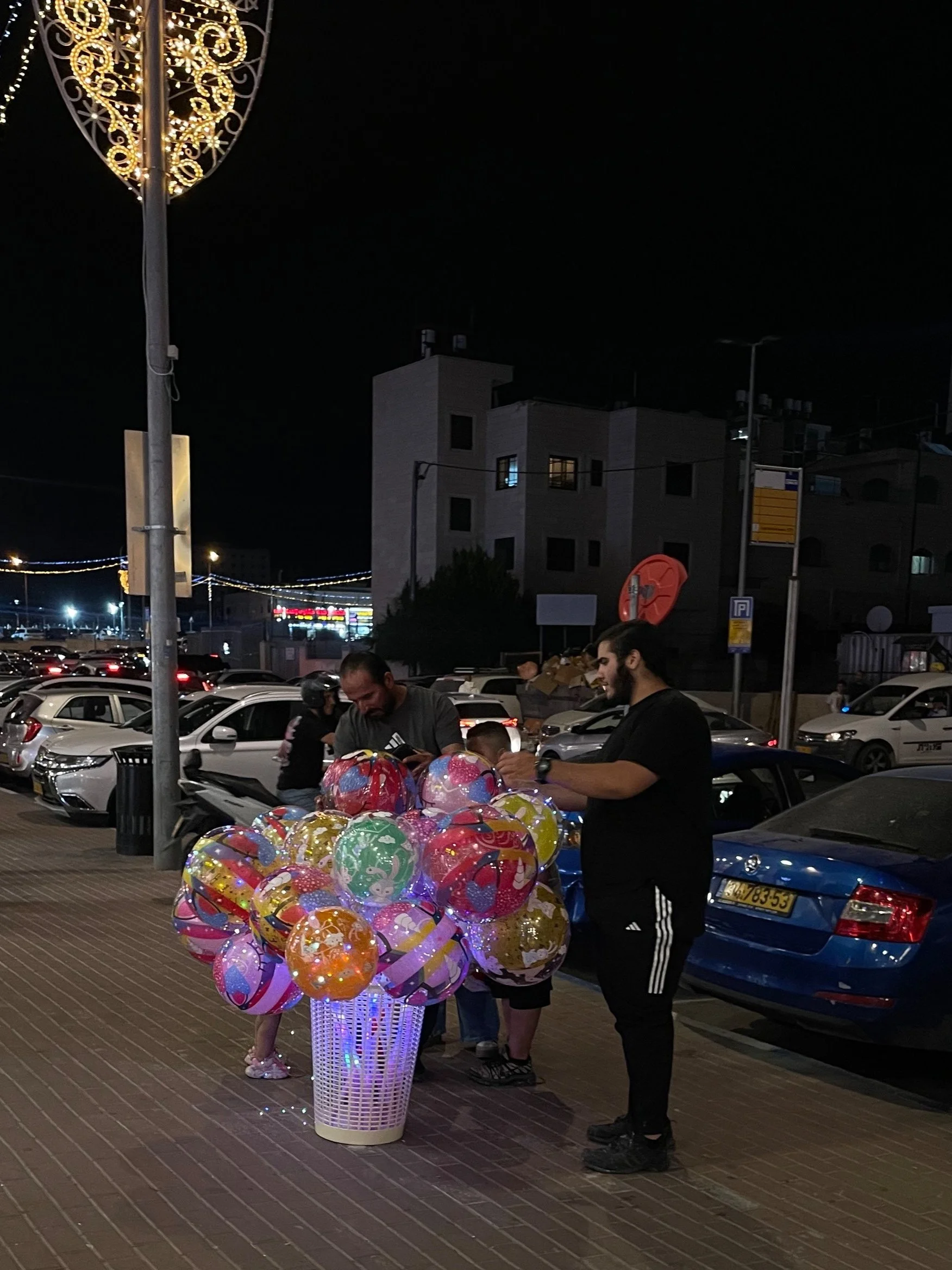
A balloon seller on the streets of a souq in the West Bank during the Eid holidays. Photo: Haifa Ali.
As a child, Shilbae did not have to consider the ethics of celebrating Eid in the midst of widespread violence, loss and destruction. The occupation felt distant, something that affected adults but left space for a child's wonder at new shoes and the crisp bills that visiting relatives pressed into her palm.
Back then, she says, Eid traditions were simple but meaningful: waking early to attend prayers at the local mosque with her father and siblings, then returning home to receive visiting family members who would gift her Eid money. She would spend her shekel coins on balloons from sidewalk vendors in the camp's market, walking back via the familiar path between neighbors’ houses with the colorful balloons high above her head.
Those traditions have been systematically dismantled, Shilbae says. Since January 2025, Israel has launched a full–scale military assault on northern Palestine, including Tulkarm. In April, the mosque where Shilbae spent her Eid mornings was leveled by Israeli forces during a broader demolition campaign targeting the camp's infrastructure. The market where she once bought balloons now operates under constant surveillance, its vendors frequently subjected to raids that can shut down commerce for days.
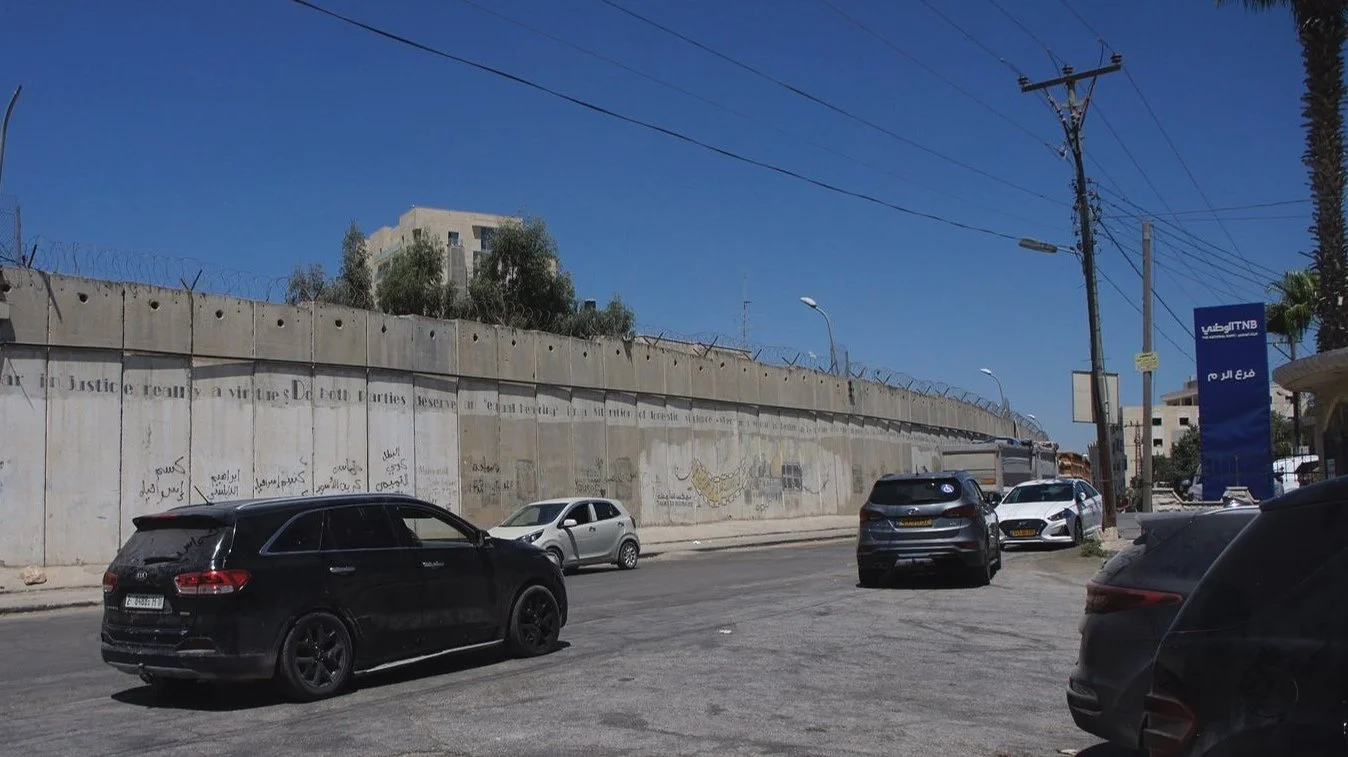
The apartheid wall that separates ‘48 Palestine and the West Bank. Photo: Haifa Ali.
As the occupation grows more visible and more violent, Shilbae is saddened watching her younger siblings, still children, navigate a reality in which military jeeps are more commonplace than ice cream vendors. “Eid no longer holds the same weight for children," Shilbae says. “Their innocence can no longer protect them from reality.”
For 27-year-old Jerusalem resident Rola Al-Masri, Eid requires bridging the artificial divisions created by Israeli restrictions on movement. Al-Masri’s father is from Jerusalem and her mother from the West Bank, so celebrating Eid means negotiating a complex web of checkpoints so that her extended family can be together.
"Growing up, Eid was special because it was when I saw all of my family," Al-Masri says. Her mother's male relatives did not have the option of entering Jerusalem to visit her as per Palestinian tradition, so Al-Masri’s mother would break with convention, traveling to the West Bank herself to celebrate with her relatives.
The preparations were as meaningful as the celebration itself. Al-Masri always went with her mother to Ramallah, where they would make ma’moul—a Levantine date cookie—with the family. It was a bonding activity. Women gathered in the kitchen, sharing stories and the techniques passed down to them through generations, while the men sat outside with tea and cigarettes and the children played in the village streets, their games spilling from house to house as the entire neighborhood joined in.
Al-Masri’s fondest memory is a simple one: enjoying the ma’moul that had been made by the women of her family, each bite a taste of collective labor, the weight of tradition, and the sweetness of being surrounded by love.
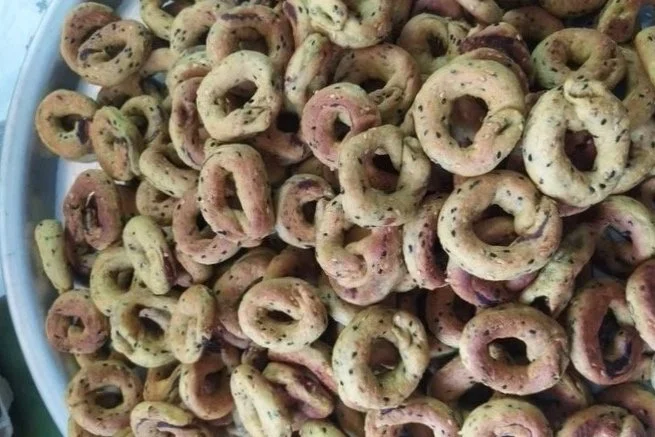
With restrictions on mobility preventing families from engaging in the communal activity of making Eid sweets together, some have resorted to sharing photographs instead. Photo courtesy of Rola Al-Masri.
"Everyone makes ma’moul in their own home now," Al-Masri says, her voice conveying what has been lost. Because of the difficulty of movement across Palestine, the communal preparation that once defined her Eid holidays is no longer possible. Families that used to spend days together now exchange photos of their cookies via messaging apps, trying to maintain connections across barriers that seem to multiply each year.
Since October 7, 2023, Eid celebrations have been particularly overshadowed by the ongoing genocide in Gaza. To many Palestinians, the contradiction feels unbearable. "How can we even celebrate Eid when our people in Gaza are being burned alive?" Al-Masri asks. "Every bite of ma’moul feels wrong when we know children in Gaza haven't eaten in days. Every piece of new clothing feels like a betrayal when we see the videos of children in Gaza wearing the same bloodstained clothes for months."
Individual family tragedies intersect with this broader context to make celebration feel all the more distasteful. For Shilbae, this year's Eid was marred by her brother's absence. Arrested on September 19, 2024, in what she describes as a political detention, he remains in prison with no projected release date. Shilbae’s brother is one of thousands of Palestinian political prisoners whose families mark holidays with visits to detention centers rather than shared meals.
"None of us show that we are upset, but we feel his absence on the morning of Eid," Shilbae says. While the men in her family visit her brother when they can, it is considered inappropriate for women to go to the prisons. So Shilbae speaks to her brother by phone to wish him Eid Mubarak, their conversations subjected to time limits and potential monitoring.
The destruction caused by the occupation runs deeper than individual loss and has created a community of mourning that extends beyond blood relations to encompass entire neighborhoods, refugee camps and towns."Everyone has their own experience, but we are all living this occupation, and you can see how broken everyone is on Eid," Shilbae says.
At her aunt's home, photographs of martyred cousins line the walls of the living room. These memorial walls inevitably spark conversations and tears when visitors arrive for Eid gatherings, offering opportunities for collective grieving and remembrance.
As families across Palestine attempt to maintain some semblance of Eid tradition, children still receive small gifts, families still prepare special meals and communities still attempt to gather for prayers. But genuine celebration feels impossible, Al-Masri says.
“We don’t know when, or if, we will ever be able to celebrate Eid like the rest of the world.”
***
Haifa Ali is a writer in the West Bank who writes under a pseudonym.