
‘English at School, Turkish at Home’: How Immigrant Families Balance Language, Culture and Community
By Gawhara Abou-eid
October 10, 2025
Recently, when Ahmet Selim Tekelioglu’s 6-year-old son, Mehmet, came home from school and said, “Nobody can say my name properly,” it highlighted a familiar struggle among Philadelphia’s immigrant families: how to maintain cultural identity through language. Born and raised in Turkey and living in the U.S. since 2007, Tekelioglu, the Executive Director of CAIR-Philadelphia, is familiar with the effort required to balance heritage languages and English.
For Tekeliolgu, his wife Hena Cebeci and their two young children, that effort plays out daily, in conversations, choices and identities shaped by both cultures.
“We speak both,” he says. “English is more comfortable for my wife, Turkish is more comfortable for me… The kids get English at school, and we try to have them speak Turkish at home.”
This approach rarely achieves full fluency, he adds, and it reflects a broader trend of situational language use, or code-switching, among immigrant families.
Tekelioglu recalls a friend with Iranian and Mexican roots who felt his parents missed an opportunity by not teaching him Farsi or Spanish, leaving him to learn both languages by studying them in college.
These issues are further complicated in a city as linguistically diverse as Philadelphia, Tekelioglu says, where Muslim communities include speakers of Arabic, Urdu, Turkish, Farsi, Armenian, Sudanese, and other languages. Few institutions are equipped to support this range, often leaving families to shoulder the responsibility of language preservation alone.
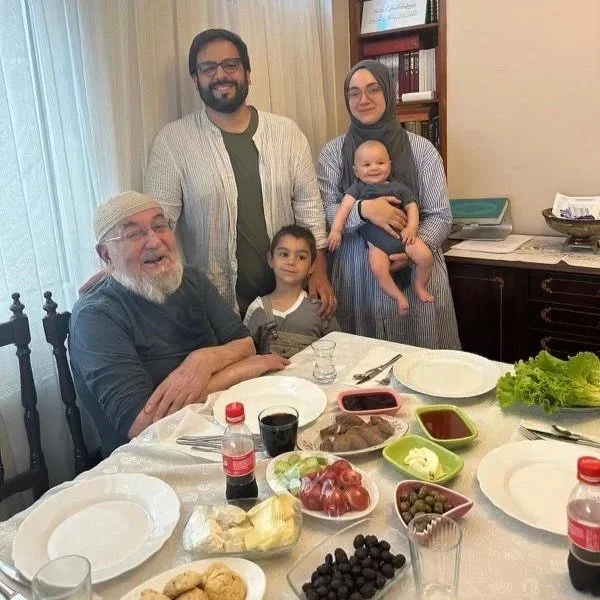
Ahmet Tekelioglu (top left) shares a dinner in Izmir, Turkey in 2024 with his wife Hena Cebeci, their sons Yusuf (1) and Mehmet (6) and his great-uncle Ahmet Satoglu. Photo courtesy of Ahmet Tekelioglu
Tekelioglu recalls speaking at a large cultural event in West Philadelphia where many speeches were delivered in both Bengali and English, but the keynote was presented only in Bengali. He questioned whether the younger attendees, many of whom were in elementary and middle school, could follow along, or felt comfortable enough to say they didn’t.
Similar questions arise in religious spaces. Some congregations continue Arabic-only sermons to preserve tradition, while others have adopted English to better engage younger generations. These choices reflect ongoing debates over how language, faith and identity should be negotiated within increasingly diverse, multigenerational communities.
“For children, however, especially those born in the U.S., the pressure to fit in can lead to discomfort with language and identity, especially when teachers or peers mispronounce their names, or when their accents are perceived as ‘different.’”
Maintaining heritage language fluency is not only a personal effort but also a community challenge, Tekelioglu says. Limited language programming in schools and mosques means families often bear of the burden alone. That’s where Bilingual Counseling Assistants, or BCAs, become vital. These school-based staff members support students and families by bridging language and cultural gaps.
Margarita Abuawadeh works for the School District of Philadelphia as a BCA at Academy at Palumbo and G.W. Childs Elementary School. A native Spanish speaker born and raised in the U.S., Abuawadeh also speaks Arabic, which she learned after converting to Islam and practicing with Palestinian community members, including her husband.
Abuawadeh helps nearly 450 families across both schools navigate enrollment, scholarships and cultural adjustment. She is the only bilingual Spanish-speaking counselor at the elementary school, where she supports close to 200 families two days a week.
At the high school, she works with about 257 families, whose children are more independent but still need help with tasks like applying for scholarships, college decisions and using the parent portal, which Abuawadeh says many parents struggle with. She also sponsors the Hispanics y Latinos Unidos Club there.
“The biggest barrier [for families] is acclimating. At home, students speak one language and follow their culture. At school, they face a completely different culture and language,” she says.
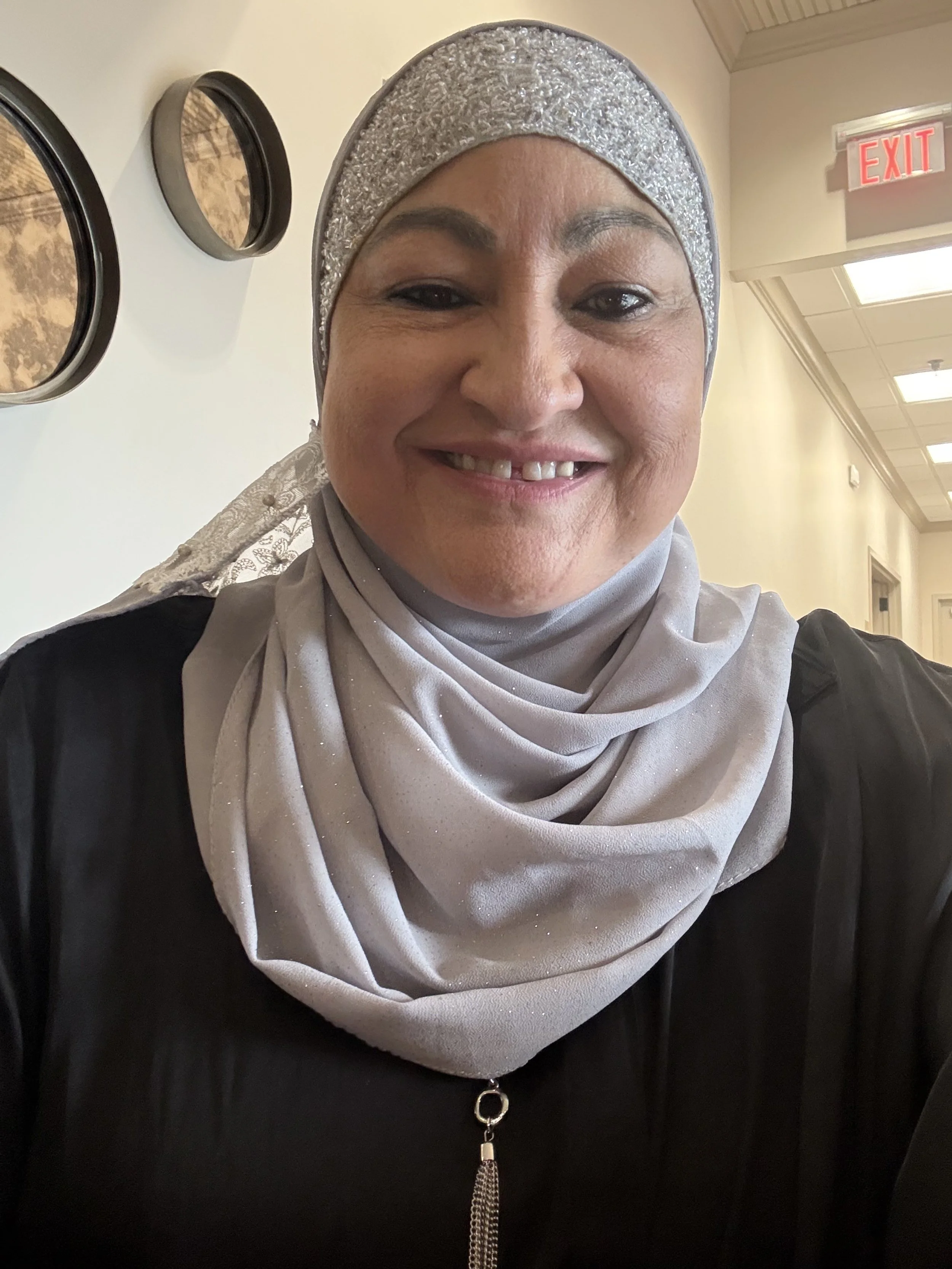
Margarita Abuawadeh, who is fluent in both Spanish and Arabic, works as a Bilingual Counseling Assistant, or BCA, for the School District of Philadelphia. Photo courtesy of Margarita Abuawadeh
According to Abuawadeh, Philadelphia is one of the few cities, along with New York and Chicago, where these services are available. She and other BCA’s offer their assistance as interpreters, cultural liaisons and educational guides. Schools also rely on services like the Language Line for phone interpretation and translation teams that help ensure key documents are accessible in Spanish, Chinese, Arabic and other commonly spoken languages.
But institutional resources only go so far when students are wrestling with internal identity conflicts, Abuawadeh says.
“We encourage students not to have to choose between speaking only English or only [their heritage language],” she says. “We try to help them embrace both and find pride in who they are and where they come from.”
“...Some mosques, school boards and even media outlets favor community members without an accent, suggesting an implicit bias toward assimilation and a greater comfort with dominant culture norms.”
Outside of school, families have fewer ways of ensuring that their children learn and retain heritage languages than they once might have. Traditional methods of language transmission, like extended visits to parents’ home countries, are less common today.
“In the past, families used to go back for a few years to learn the language and culture,” Abuawadeh says. “Now, most people visit briefly due to documentation issues and affordability.”
Regional instability can also be a deterrent to travel, particularly for Palestinian, Syrian and Sudanese families.
And while Tekelioglu finds taking his family to Turkey over the summers to be effective, short trips offer limited language immersion before children return to an English-dominant environment.
Both Tekelioglu and Abuawadeh see a stark contrast between how immigrant parents feel about their accents, names and cultural markers—and how their children do. Tekelioglu describes a friend who deliberately gave his kids names that are especially hard to pronounce in English, wanting them to “struggle and grow” through the experience and value their heritage.
For children, however, especially those born in the U.S., the pressure to fit in can lead to discomfort with language and identity, especially when teachers or peers mispronounce their names, or when they speak with accents.
For many first-generation youth, the issue isn’t just which language is spoken. Tekelioglu has observed a post–9/11 emphasis on sounding ‘native’ as a marker of Americanness within Muslim communities. He says that some mosques, school boards and even media outlets favor community members without an accent, suggesting an implicit bias toward assimilation and a greater comfort with dominant culture norms.
Even decisions about who leads prayer or speaks at public forums can be influenced by a person’s pronunciation.
“It’s not always just about what is said,” Tekelioglu says, “but how it’s said.”
This dynamic can affect how youth relate to their parents. A word like “bullying” may not have a direct translation in Turkish, for instance, creating a communication gap. When students experience conflict at school, they may hesitate to tell parents who lack both the vocabulary and the institutional familiarity to intervene effectively.
Still, Tekelioglu sees hope in the conversations families are having. “There’s more awareness now,” he says. “More people asking: ‘How do we do this better?’”
Abuawadeh is also optimistic. “We try to plant the seed early. Language is not just about speaking; it’s about connection. And that connection matters.”
***
Gawhara Abou-eid is an Egyptian-American researcher and journalist from Lewisburg, PA and an Al-Bustan News media fellow. They hold a BA in International Relations from The George Washington University, with a concentration in International Security Policy. Gawhara has published research for the League of Arab States in Cairo, and their journalism has appeared in The Standard Journal and The News-Item.

Al-Bustan News is made possible by a grant from Independence Public Media Foundation.