
Threads of Identity: Keeping Clothing Traditions Alive in a Fast Fashion World
By Ragad Ahmad
May 7, 2025
When Yara Shobut wears her fasha—a traditional Circassian woman's dress—to attend campus events, she engages in an act far more significant than selecting an outfit. For Shobut, a 19-year-old Circassian Syrian student at Swarthmore College, as for many Middle Eastern and North African (MENA) women across Philadelphia, cultural garments serve not merely as clothing but as living threads connecting them to their ancestral heritage.
According to estimates by the Arab American Institute, 3.7 million Americans claim MENA ancestry, representing one of the fastest-growing diasporic communities worldwide. Yet despite their numbers, the pressure to blend in can weigh heavily on these communities, often transforming cultural expression from a source of pride into something taboo or even dangerous.
Wearing outfits that signal one’s cultural background can become particularly challenging during periods when xenophobia and Islamophobia surge, as they did during the “War on Terror” and, more recently, since October 7, 2024. Brown University reports that between 2000 and 2009, anti-Muslim hate crimes grew by 500%. And between January 2024 and June 2024 alone, reported anti-Arab and anti-Muslim hate in America increased by 69%, according to the Council on American Islamic Relations (CAIR).
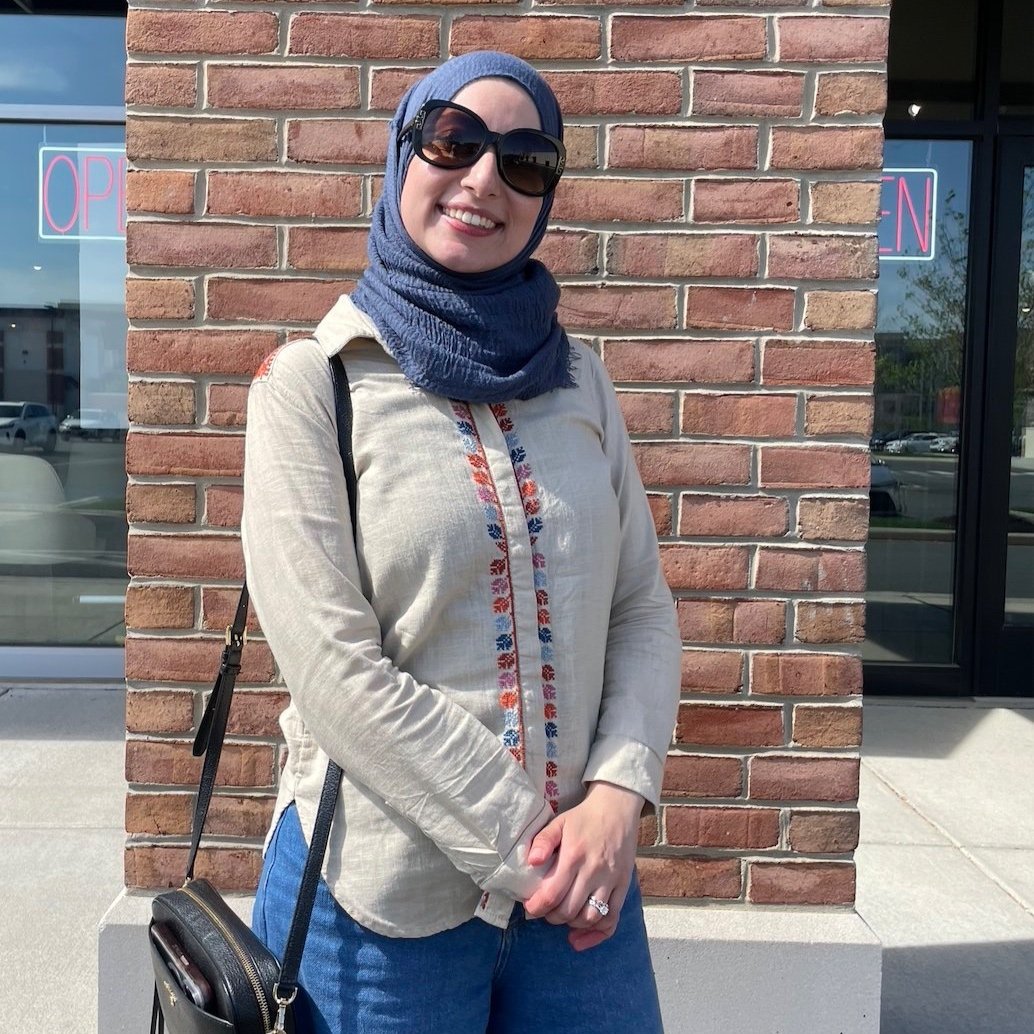
Dr. Afnan Albahri wears clothing that features tatreez, a traditional Palestinian style of embroidery. Photo courtesy of Afnan Albahri
For Philadelphia-based Palestinian American pediatrician Dr. Afnan Albahri, 33, these periods of heightened political and social tension directly influence the cultural visibility that she practices. "As the genocide in Gaza was first unfolding, I would avoid talking about my identity, because I didn't know what spaces were safe for me to be Palestinian," she said. But dressing in Palestinian clothing, particularly items that feature the traditional embroidery called tatreez, has enabled Albahri to engage in conversations about her identity.
"Wearing a tatreez blouse allows me to talk about my heritage without immediately being silenced, the way I would if I spoke about the genocide," she said.
27-year-old Kenza Bousseloub also turns to clothing as an avenue for expression. An Amazigh Algerian freelance filmmaker based in Philadelphia, Bousseloub has been incorporating cultural elements into her day-to-day outfits since her teenage years, often using eyeliner to draw traditional Amazigh tattoos on her face. Amazigh clothing features vibrant colors and natural elements, incorporating distinctive symbols that connect wearers like Bousseloub to their Indigenous identity. Participating in these practices also provides Bousseloub with a way to fight cultural erasure in the U.S.
"My grandfather was a martyr and resistance fighter in Algeria, and wearing my Amazigh face tattoos out is my own form of resistance," she said. "Some days it’s very bold, and other days it's quiet and something I do for myself."
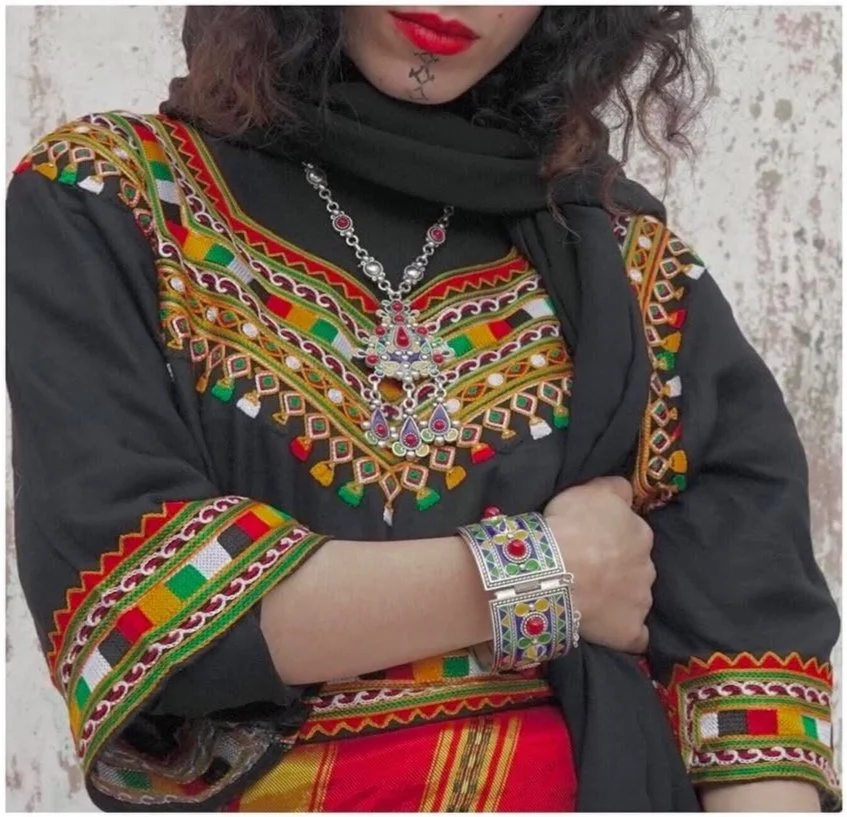
Kenza Bousseloub’s kaftan, jewelry and facial tattoos help her feel connected to her Amazigh Algerian heritage. Photo: Kenza Bousseloub
Yara Shobut also sees clothing as a crucial anchor to her people’s traditions, which survive despite a 19th-century genocide by the Russian army and mass displacement. Shobut's fashas—decorated with intricate iconography like swords in the chest panel—serve as an archive of the Circassian people's history of resistance. "Circassian clothing keeps us tethered to our identity,” she said.
“We don't have that privilege with other components of our culture, like the language that has been slowly dying over generations.”
Like Circassian symbols, Palestinian tatreez patterns, which vary from region to region, hold deep cultural and historical significance. The cypress tree that commonly adorns women’s thobs—a type of traditional Palestinian dress—evokes the landscape in Palestine, as well as determination and resilience.
But despite demand, finding authentic cultural garments in Philadelphia can be difficult. According to Shobut, diaspora Circassians must often ask their relatives to ship traditional clothing to them. And Amazigh clothing is impossible to find locally, Bousseloub said. "When I go home to Algeria, I try to buy as many pieces as I can to bring back to America.”
Occasionally, this scarcity creates opportunities for creativity: Shobut’s mother hot-presses vinyl patches, designed to replicate Circassian chest panels, onto hoodies for her children. Albahri has observed how Palestinian fashions have evolved and modernized, which has made incorporating cultural elements into her everyday life in the U.S. more feasible. "Tatreez has become fashionable with time,” she said. “Growing up, it was only on thobs, but now there are tatreez blouses and skirts." For Bousseloub, adapting traditional practices to fit her life includes going out while wearing the kardoon—an Amazigh protective hairstyle typically worn at home.
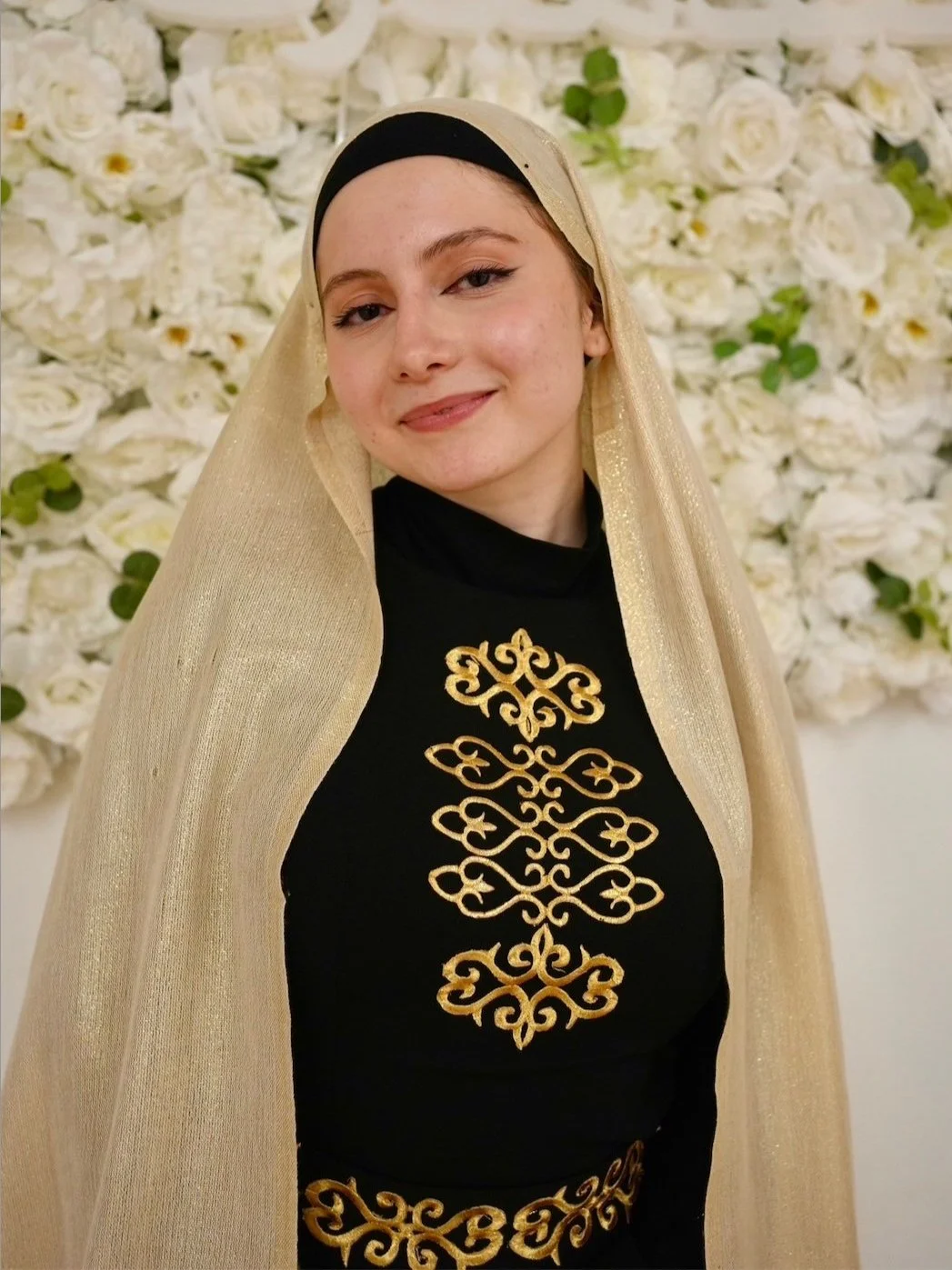
Yara Shobut attended an Eid banquet at Swarthmore College wearing a fasha, the traditional dress of Circassian women. Photo courtesy of Yara Shobut
Shifts like these allow MENA diaspora women to more easily navigate their multiple cultural identities. Still, the modernization of cultural garments raises questions for all three women about who produces and profits from traditional practices. Corporate skincare brands, for example, now sell blue nila powder, a staple of Amazigh skincare for centuries, without crediting Amazigh women for its historical development and use. So Bousseloub takes a careful approach to purchasing cultural items. "I am very intentional about the Amazigh and Algerian clothing and accessories I wear and do a lot of research before buying anything,” she said. “People often exploit Amazigh culture for their benefit, and that is not something I can comfortably engage with."
Albahri is similarly wary of the commercialization and cultural appropriation that can result from modernizing traditional clothing. The popularity of keffiyehs has led to their mass production by non-Palestinian manufacturers, depriving Palestinian artisans of their livelihood and divorcing the garment from its cultural significance. Accessibility, Albahri said, “should not come at the expense of Palestinians and their culture.”
The practical challenges of finding ethical cultural garments aside, Albahri professed an unwavering commitment to wearing traditional fashions, saying, "I'm letting go of my summer dresses and sticking with my thobs."
***
Ragad Ahmad is a Palestinian-American Muslim born and raised in Philadelphia. She currently studies Peace and Conflict Studies at Swarthmore College, where she explores issues of decolonization and climate justice.