
The Mirage of Freedom: Reflecting on Elia Suleiman’s “It Must Be Heaven”
By Ragad Ahmad
May 15, 2025
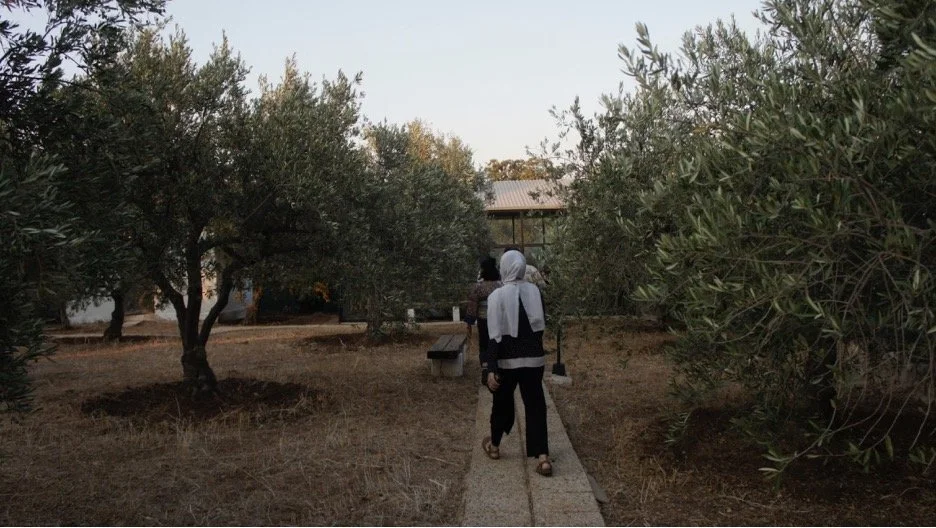
A young Palestinian woman walking in a grove of olive trees. Photo: Ragad Ahmad
After sixteen years of absence, I found myself standing at the threshold of my ancestral homeland last summer. Many questioned my decision to return to Palestine amid escalated assaults on the West Bank, but after being away for so long, I could no longer ignore the calls of the red poppies. At 20 years old, with only faint childhood memories of Palestine, I crossed the border from Jordan into a reality that had existed primarily in family stories. What transpired over those summer days would fundamentally alter my understanding not only of Palestine but also of American "freedom" as I had experienced it.
In Elia Suleiman's masterful 2019 film “It Must Be Heaven,” we witness a journey that inverts my own—his protagonist leaves Nazareth for Paris and then New York, chasing what we Palestinians have been conditioned to believe is a better life. Through his deadpan observation of Western societies, Suleiman exposes the painful truth that resonated so deeply with me upon my return to America: the lands of liberation that Palestinians often flee to are merely facades, elaborate stage sets where freedom and opportunity exist as performances rather than realities.
Growing up Palestinian in the United States, I was raised on a steady diet of American exceptionalism. My schools, media and surrounding culture reinforced the narrative that I was fortunate to live in “The Land of the Free,” where opportunity awaited anyone willing to work for it. I believed this narrative wholeheartedly. After all, wasn't America better than the checkpoints, the occupation and the hardships that my relatives in Palestine endured? Wasn't I lucky to have escaped that fate?

The apartheid wall separating the West Bank from ‘48 Palestine. Photo: Ragad Ahmad
My first week in Palestine shattered these certainties. Walking through my family's hometown, navigating checkpoints where soldiers younger than me wielded enormous power, witnessing the daily indignities of occupation, I expected to feel pity, perhaps even relief, that this wasn't my reality. Instead, I felt an unexpected and overwhelming sense of belonging that I had never experienced before.
In one particular moment that has stayed with me, I sat with distant relatives on their rooftop overlooking Qalandiya checkpoint, watching Palestinian cars waiting to be permitted to move in a line that stretched beyond the horizon. I expressed my frustration at the countless hours wasted at these checkpoints. "What else are we to do?" my cousin asked, offering me coffee with a smile that carried no self-pity.
This resilience mirrors what Suleiman portrays in his film, which begins in Nazareth. There, despite evident hardships, an unmistakable sense of community and mutual support prevails. In one scene, Suleiman interacts with his elderly neighbor who shares a parable about a snake he saved from an eagle. The snake later returned the favor by inflating his flat tire, a beautiful metaphor for how Palestinians sustain each other under occupation.
This resonated profoundly with what I witnessed daily in Palestine: village folks who visited on my first day despite my having no recollection of them; cousins who left their homes for two weeks to stay with me in my childhood house; the collective care that permeated daily interactions. After years of American individualism, where success is measured by self-sufficiency and connections often feel transactional, the interdependence I found in Palestine felt like rediscovering a language I had forgotten I knew.
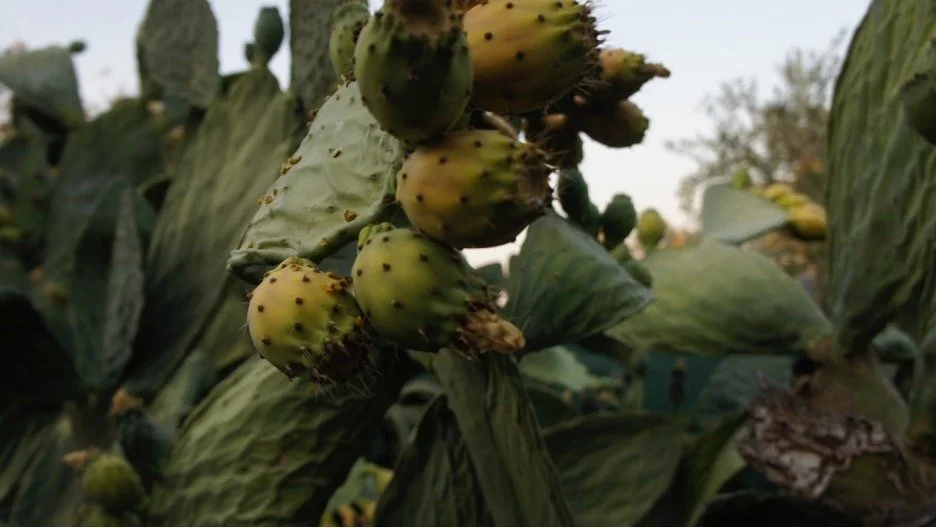
A grove of cacti in the hills of Ramallah in Palestine. Photo: Ragad Ahmad
Before departing Palestine in the film, Suleiman visits a grove of cacti and olive trees—symbols that pierced my heart with recognition during my own journey. Cacti hold a particularly profound significance in Palestinian consciousness because they can thrive under harsh conditions without agricultural care; they have survived ethnic cleansing campaigns and remain as steadfast markers of where Palestinians once lived. They function as a living archive of Palestinian existence: no matter where Palestinians are displaced or how long they are gone, the cacti will always be there when they return, bearing silent witness to our history and right to the land.
Among the cacti and olive groves, Suleiman witnesses a Bedouin woman in her traditional thob. The peacefulness of the scene is interrupted when he passes a car with two Israeli Occupation Forces (IOF) soldiers admiring themselves in the front seats as a Palestinian woman is sitting tied and blindfolded in the back. The reality of the military occupation of Palestine weighs heavily on Suleiman and me alike.
The film's transition to France initially presents a stark contrast. The streets of Paris seem to embody freedom—women dressed as they please, people smiling, a sense of ease in the air. Yet, as Suleiman's stay extends, this facade crumbles. With each passing scene, the military presence intensifies, culminating in a parade that transforms the city into a militarized zone not unlike the occupied territories he left behind.
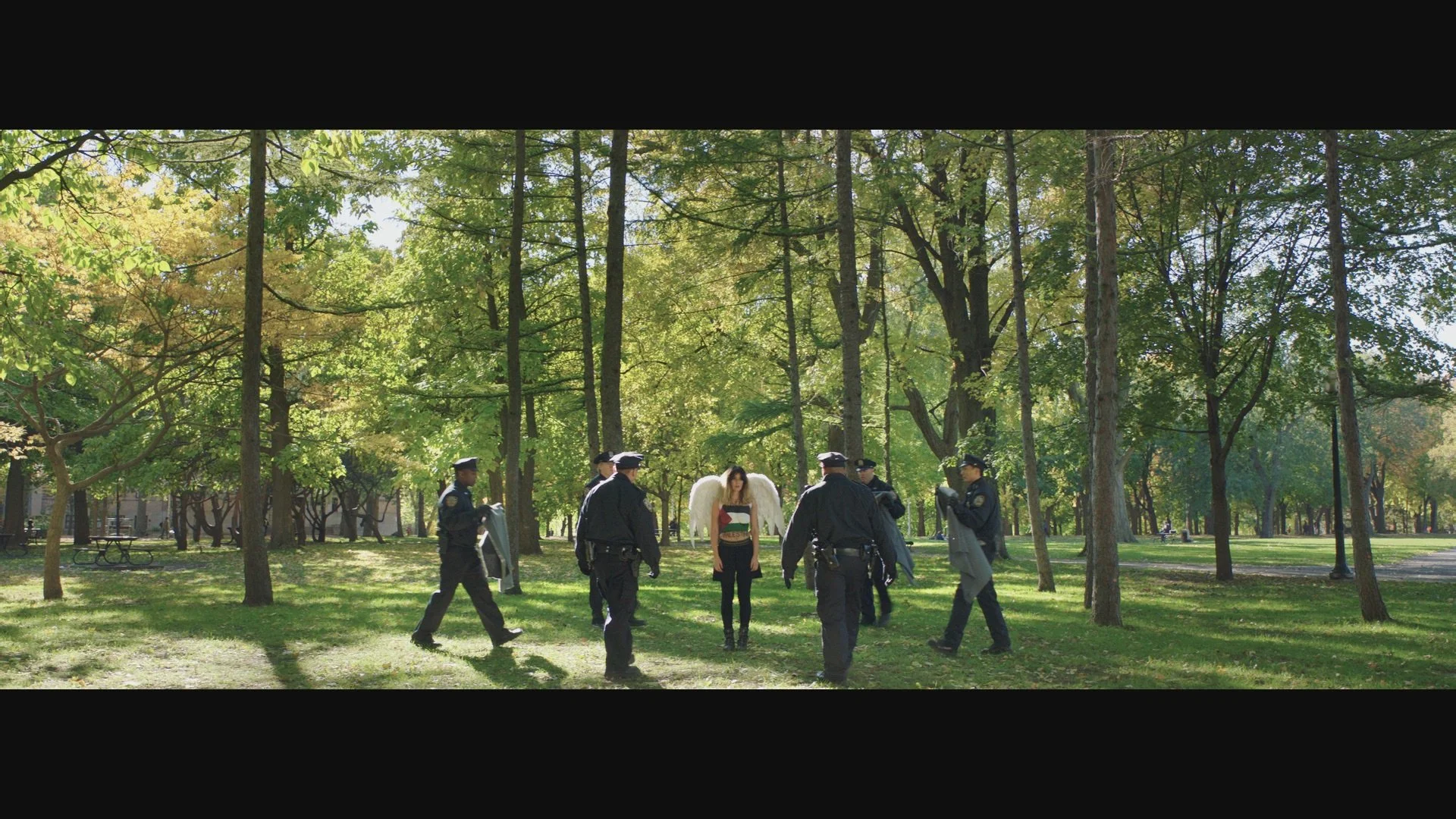
A still from Elia Suleiman’s “It Must Be Heaven”
When Suleiman reaches America, it is revealed through his eyes as an elaborate illusion. In a particularly poignant scene, his taxi driver exclaims with surprise at meeting a Palestinian, as if we are mythical creatures rather than a people with a homeland and history. This moment echoed countless interactions from my own life growing up in America, where my identity was treated as either obscure or controversial, never simply a fact of my existence. I had learned to modulate myself, to explain and justify my presence in spaces where "Palestinian" was either unknown or automatically associated with terrorism. I practiced the exhausting art of making myself palatable, of being the "good" kind of Palestinian who didn't make Americans uncomfortable with too much truth. Suleiman experiences this in the film as well—he is introduced as a Palestinian filmmaker who makes "comedies" (as opposed to political films) to make him acceptable to American film producers.
The words in the film that resonate most profoundly with me are spoken by Suleiman’s Arab friend in a bar: "Palestinians are weird because everyone else drinks to forget, but Palestinians drink to remember." This distinction captures the essence of what I discovered in myself during that transformative summer—that remembering, not forgetting, is our path to freedom.
In America, I had been encouraged to assimilate, to look forward rather than backward, to prioritize individual success over collective memory. In Palestine, I found people who understood that memory is resistance and that knowing where you come from is essential to knowing who you are. The Palestinians I met carried their history not as a burden but as a source of strength; their identity not as a political position but as a lived experience.
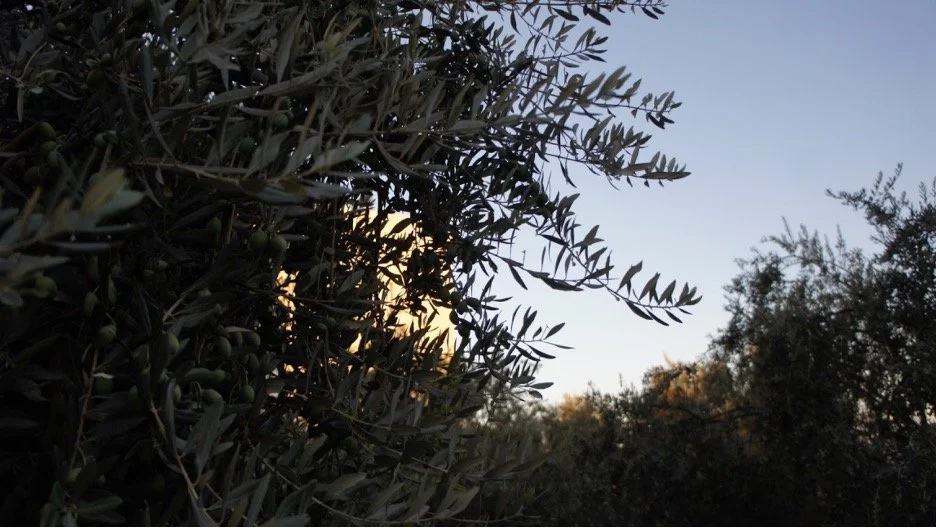
Olive branches in front of Ragad Ahmad’s childhood home in the West Bank. Photo: Ragad Ahmad
When Suleiman returns to Palestine, the lemon tree he planted before leaving has grown and bears fruit because his younger neighbor took care of his land while he was gone. Upon my return to America, the myth of American exceptionalism had lost its power over me. It was replaced by a deeper understanding of freedom: not the absence of constraints but the presence of authentic belonging.
In the end, perhaps freedom is not found in any particular place but in the courage to remain true to one's identity, to remember rather than forget, and to find humor and humanity even in the most absurd contradictions of our existence. This is the hope that Suleiman's film offers—not a false promise of liberty elsewhere, but the freedom that comes from a clear-eyed recognition of reality, the quiet dignity of persistent memory, and the profound joy of knowing where you truly belong.

This essay is presented in collaboration with cinéSPEAK. As independent platforms committed to elevating underrepresented voices and fostering nuanced dialogue, Al-Bustan News and cinéSPEAK Journal aim to highlight stories at the intersection of art, culture and social justice that resonate across communities in Philadelphia and beyond.
“It Must Be Heaven” is screening on Friday, May 23, 2025 in Clark Park as part of cinéSPEAK Under the Stars. Learn more and get free tickets.
***
Ragad Ahmad is a Palestinian American Muslim born and raised in Philadelphia. She currently studies Peace and Conflict Studies at Swarthmore College, where she explores issues of decolonization and climate justice.