
Cinema, Etcetera | Where is the Arab American Film Wave?
By Joseph Fahim
November 29, 2025
Amid the euphoria surrounding Zohran Mamdani’s historic win in New York City’s mayoral race, two details caught my attention: a renewed attention to the work of the mayor–elect’s mother, award–winning Indian filmmaker Mira Nair, and the release of “The Carpenter's Son,” the biblical-horror Hollywood flick starring Nicolas Cage and directed by Egyptian–born British–American filmmaker Lotfy Nathan.
For film aficionados, Nair’s fame preceded her son’s by multiple decades. Her Indian films — “Salaam Bombay!” (1988) and “Kama Sutra: A Tale of Love” (1996) — remain daring and fiercely progressive in their politics, while “Monsoon Wedding” (2001) is one of the masterpieces of the 21st century.
Less attention is paid to her American films. In “Mississippi Masala” (1991), “My Own Country” (1998), and “The Namesake” (2006), a trio of remarkable but undervalued works, Nair explored the evolving Indian–American experience over two generations with unassuming clarity and incisiveness.
By contrast, Lotfy Nathan has shown no interest in engaging with Arab Americanism in his budding oeuvre. His 2013 feature–documentary debut, “12 O’Clock Boys,” centered on the world of African American dirt–bike riders. His rise to fame came with “Harka” (2022), a scorching Tunisian thriller about a young man struggling to make ends meet that was inspired by the real–life story of street vendor Mohamed Bouazizi, whose desperate self-immolation sparked the Arab Spring.
The success of “Harka,” which earned the Best Actor award for French–Tunisian lead actor Adam Bessa at Cannes’ Un Certain Regard sidebar, attracted Hollywood for his next film, a deformed mismatch of horror, folk, and coming-of-age tropes that ranks among the worst pictures I’ve seen this year. With scores to date of 3.9/10 on IMDb and 35% on Rotten Tomatoes, “The Carpenter’s Son” is already shaping up to be a sizable bomb.
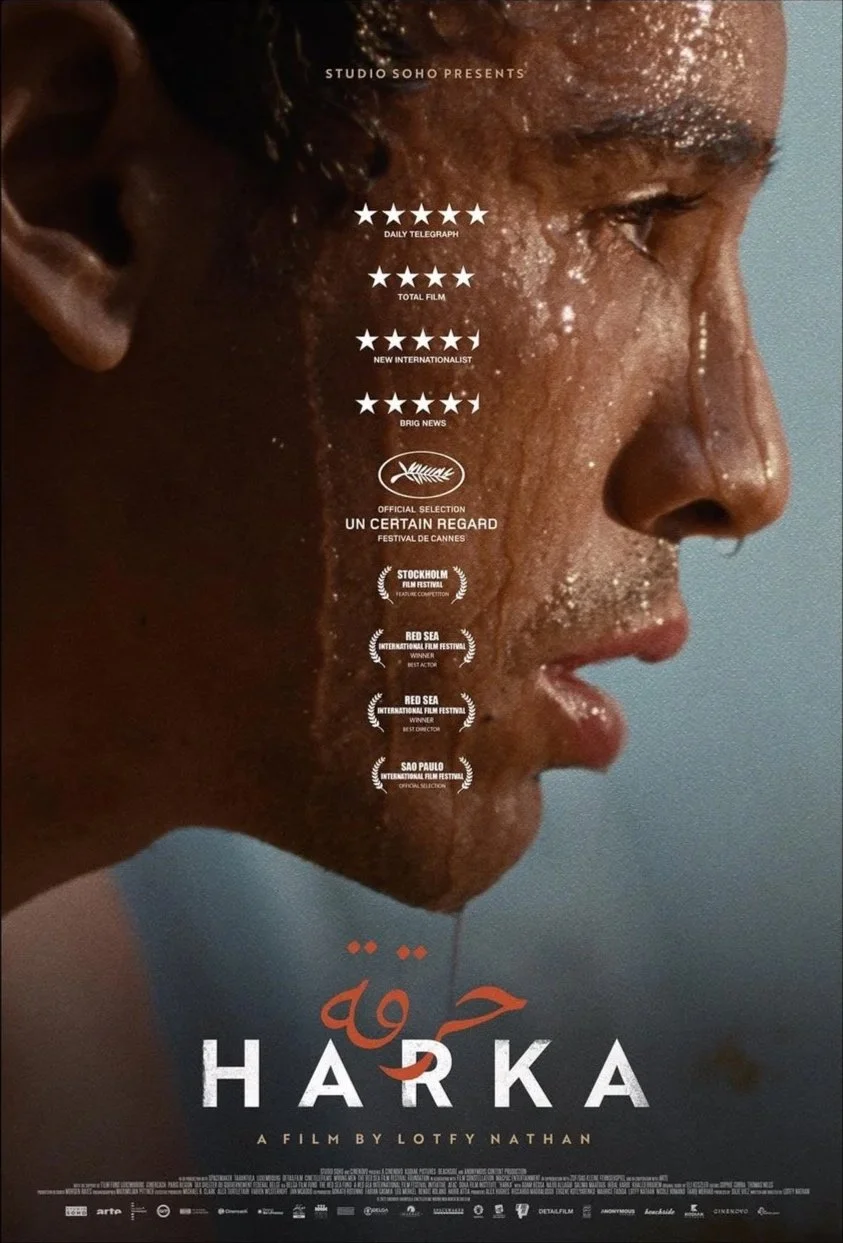
Egyptian–born filmmaker Lotfy Nathan followed the success of his scorching Tunisian thriller “Harka” (2022) with a Hollywood film that is a deformed match of horror, folk and coming–of–age tropes. Image: IMDB. ©Cinenovo.
An Arab Presence in Hollywood
The rediscovered work of Nair and the irrelevance of Nathan’s first foray into blockbuster filmmaking underline a glaring, seldom-discussed reality: unlike most major ethnic groups in the U.S., Arab Americans have failed to carve out a tangible cinematic wave.
Arab talents have had a noticeable and steadily growing presence in independent American cinema and Hollywood over several decades. Pioneering Syrian–American director/producer Moustapha Akkad was among the first Arab talents to storm Hollywood, thanks to his hugely successful slasher–film franchise “Halloween,” which debuted in 1978.
But the box–office success of "Halloween" did not encourage Akkad to examine his experience as a first–generation Arab American in the 1950s and ’60s; nor did it prompt him to nurture Arab talent in Hollywood. Instead, Akkad’s Hollywood career was comprised solely of the "Halloween" films alongside a couple of forgettable genre efforts. The two stodgy Arab–themed epics he directed — "The Message" (1976), about the life and times of Prophet Muhammad, and "Lion of the Desert" (1981), which revolved around the 1929 Libyan resistance against Italian colonialism — were produced outside the Hollywood system and financed by Muammar Gaddafi’s Libyan government at the time.
A number of Arab producers followed Akkad’s footsteps, all largely focusing on mainstream Hollywood movies. The two names that stand out are Lebanese–American Mario Kassar (whose films include the “Rambo” franchise, "Total Recall," "Terminator 2" and "Basic Instinct") and Tunisian Tarak Ben Ammar ("Jesus of Nazareth," "The Equalizer 3," "Caught Stealing").
There has been no shortage of Arab American actors either, especially in this century. Omar Sharif’s well–documented gambling addiction and poor choices robbed him of the power to fashion projects that may have advanced the image of Arabs in Hollywood. A number of Arab stars emerged in subsequent decades, most notably the Lebanese–American Tony Shalhoub, who earned the Golden Globe in 2003 for the hit comedy "Monk," along with four Primetime Emmys split between "Monk" and "The Marvelous Mrs. Maisel.”
Then came Egyptian–American Rami Malek, who made history by becoming the first Arab American to earn the Best Actor Oscar for his portrayal of Freddie Mercury in "Bohemian Rhapsody" (2018). Apart from the occasional acknowledgment of his Egyptian background, Malek has never engaged with Arab culture in his work either, choosing instead to take on roles uninformed by his ethnic background.
Egyptian–Canadian Mena Massoud became an overnight sensation when he landed the titular role in Disney’s billion–dollar–grossing "Aladdin" (2019), but unlike Malek he struggled to land high–profile roles in subsequent years.
It wasn’t until 2020 that the first bona fide Arab American screen narrative materialized in the shape of "Ramy," Egyptian–American Ramy Youssef’s groundbreaking Hulu series that charted the spiritual, cultural and political travails of the comedian’s second–generation Arab American alter ego. “Ramy” explored different facets of the Arab–American experience in a polished production with popular appeal. Palestinian–American Mo Amer, a supporting character in "Ramy," followed Youssef’s footsteps three years later with Netflix’s "Mo", the first Palestinian–themed series in American television that chronicled the Herculean efforts of the eponymous Palestinian immigrant in dealing with the American asylum system.
The new wave of Arab American storytelling has not extended to the movies, however. And judging by the economics of the current film landscape, one senses that the moment may have passed.
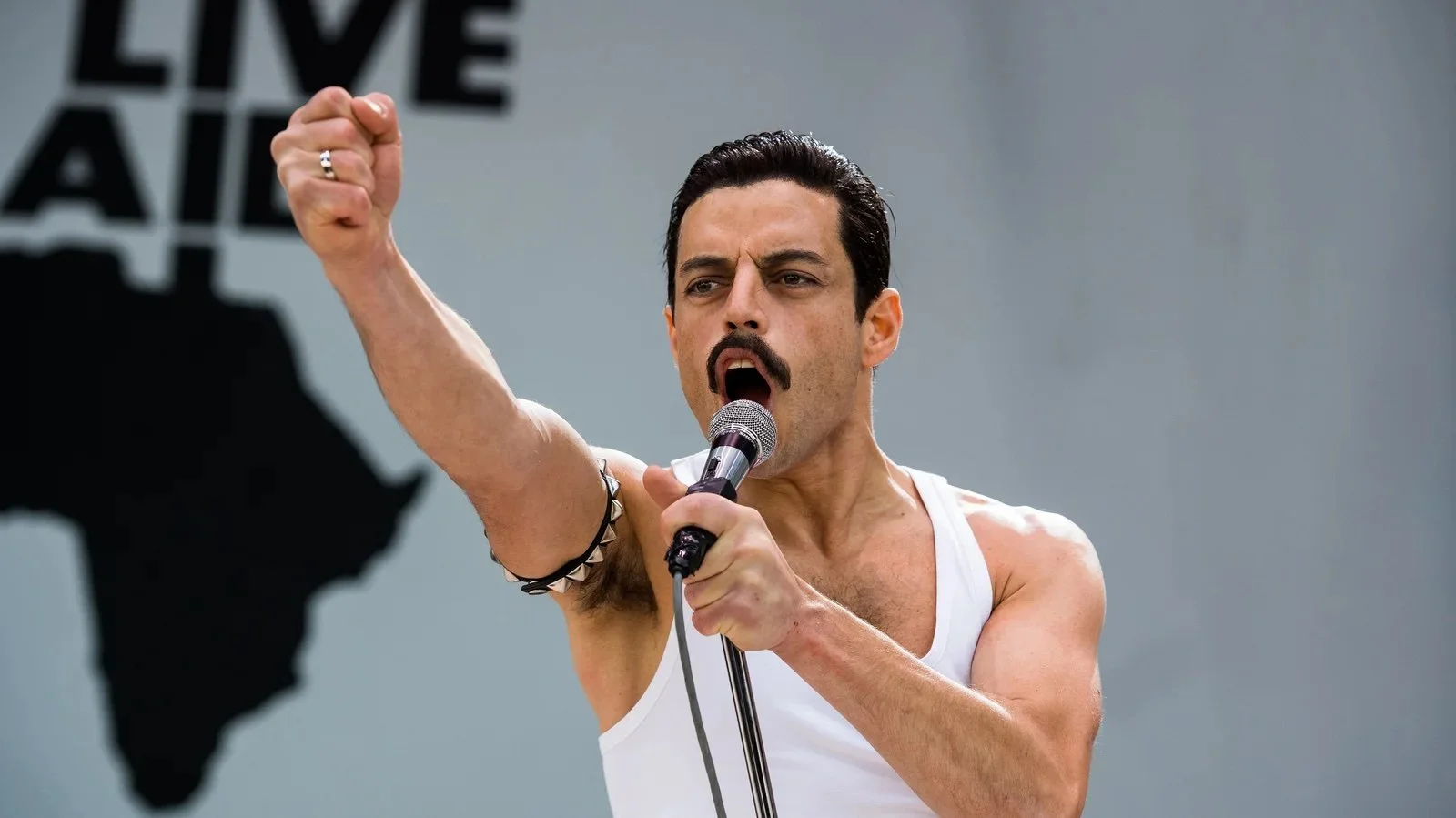
Egyptian–American Rami Malek made history by becoming the first Arab American to earn the Best Actor Oscar for his portrayal of Freddie Mercury in "Bohemian Rhapsody" (2018). Image: Alex Bailey/20th Century Fox
Various ethnic minorities have succeeded in conjuring up film movements that have left indelible marks on the course of American cinema. East Asian American filmmakers’ influential works include Wayne Wang ("Chan is Missing" in 1982 and "The Joy Luck Club" in 1993), Ang Lee ("The Wedding Banquet" in 1993 and "Eat Drink Man Woman" the following year) and Justin Lin’s 2002 crime drama "Better Luck Tomorrow," to name a few. In addition to Nair, the South Asian diaspora has produced Minhal Baig ("Hala," 2019), and Geeta Vasant Patel ("Meet the Patels," 2014).
Latine cinema features an even larger volume of works, from Gregory Nava’s "El Norte" (1983) to Julio Torres’s "Problemista" (2023). And African–born American filmmakers have produced remarkable works in the U.S., such as Andrew Dosunmu’s "Mother of George" (2013) and Ekwa Msangi’s "Farewell Amor” (2020).
By contrast, apart from a handful of dismal and largely forgotten attempts — "AmericanEast" (2008) and "The Citizen" (2012), for example — the sole notable film by an Arab American filmmaker over the past 30 years has been Palestinian–American Cherien Dabis’ "Amreeka," which premiered at Sundance in 2009. A comedy–drama about the trials and tribulations of a Christian–Palestinian family struggling to adapt to their new life in Illinois, Dabis’ debut has not aged well in either its derivative narrative or its lack of an aesthetic point of view. But it did represent a watershed moment at the time for Arab–Americans who seldom saw themselves on screen.
The film also proved to be a fluke. Arab American filmmakers have never ventured to form a community or explore the darker, more complex facets of their identity.
More American than Arab
The cornerstone of works by diaspora filmmakers is identity and alienation, and intricate community dynamics in relation to diverse American environments. In the scant body of work by Arab Americans, these issues have never surpassed an elementary examination, resulting in works lacking in depth and relevance.
As amiable and well-intentioned as "Ramy" and "Mo" are, they were still bogged down by the exasperatingly limited Sunni–Muslim–heterosexual–male gaze — a reflection of the preoccupations and visions of their creators –—that anchored their narratives. And their complete detachment from Arab film aesthetics rendered them indistinguishable from the American stories they strove to emulate.
This stuttering engagement with cultural and political identities in Arab American cinema is underlined by how Arabs in general regard and approach assimilation in the U.S. Assimilation varies according to a number of influences — among them class, education and religion — and it’s these thorny topics that most Arab American filmmakers seem to have shied away from, themes that have always been integral to African American films, for example.
But Arab American cinema has always been more American than Arab. It has failed to distill a wide–ranging Arab artistic heritage into an inimitable new language, opting instead to adopt worn–out formulas that ignore cultural specificities and prickly politics in favor of familiar storytelling. It is too safe, too rudimentary, too predictable to flower into a tangible movement with durable cultural impact.
Part of the issue has to do with the power dynamics of the American film industry and the reality of the market, which today demands simplified narratives populated with established archetypes grounded in a reality with which audiences can identify. But the authentic reality of the Arab American experience is too multifaceted, too convoluted, too untidy to compartmentalize into neat, clean Hollywood plots.
The Arab American filmmakers who were given space and resources to work within the system have opted to conform to these formulas instead of upending them, prioritizing representation alone. But a movement cannot thrive solely on representation. Youssef’s last TV project, the animated series “#1 Happy Family USA” — about coming of age in the aftermath of 9/11 — did offer a pathos and richness missing from other similar works. Still, there’s nothing on the horizon indicating that the Amazon–produced endeavor heralds more forward–looking projects.
Gaza may have unified Arab–American filmmakers over the past couple of years, but mirroring the reality of the region, the lack of organized partnership, structured frameworks and disagreement on how and which facets of the Arab American experience should be presented on screen continue to hinder more fruitful collaborations.
Enduring art is not afraid to offend, to challenge, to look and sound different from the conventional. Unless Arab American filmmakers decide to take risks, carve out a new aesthetic identity and defy the dominant American influence, Arab American cinema may never materialize.
***
Joseph Fahim is a film critic, curator and lecturer. Currently Al-Bustan’s film curator, he has curated for and lectured at film festivals, universities and art institutions in the Middle East, Europe and North America. He also works as a script consultant for various film funds and production companies; has co-authored several books on Arab cinema; and has contributed to news outlets, including Middle East Eye, Middle East Institute, Al-Monitor and Al Jazeera. In addition, his writing can be found on such platforms and publications as MUBI’s Notebook, Sight & Sound, The Criterion Collection, British Film Institute and BBC Culture. His writings have been translated into eight different languages.

Al-Bustan News is made possible by a grant from Independence Public Media Foundation.