
Cinema, Etcetera | My Six Hopes for Arab Cinema in 2026
By Joseph Fahim
January 16, 2026
It is the best of times; it is the worst of times. For Arab cinema, Charles Dickens’ famous opening lines neatly capture the annual condition of a film culture shaped by uncertainty and political whim. Censorship remains firmly in place to varying degrees across the region; European funding continues to be provisional; and perpetual political turmoil sustains global interest in Arab stories, though often for the wrong reasons.
Yet despite these largely static conditions, remarkable work continues to be made and released, defying expectations and routinely charting unfamiliar terrain.
A new year brings fresh surprises and inevitable frustrations. As always, it is impossible to predict how Arab films will fare over the next twelve months. Still, January’s ritual optimism invites reflection, so here are my six hopes for Arab cinema in 2026.
More Genre Films
Some of the most exciting Arab films in recent years have embraced genre: Algeria’s “Roqia” (horror), Palestine’s “Coyotes” and Tunisia’s “Ashkal” (thrillers), Morocco’s “The Unknown Saint” and “Animalia” (comedy and science fiction, respectively), and the Egyptian film “East of Noon” (a musical). These works stand in contrast to the social realism that continues to dominate and define Arab cinema in the U.S. imagination.
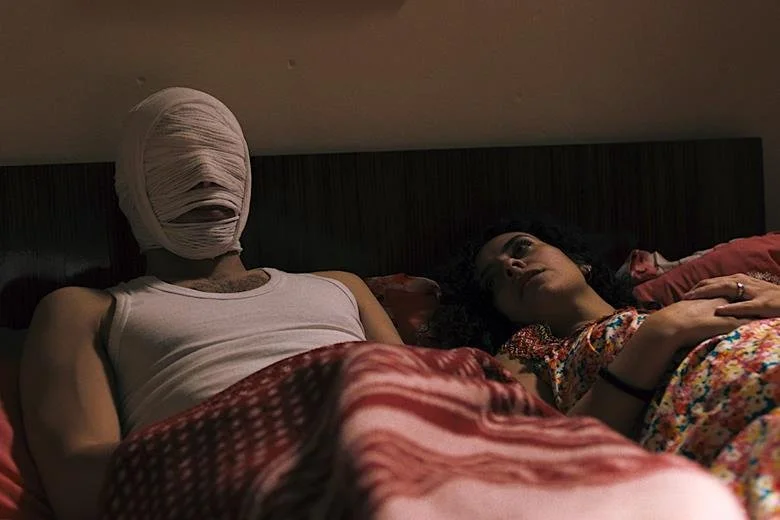
Algerian horror film “Roqia” (2025), written and directed by Yanis Koussim. ©Supernove Films/19 Mulholland Drive Production
Genre serves a dual purpose: it offers ways around censorship by allowing filmmakers to conceal political criticism in allegory, while injecting urgency, imagination and new dimensions into familiar themes. Yet many filmmakers remain hesitant, either intimidated by genre films’ technical demands or wary of marginalization in an international market that remains largely hostile to Arab films that deviate from realism.
But for Arab films to endure and travel, innovations in form and storytelling are essential, and genre provides precisely that space, opening up expansive possibilities for filmmakers seeking freedom beyond the confines of conventional drama.
More Accountability
As the saying goes, nobody gets cancelled in the Arab world. Arab cinema has yet to experience its own #MeToo reckoning. While some women have spoken out about misconduct on film and television sets, many remain silent out of fear of professional retaliation. The recent testimony by an actress involved in an Egyptian short film is yet another reminder that sexual harassment is routinely swept under the rug.
Nor is exploitation in Arab cinema limited to sexual abuse. Grants are embezzled, subject matter is manipulated, hate speech goes unpunished. Few industry professionals are ever held accountable, and those who are tend to face insufficient consequences, so the transgressions persist.
For a healthier, safer, and more ethically grounded industry to emerge, accountability must become the norm rather than the exception.

2023 Moroccan science fiction film “Animalia,” directed by Sofia Alaoui. ©Wrong Films/Srab Films
Less ‘Misery Porn’
Another form of exploitation is the prevalence of ‘pain voyeurism’ in the region’s independent cinema. Narratives of suffering—war-stricken children, refugees, terrorism, migration and patriarchal brutality—have become staples for filmmakers seeking international attention.
But polished cinematography and stylized visuals cannot mask the opportunism of a cinema seeking approval from Western institutions. These films’ political gestures ring hollow given the lack of nuance and context. The problem is not the subject matter itself but the heavy-handed tone and manufactured sentimentality that reduce complex realities to spectacles of suffering.
Festivals enthusiastically screen these exoticized, one-dimensional portrayals of Arab life that affirm rather than challenge Western expectations. So-called misery porn will persist as long as there is an appetite for it, but the tired trend is becoming increasingly regressive, reinforcing a cycle of stigma that Arab cinema struggles to escape.
More Innovative Distribution
Beyond a small number of Cannes–Award winners and Palestine–related titles, most Arab films continue to struggle for meaningful international distribution, particularly in the U.S., where theatrical revenues for foreign–language cinema have been declining for years.
The success of the Palestinian–owned Watermelon Pictures, the independent production and distribution company behind such recent films as “From Ground Zero” and “Palestine ‘36”, demonstrates that there are sizable and under–served audiences for Arab cinema that most distributors either overlook or fail to engage.
Watermelon’s launch of a Palestinian streaming platform also illustrates the potential of alternative distribution models outside filmmakers’ home countries. The U.S. is far from the only market with potential: Arab films released in parts of Europe and Latin America have similarly benefited from this model of concentrated community–driven efforts. While a theatrical release remains the premium mode for watching movies, it is no longer the only one. University screenings, galleries, cultural organizations and film clubs are introducing Arab cinema to new and diverse audiences.
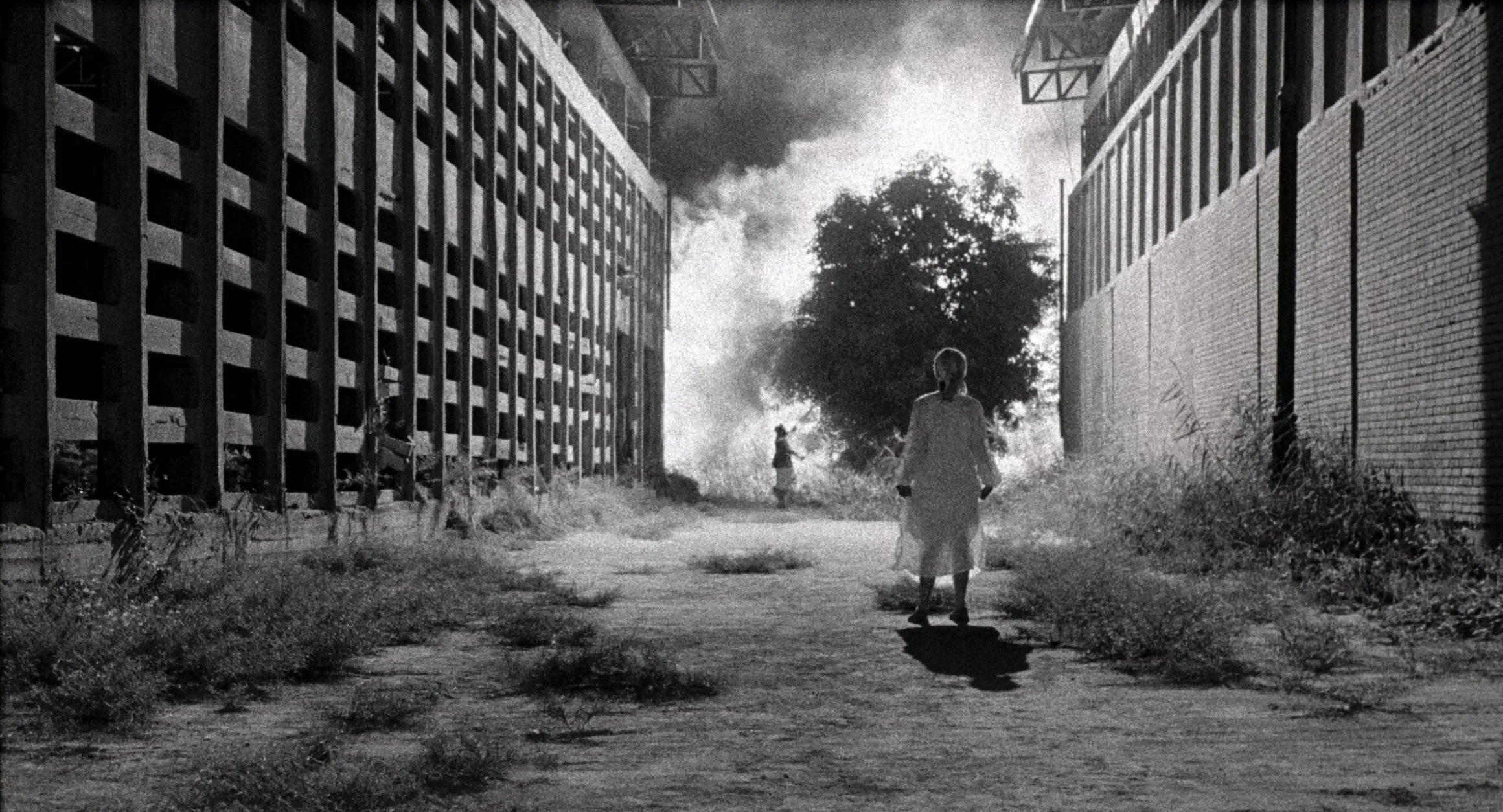
Egyptian filmmaker Hala Elkoussy’s musical “East of Noon” (2025). ©VRIZA/Nu’ta Films/seriousFilm
Specialized streaming platforms, such as Criterion and Mubi, are helping subscribers discover cinemas they might otherwise never encounter. But the dominance of Netflix and the overcrowded streaming landscape will continue to pose grave challenges for wider distribution of Arab films. Innovation in distribution is thus more urgent than ever for the survival and growth of Arab cinema.
More Honest Critique
One of the most dispiriting trends in recent years has been the uncritical cheerleading of unworthy Arab films. Well–meaning advocacy for underrepresented voices has led to many films being shielded from necessary critique. This has, in turn, contributed to the political bluntness and narrative oversimplification that plague much contemporary Arab cinema.
Not all Arab films are good. Not all deserve prominent festival slots or wide distribution. Not all are driven by noble intentions. And not all are victims of a racist distribution system. Cultural context matters; modes of production must be interrogated; and reception within the filmmakers’ home countries deserves closer attention. Without honest evaluation, Arab cinema cannot evolve.
Forget the Oscars
Arab cinema’s presence at the Academy Awards has been steadily growing — but largely for the wrong reasons. Too often, films are recognized for their political resonance rather than their artistic merit. This visibility has fostered the illusion that a film’s quality is the reason it receives recognition from the Academy. But the Academy’s membership now numbers over 10,000. And while its expansion has likely led to more diversity, it has also turned the nomination process into one defined by extensive and costly campaigning, especially in the Best International Film category where the identity of voters is largely unknown.
In reality, Oscar campaigns — which are increasingly cynical and unscrupulous — demand vast financial resources and relentless lobbying, luxuries most Arab filmmakers simply do not possess. And even when an Arab film does get nominated or win an Oscar, this rarely translates into wider distribution or increased viewership for Arab cinema. It may boost individual careers and offer networking opportunities, but its broader impact is minimal.
Over the past fifteen years, Arab cinema has earned ten Oscar nominations, yet these accolades have done little to improve visibility for or access to Arab films as a whole. Politically timely films continue to be sidelined in favor of nominees that tend to recycle themes and narratives.
What Arab cinema needs now is not decorative Oscar recognition, but sustained community engagement and inventive, grassroots marketing strategies.
The year may not have begun on the most promising note, but this is where art comes in: it restores the humanity of underprivileged groups and offers artists and communities a tool for resistance. And while things are far from perfect in Arab cinema, there are enough remarkable offerings to give us reason for optimism in the coming year.
***
Joseph Fahim is a film critic, curator and lecturer. Currently Al-Bustan’s film curator, he has curated for and lectured at film festivals, universities and art institutions in the Middle East, Europe and North America. He also works as a script consultant for various film funds and production companies; has co-authored several books on Arab cinema; and has contributed to news outlets, including Middle East Eye, Middle East Institute, Al-Monitor and Al Jazeera. In addition, his writing can be found on such platforms and publications as MUBI’s Notebook, Sight & Sound, The Criterion Collection, British Film Institute and BBC Culture. His writings have been translated into eight different languages.

Al-Bustan News is made possible by a grant from Independence Public Media Foundation.