
‘Palestine 36’ Reveals the Cruel Logic of Empire and the Limits of Endurance
By Gawhara Abou-eid
January 8, 2025
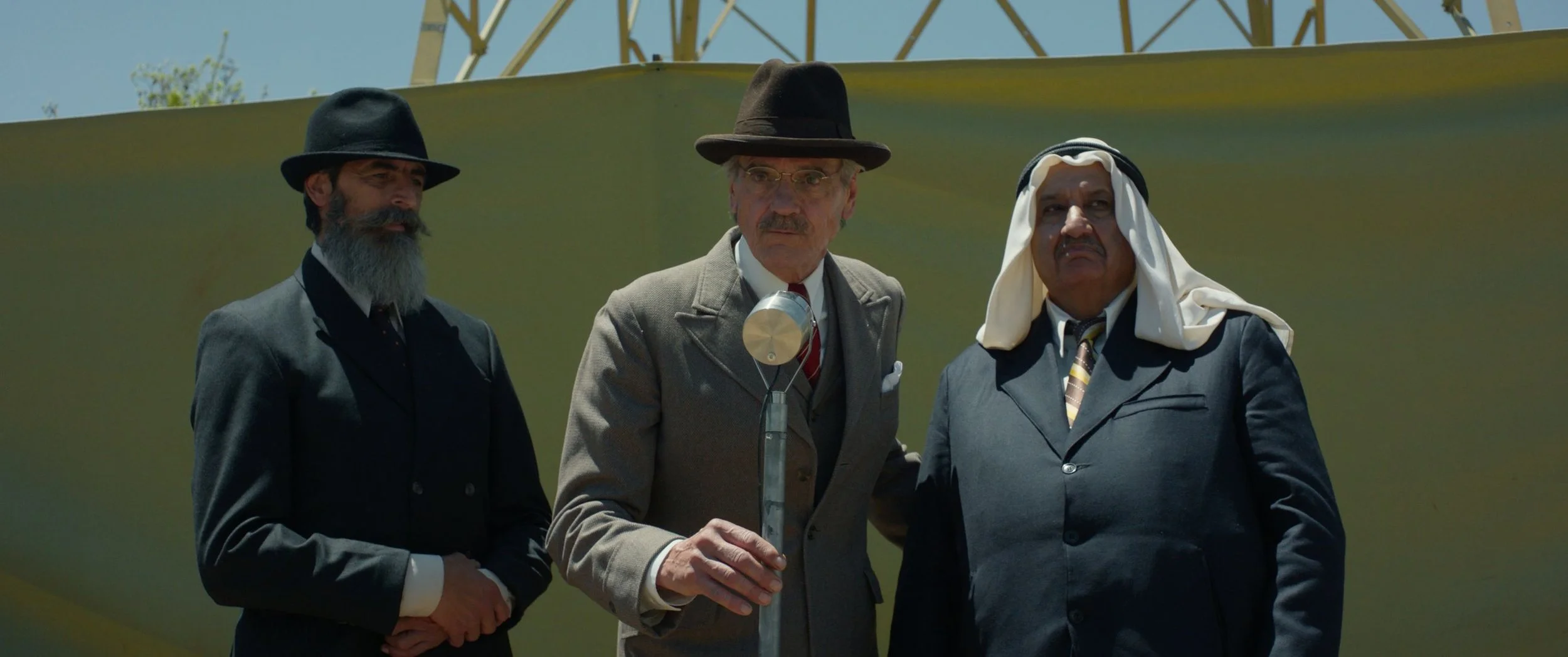
Still from “Palestine 36” (2025). Image: Watermelon Pictures
By the time “Palestine 36” ends, it becomes clear that this is not simply a film about the past. It is an excavation of the system that engineered the brutal occupation that Palestinians live with today.
Directed by Palestinian filmmaker Annemarie Jacir and set during the late–1930s Palestinian revolt against British colonial rule, the “Palestine 36” traces the tightening grip of empire through the lives of farmers, journalists, priests and laborers and their roles in the resistance. But what the film ultimately exposes is something far more insidious: how Palestinians were made to bear the moral burden of colonial guilt, and how endurance, rather than justice, was demanded of them as a substitute for freedom.
Filmed in Palestine and Jordan, the film situates viewers in a land alive with movement and contradiction from its opening scene: flourishing countryside disrupted by British combat vehicles and armed soldiers, and British broadcasting channels replacing Palestinian media. Authorities stop and search Palestinians, demand identification, ban protests, survey and redefine land possession.
At its core, the story follows farmers in Al-Basma, a fictional village near Jerusalem inhabited by Christians and Muslims, modeled on the historic Al-Bassa, the site of a British massacre in 1938. British officials insist that registration will ‘protect’ Palestinian farmers, even as land is transferred into settler hands, arguing that the Ottomans had left no reliable records.
Paper takes the place of memory. The physical evidence of an ancestral relationship to land — the terraces carved into hillsides over thousands of years, long histories of taxes paid, are dismissed as insufficient proof of ownership. Without British documentation, Palestinians are told, they have rights over the land.
The power of “Palestine 36” lies in how its characters embody various possible responses to colonial oppression. Yusuf, played by Karim Daoud Anaya, is a young man from the village who regularly travels into the city for work, moving from cautious neutrality to active resistance following the killing of his father and the imprisonment of his brother. Kareem (Ward Helou), the young son of a priest in the village, represents the limits of endurance and religious patience. He clings to faith and patience until the British murder his father.
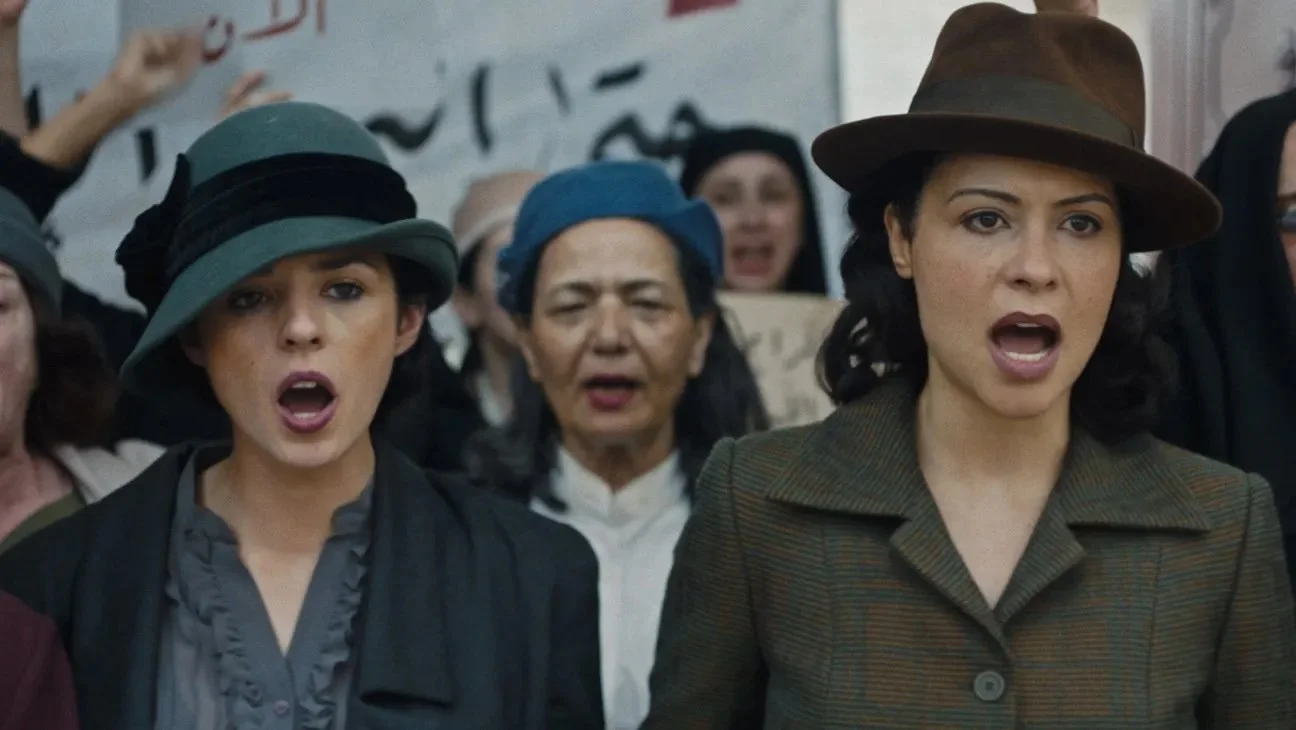
Image: Watermelon Pictures
The film’s female characters highlight the contributions of women to Palestinian political life. Khuloud (Yasmine Al Massri), the journalist at the heart of “Palestine 36,” is reminiscent of feminist organizers like Tarab Abdul Hadi (1910–1976), co–founder of the Palestine Arab Women’s Congress. Khuloud confronts the High Commissioner Wauchope (Jeremy Irons) following the revelation of British militant abuses in the countryside. Using a masculine pen name, she insists on documenting reality under colonial censorship.
Afra (Wardi Eilabouni), a young girl embodying the necessity of curiosity and awareness, moves through her village under occupation, watching her mother submit to searches while protecting hidden crops. Afra notices the markers of empire: fences separating Palestinian farmers from settlers, King George V’s face on the stamps of other colonized nations from Egypt to Hong Kong, given to her by Yusuf.
Khuloud’s husband Amir (Dhafer L'Abidine) represents the logic of compromise by the elites under colonial pressure. Hoping to secure a political foothold to protect himself and his family, he collaborates with the British–backed Muslim Association, an organization funded in part by the Zionist Commission for Palestine. And through Thomas (Billy Howle), the conflicted British secretary whose moral discomfort fails to translate into action, Jacir demonstrates that empathy without intervention only sustains the structures of oppression.
The occupiers, too, have their types. Colonial ideology and its systematic enforcement are represented through high–ranking British officials. Captain Wingate (Robert Aramayo), a historical figure who trained Zionist militias under British command, shows how terror became policy. Another well-known colonial figure, police inspector and “colonial counterterrorism specialist” Charles Tegart (Liam Cunningham), illustrates how ideology hardened into a permanent system of walls, surveillance and tactics pitting Palestinians against each other to suppress resistance.
The film also recognizes how language does the work of empire. The British call the uprising an “Arab Revolt,” a term that strips Palestinians of both specificity and nationhood. Faith is intentionally weaponized: Palestinians are framed as “Arab” first, erasing Christian Palestinians who lead, resist and die at the hands of British soldiers. After significant losses to the resistance, British officials prohibit images of Christian Palestinians holding flags with the cross. “It’s not an image we want,” Wauchope says. Unless Britain intensifies repression, separating Palestinians and Jewish settlers by force and reasserting authority, it will lose control.

Image: Watermelon Pictures
“Palestine 36” poses a question that echoes long after the credits roll: Is endurance the only solution Palestinians are permitted?
Endurance is demanded everywhere — in the countryside, in the cities, in the pressrooms, in the churches and in homes. Parents tell children to endure. Priests preach patience. Political elites urge calm. Palestinians are told to wait, to trust commissions, to accept half–measures.
“Half a loaf is better than no bread,” British officials declare as they broadcast the Peel Commission’s 1937 partition plan, the first proposal to divide Palestine, which framed dispossession as a moral duty to address Europe’s antisemitism and persecution of Jews. The declaration continues, “The Arabs throughout their history have not only been freed from antisemitism, but have also shown that the spirit of compromise is deeply rooted in their life.” But how can Arabs, Semites themselves, be predestined to accept dispossession as a manifestation of their “generosity?”
Nowhere is this irony clearer than in the collective punishment imposed on villages: crops are burned, homes are demolished, men are detained without trial, children are terrorized and entire communities are displaced. The British do not hide their strategy. They shut down the press, censor newspapers, continue to control radio broadcasts, ban flags, songs and public gatherings.
Perhaps the most jarring aspect of “Palestine 36” is how familiar it all feels. The checkpoints, the curfews, the land confiscations, the language of “security,” the criminalization of resistance, the suppression of press, the collective punishment — these are not relics of the 1930s. They are the architecture of the present.
The film’s final movement, however, belongs to the future.
Following the crackdown on the rebellion in Al-Basma, Yusuf is cornered by British forces. Even as he surrenders, he chooses to throw a grenade rather than allow himself to be captured and is killed in the process. In the wake of his death, the British force the villagers to dig graves for their loved ones, their hands burying the bodies of fathers, sons and neighbors as smoke rises from the charred remains of their homes and the burning of their crops. Most of the survivors are moved elsewhere, except for Afra’s mother and Kareem.
“There is work to be done,” Afra’s mother says. “It is not the first time, nor will it be the last.”
Afra, stranded in Jerusalem after running away, inherits not only loss but memory, as she runs to a crowd of protestors in Jerusalem following the killing of her grandparents and separation from her mother, who aided resistance soldiers. Land is where your people are buried, her grandmother tells her. And there is something more powerful than the British Empire. The film does not name it outright, but it is clear what she means: memory, continuity, refusal.
What Jacir captures in “Palestine 36” is how empire thinks — how it systemically survives. And, in turn, how resistance is born, and why and how it lives on.
***
Gawhara Abou-eid is an Egyptian-American researcher and journalist from Lewisburg, PA and an Al-Bustan News media fellow. They hold a BA in International Relations from The George Washington University, with a concentration in International Security Policy. Gawhara has published research for the League of Arab States in Cairo, and their journalism has appeared in The Standard Journal and The News-Item.

Al-Bustan News is made possible by a grant from Independence Public Media Foundation.