
‘Black Arab’ Comedian Abbas Wahab Forges His Own Path
By Elissa Odeh
August 22, 2025
On August 13, Sudanese-Canadian comedian Abbas Wahab performed an hour-long set about immigrant experiences, cultural contradictions and family dynamics at Fishtown’s Punch Line Comedy Club.
Wahab, who moved from Sudan to London, Canada with his family when he was six, never thought he would be able to pursue comedy.
“I was always the class clown,” he said. “At home I watched standup all the time, and then I’d go to school and tell those jokes to my friends.”
But pursuing comedy while growing up in a Sudanese immigrant household was not an option.
“The standard for immigrants is a career in medicine or engineering—or else you’re a disappointment,” said Wahab. “If you asked me when I was 10 what I wanted to be when I grew up, my mother would be behind me to tell you that I wanted to become an engineer.”
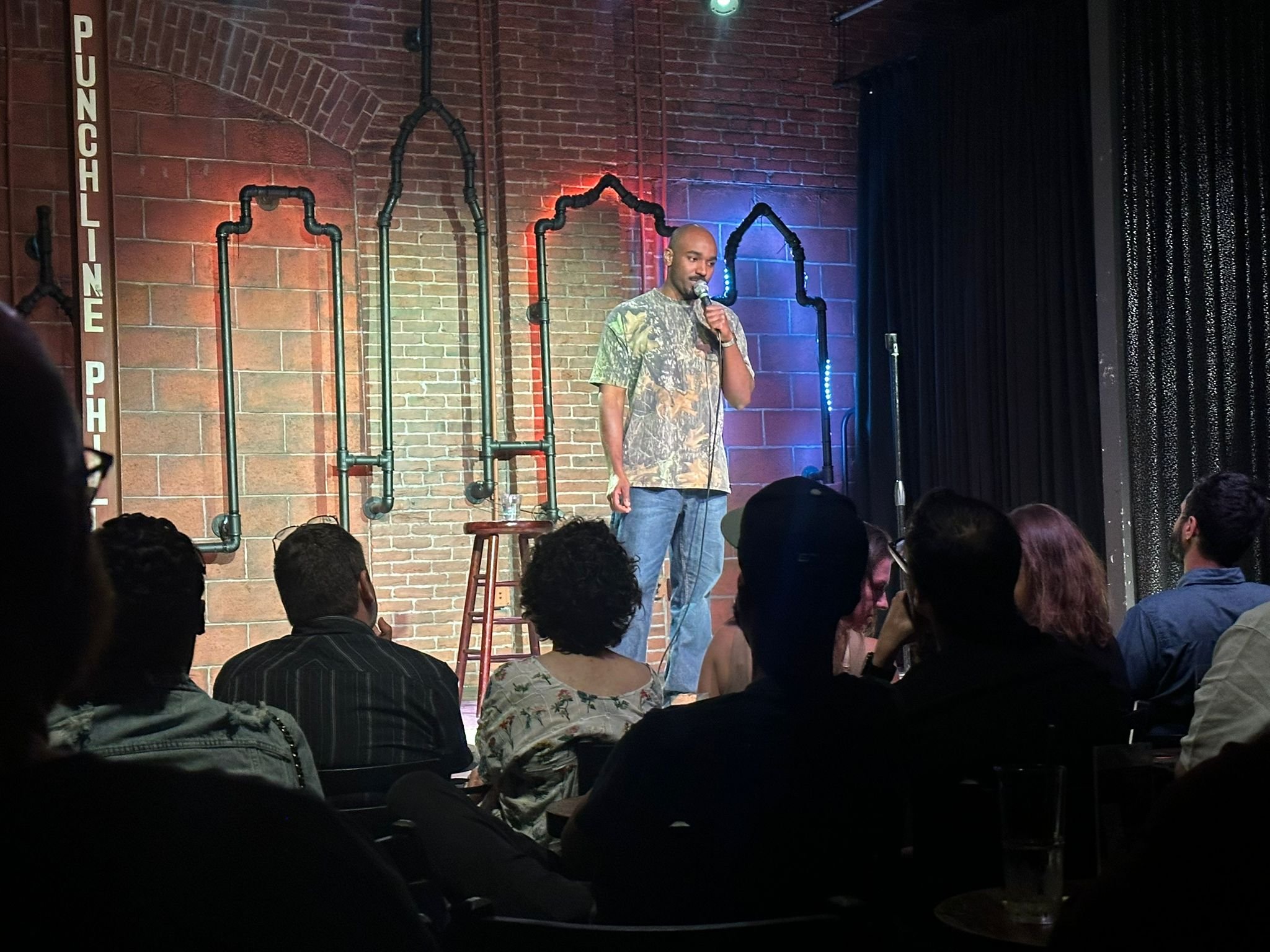
Sudanese-Canadian comedian Abbas Wahab performed at Punch Line Philly on August 13. Photo: Elissa Odeh
At first, Wahab followed that path, studying engineering and moving to Michigan to work in the automotive sector. “They sell you the dream,” he said, referring to the pressure on many immigrants to suppress their artistic passions in favor of job security.
His work as an engineer was an achievement that brought pride to his Sudanese family but left him feeling restless. In 2015, he finally made a shift. By day he worked as an engineer, and by night he took the stage at comedy clubs, fulfilling his childhood dream.
When Wahab finally told his family he wanted to be a comedian, they dismissed the idea as unrealistic. “They thought I was crazy,” he said. “They wanted to make sure I could establish some concrete success, and for them, engineering guarantees that.”
And there were other hurdles. Wahab still remembers his first stand-up show in Ferndale, Michigan in 2015. “They gave me five minutes, so I wrote three minutes of jokes and figured the other two would be filled with laughter,” he said. “Let’s just say it didn’t quite work out that way.”
His parents’ doubts lingered until 2017, when he landed an unexpected gig: a McDonald’s billboard advertisement for a Spicy McChicken sandwich. Wahab’s face could be seen across Canada. Soon after, videos of his skits and stand-up began circulating online, reaching viewers in Sudan before finding their way back to his mother in Canada.
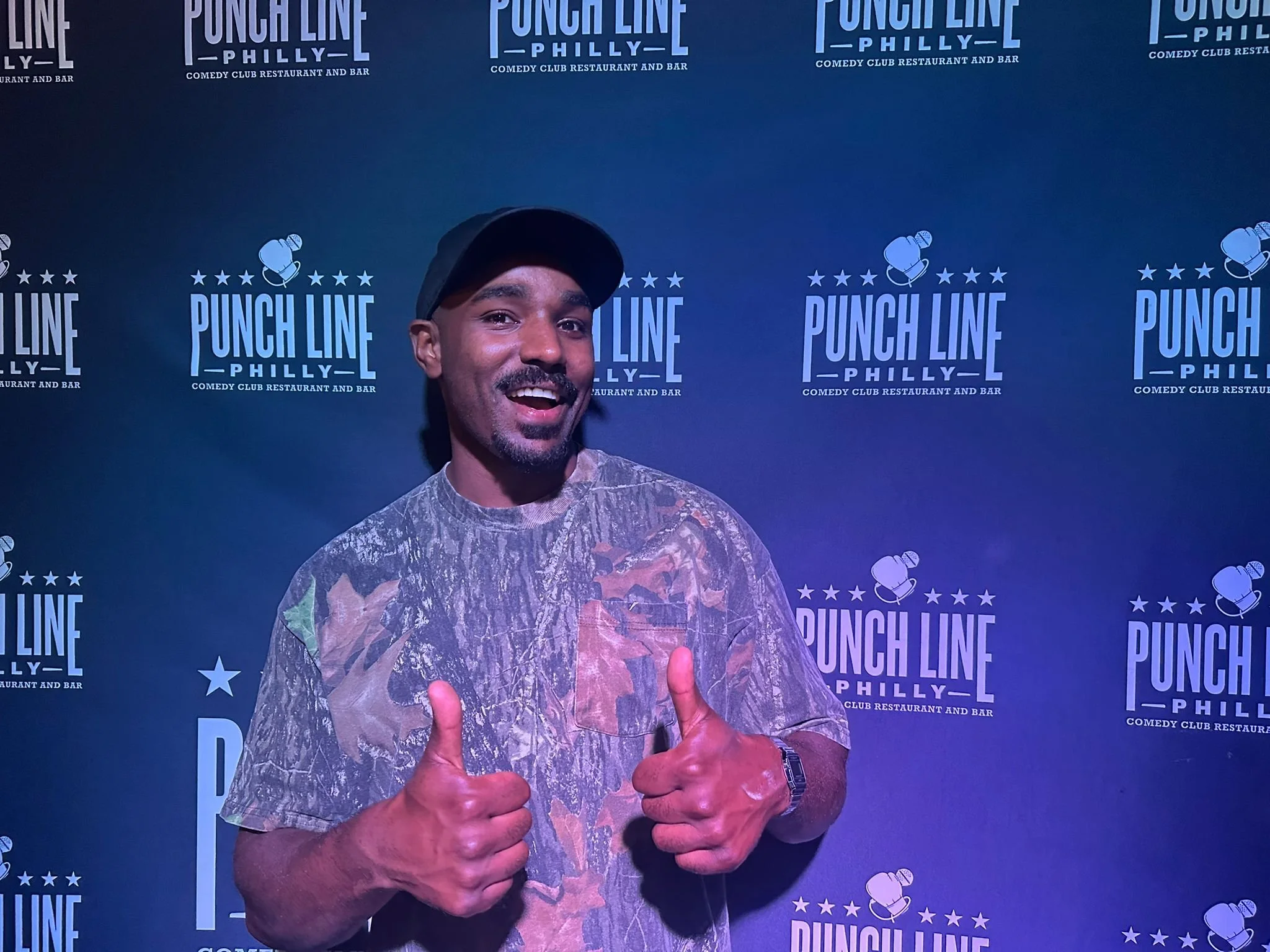
Wahab met with fans during a meet-and-greet after his set. Photo: Elissa Odeh
Still, there are occasional setbacks. When Wahab performed in Philadelphia in 2024, barely any tickets sold. But rather than cancel, he gave away free tickets, filling the venue with an energetic crowd.
“At the end of the day, every show is the best commercial for your next one,” Wahab said. “There’s no cutting ahead of the line. By the time I can pack a theater in Philadelphia, I’ll be a much better comedian.”
His persistence paid off when Wahab came back to Philly for his show this August, where around 90 people were in attendance. Among them was Andrew Figueroa, who, despite not being familiar with Wahab before the show, became one of the loudest laughers in the crowd.
“Wahab talked about topics that could easily make people upset, but he made everyone laugh instead,” he said.
Wahab’s comedy explores numerous topics, from the immigrant experience and Islamophobia to marriage, fatherhood and the everyday absurdities of city life. While his sets are deeply personal, they resonate with his audience by weaving humor into controversial conversations. “My job is to figure out how to make a statement in a funny way,” Wahab explained. “I will tell you the brutal truth and let you laugh at it.”
Among these brutal truths are his thoughts on being a Black Arab. During his set, Wahab quipped: “Cops pull me over and they say, ‘I’m mistaken, I thought you were Black,’ but at the airport, they’re like, ‘Come on through. You’re the worst, but not a flight risk.’”
Over the years, Wahab has also embraced another truth, his Sudanese identity that he once tried to dismiss. “As a child, the last thing I wanted to be was Sudani,” he said. “Anytime I had to speak Arabic, I would move far away from my friends so they wouldn’t hear me. At that age, you just want to minimize your differences so you can fit in with the crowd.” Only in the past five years has he begun to highlight his heritage in his comedy, often giving a shoutout to Sudanese communities at his shows.
Wahab takes pride in being part of the diaspora and notes that more Sudanese are pursuing creative careers and bringing fresh perspectives to industries that have historically lacked representation.
“They are breaking out of the box,” Wahab said. “These voices that are not considered traditional are going to be huge voices in the coming decade, and it’s only going to make creativity better.”
***
Elissa Odeh is a Palestinian journalist from Lansdale, PA. She graduated from West Chester University with a BA in media and culture and a minor in journalism. Her work has been published in Lehigh Daily, Daily Local, and the New Orleans Review.