
For a Former Darfuri Activist, a Community Garden Offers Refuge and Connection
Story and Photos by Amna Khalafalla
July 6, 2026
When Mahdi Bahr Al Din becomes overwhelmed by news from back home in Jebel Marrah, Darfur, he drives from his home in Northeast Philadelphia to Benjamin Rush State Park, where he tends to his garden. He grows okra, Sudanese cucumber, purslane and other crops commonly found in Sudanese cuisine.
For Al Din and others like him, many of whom come from Sudan’s farming regions, the garden serves as a memorial of their lives before displacement and conflict marred the memories they held of their home. Since joining, Al Din has encouraged others in his community to farm at the garden, which opens seasonally from April through mid-October.
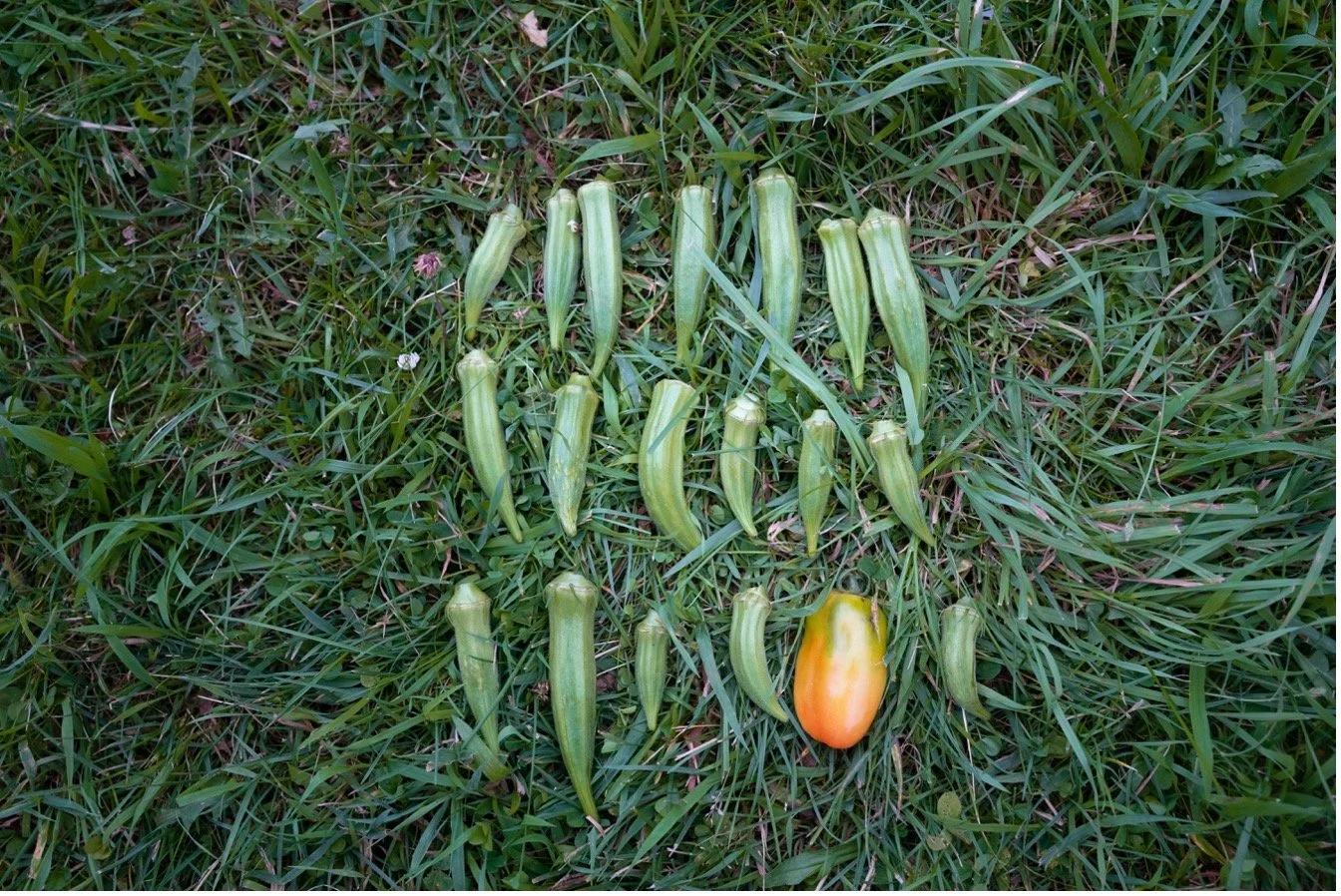
Okra and a tomato from Mahdi Bahr Al Din's garden. Al Din gives the majority of the produce he cultivates to members of his community, saying, "They love receiving the organic produce, and I love feeding them." All photos by Amna Khalafalla
"Whenever I have free time and I am stressed, I go to the garden," Al Din says. “When I come here, I forget everything.” Since the war in Sudan began in April 2023, Al Din has found himself retreating to the garden to disconnect from the distressing news from home. The conflict has created the world's largest internal displacement crisis, and parts of Darfur have been under a brutal siege by the Rapid Support Forces, the militia fighting the Sudanese Armed Forces, leaving the population there without food sources for almost two years.
Al Din, who routinely hears from family members in Sudan about their precarious situation, finds relief among the community at the garden, the root of its appeal for him. He rents one of the garden’s biggest plots and shares it with other members of the Sudanese community. Weather permitting, he visits nearly every day and spends his time pulling weeds, watering crops and socializing.
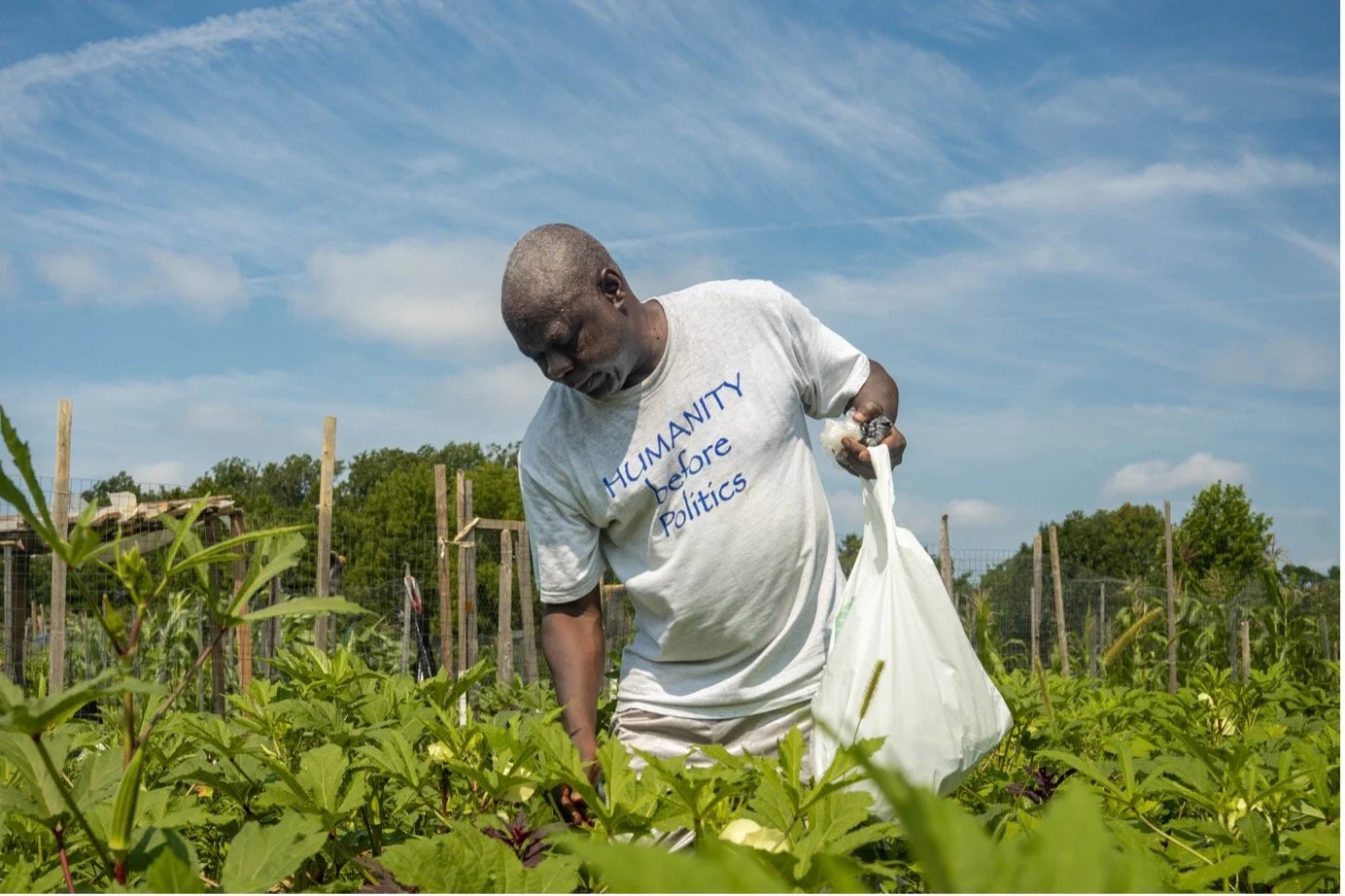
Al Din harvests okra from his plot.
Al Din comes from generations of falaheen, or farmers, in Sudan. Jebel Marrah is known for its lush, fertile soil and agricultural output that was once exported throughout Sudan. He remembers farming with his family year-round as a child. In the summertime, they would go to the valley and cultivate the land. During the rainy season, schools closed to accommodate children of farmers so that they could help their parents farm in the lowlands. Farming was so ingrained in Al Din that he pursued a formal education in agriculture.
Today, the persistent issues worrying Al Din stem from marginalization and inequality in Sudan. Darfur is rich in livestock, gold and agricultural production that have long fueled Sudan's economy. Growing up there, he bore witness to how the government extracted the region’s wealth while systemically marginalizing its people.
Al Din began to ask himself why educational opportunities were so limited, and why schools had so few teachers, questions that reflected the frustrations of many across the region. Then, in February 2003, resistance groups emerged in Darfur to counteract the protracted political and economic marginalization imposed on the region by the Central Sudanese government in the north of the country.
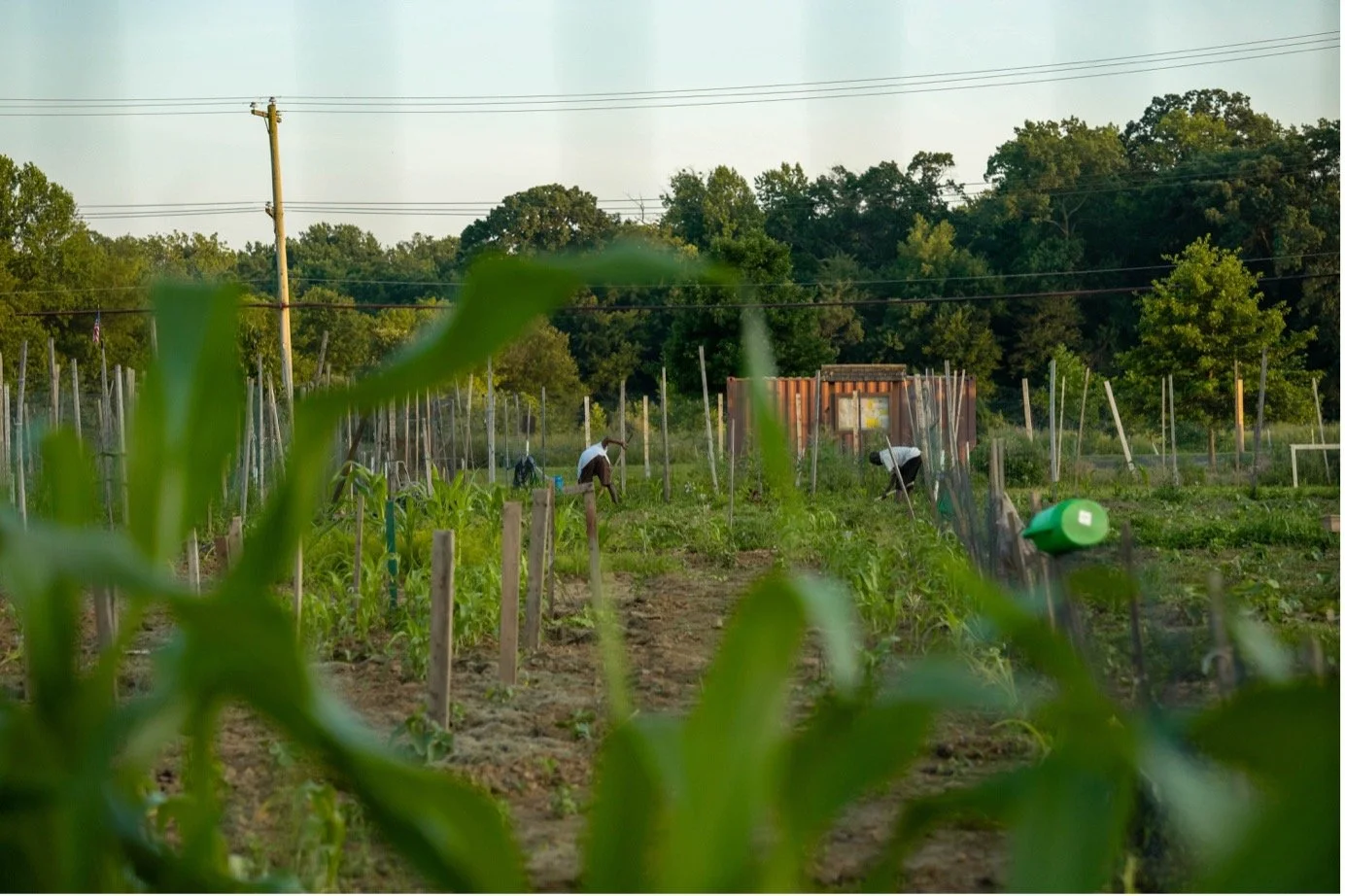
Al Din and a family member hoe soil at their garden plot.
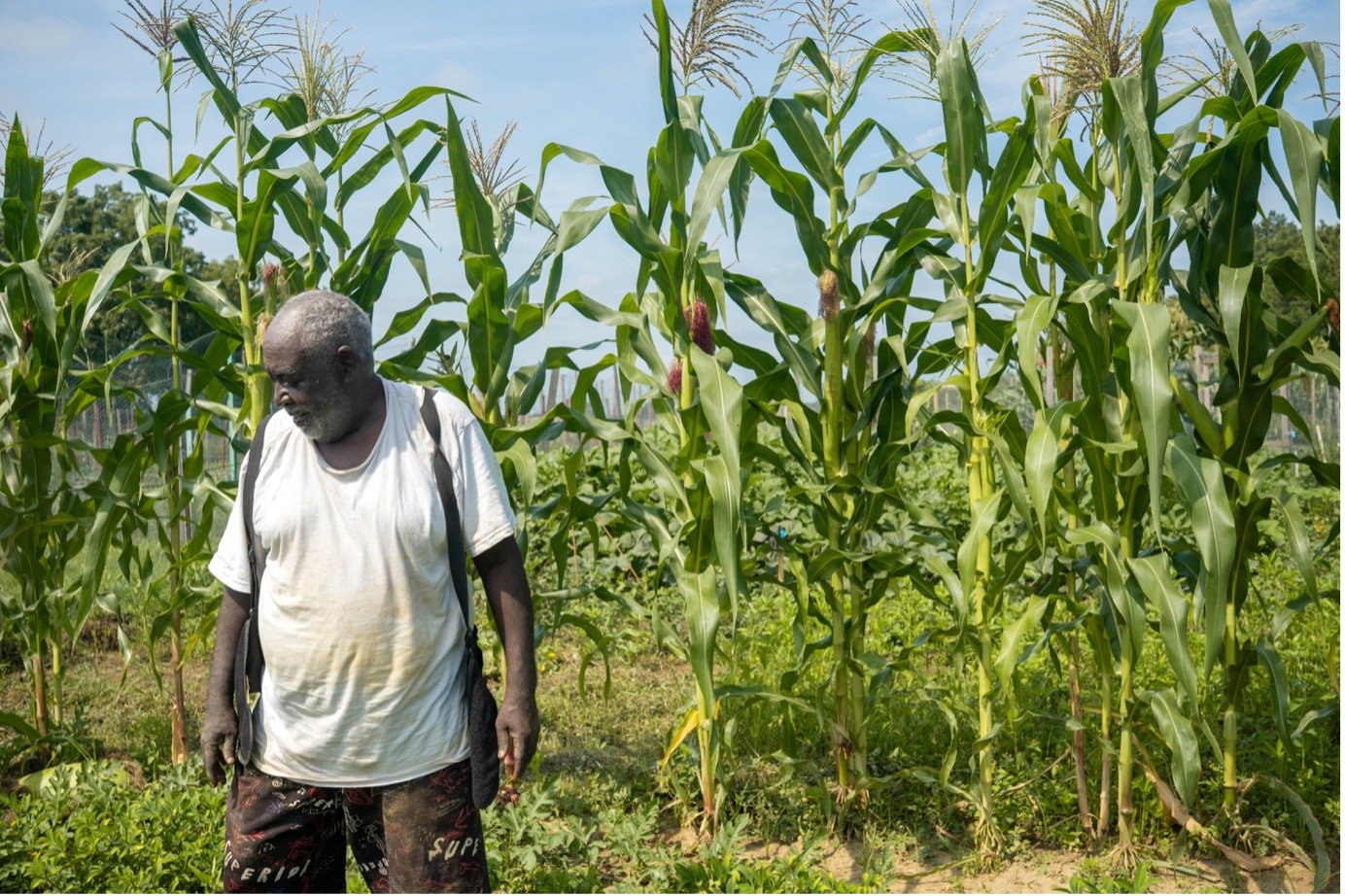
Another member of the community garden stands in front of a sugarcane–corn hybrid crop.
Despite the structural issues that hindered development in Darfur, Al Din knew he could play a part in supporting his community. After attaining a degree in Economics and Rural Development, Al Din returned to his town of Nertiti and began teaching girls at the primary and secondary levels to help mitigate the teacher shortage.
But war was brewing around him, and the attack on military outposts in El Fasher by the resistance groups — the Justice and Equality Movement and the Sudan Liberation Movement — prompted a “scorched-earth” retaliation by the then-Sudanese forces-allied Janjaweed. The conflict, which would be designated a genocide in 2004, was unfolding, and Al Din began to collect evidence of the atrocities. In 2003, he was granted a Diversity Visa to immigrate to the U.S. He said goodbye to his family and left Sudan.
Al Din’s move prompted him to illuminate what was happening in Darfur by doing advocacy work around the U.S. "When I first came to the United States, I brought many photos of evidence of what was happening in Darfur to the global community" he says.
In 2005, Al Din became part of the Darfur Alert Coalition, an advocacy organization that traveled to cities like Harrisburg, PA, Washington D.C. and New York City to speak about what was happening in Darfur. The group received immense support from Democratic senators, to whom Al Din would bring his 4x6 photographs of the atrocities happening in Darfur.
Within the Sudanese diaspora in Philadelphia, however, the group was met with criticism, harassment and defamation, and burnout eventually ended Al Din’s advocacy work.
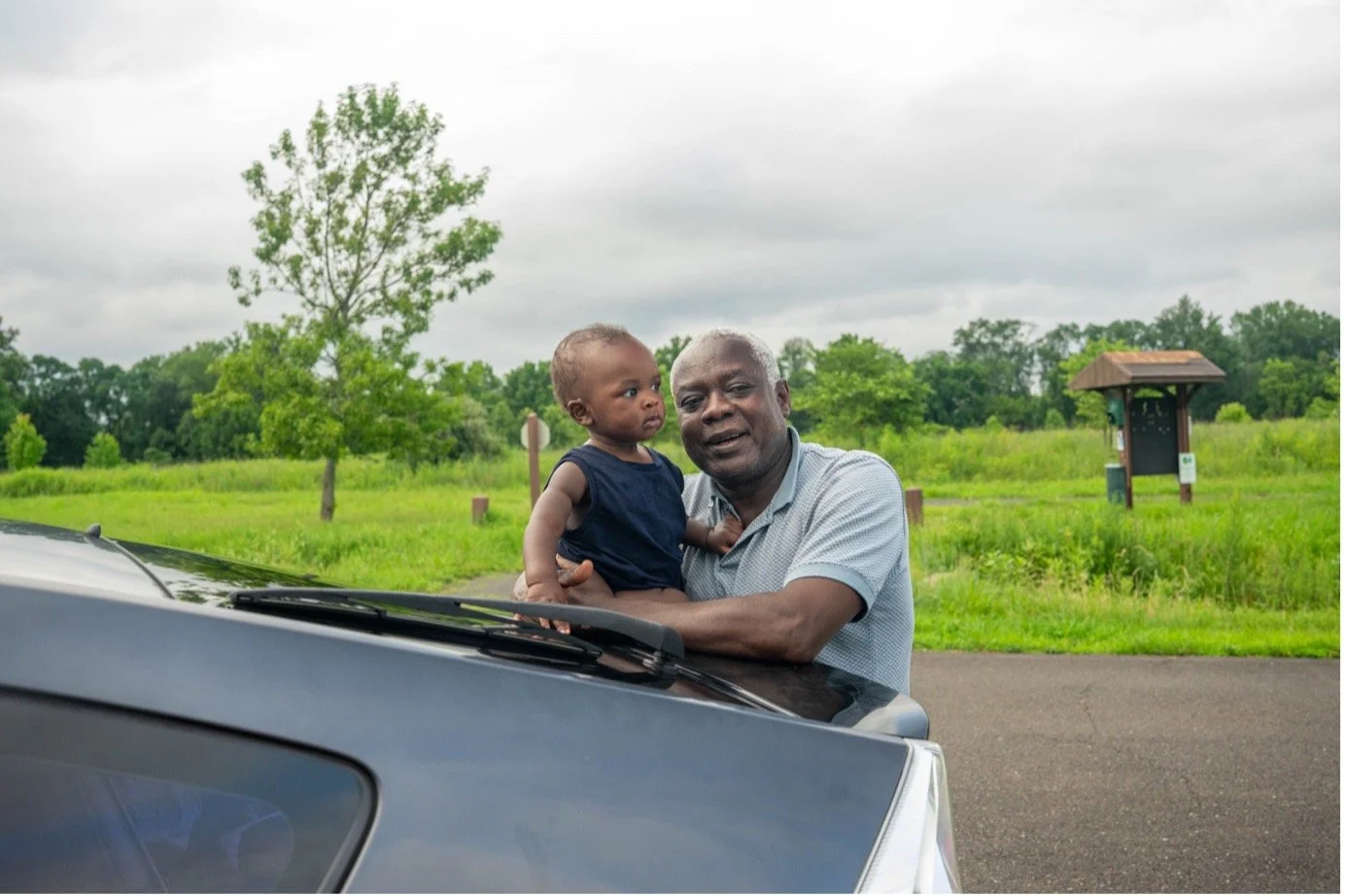
Al Din holds his niece’s son. His family frequently visits him at the community garden.
On a visit to the garden in late June, Al Din spends an hour touring the Sudanese-owned plots. Walking carefully on a narrow path to avoid stepping on new seedlings, he points to a tall maize-sugarcane hybrid providing shade from the harsh afternoon sun. The crop came from Sudan, he says. He stops to greet the owner of the plot and they briefly speak about current events before Al Din moves on to another plot, where two Sudanese men are hurriedly tilling the soil before sunset. Al Din continues to go from gardener to gardener until he has greeted everyone. It is these moments of connection, as much as the gardening itself, that keep drawing him back.
And because the genocide in Sudan continues to this day and the conflict has spilled over into the entire country, Al Din continues to arrive at the garden, hoping that one day stress from the war back home won’t be the reason he needs to garden. And on a hot summer day, he will simply pick okra or purslane, or just take a break and join his niece and her family on the grass, sharing fruit.
***
Amna Khalafalla is a Sudanese American, Philadelphia-raised photo documentarian with a background in international development. She is currently working on a long-term project documenting Philadelphia’s community of Sudanese activists and is an Al-Bustan Journalism Fellow.

Al-Bustan News is made possible by the
People’s Media Fund.