Queer, Trans and Arab: Finding Belonging in the Diaspora
By Gawhara Abou-eid
June 28, 2026
The first time Saif prayed alongside men after beginning his transition, he felt years of uncertainty give way to a sense of belonging.
At a Philadelphia protest that paused for salat al-maghrib, the Kuwaiti-born transmasculine photographer laid down a prayer rug and joined the men's line. Months later, during Muharram commemorations, he entered the men's section again, marking a significant moment in his relationship with faith and gender.
“It was just such an amazing experience,” he said. “I was like, ‘Wow — I made it this far.’”
For Saif (he/they) and Raffi Marhaba (they/them), a Lebanese-Brazilian transmasculine activist and artist, understanding their identities unfolded across different barriers. Their experiences reflect the varied paths queer and transgender members of the Southwest Asian and North African (SWANA) diaspora have taken while navigating questions of family, community, faith and self-understanding.
While their stories differ, both Saif and Marhaba said finding those connections helped dispel a feeling they carried for years: that they were alone.
The limits of gendered languages
For Saif, childhood was defined by masculinity long before he had language for it.
He was known as a tomboy, preferred soccer to dolls, often played with boys and was given a masculine nickname by an uncle. Yet discussions of LGBTQ+ identities were largely absent from public life. The most common term he encountered was “boya,” a label often applied to masculine-presenting women and frequently used in a derogatory manner. Conversations about transgender identities were similarly limited, with “jins al-thalith,” or “third gender,” often used in stigmatizing ways.
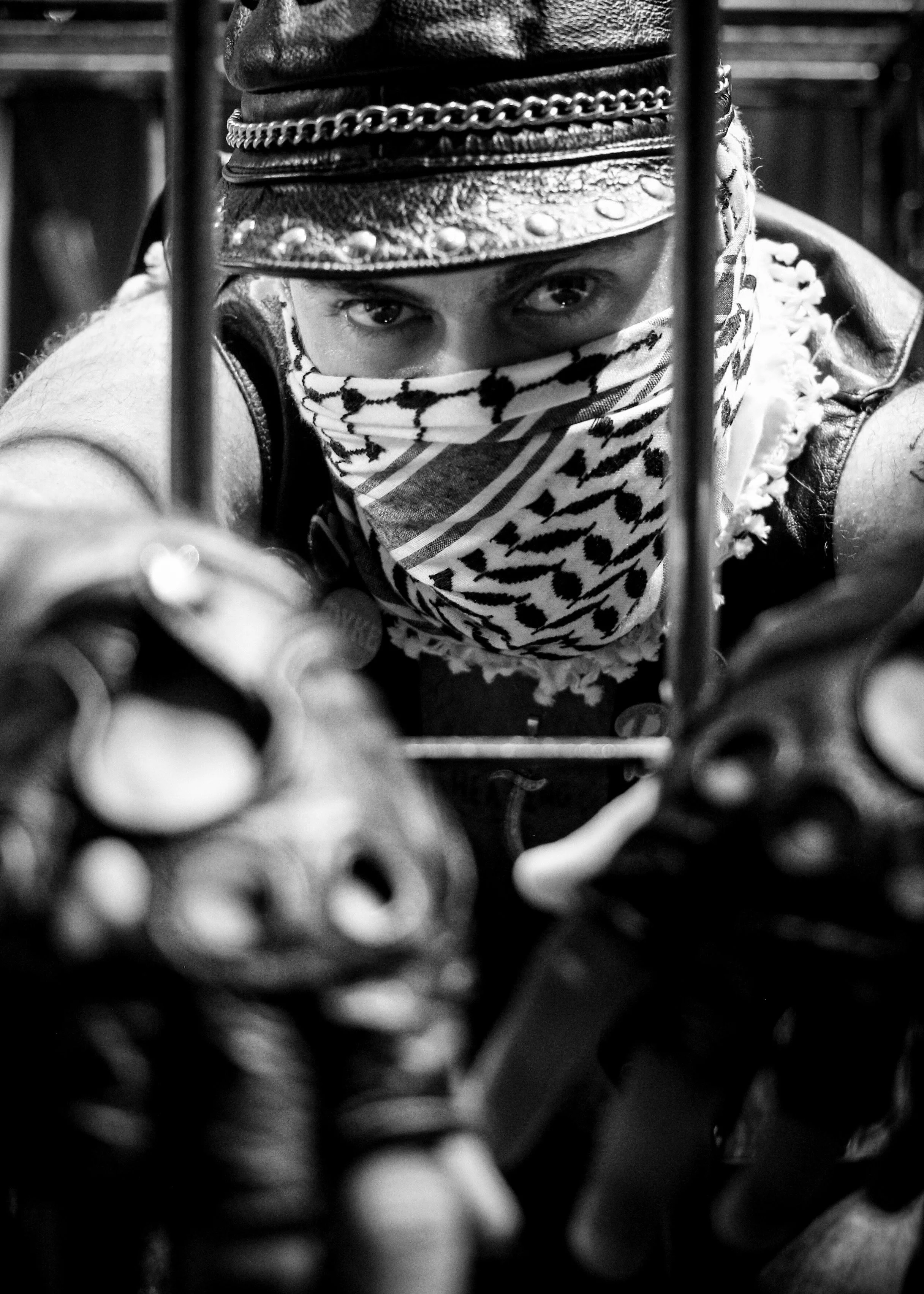
Saif, born in Kuwait, initially struggled to reconcile his faith with his gender identity. Photo: Saif
Language remains a recurring obstacle for many transgender and nonbinary people in the diaspora. Like other gendered languages, both Arabic and Portuguese require speakers to choose between masculine and feminine parts of speech.
Later, when explaining his pronouns to people in Kuwait, Saif tended to prefer masculine forms of address rather than expecting people to understand nonbinary pronouns immediately. Arabic rarely provided the vocabulary needed to describe queer and trans experiences, and while living in Kuwait, he encountered few affirming terms and little exposure to LGBTQ+ language.
Yet one of his most meaningful experiences with pronouns came from his mother. Unable to comfortably use masculine language but wanting to respect her child’s identity, she began using plural forms of address instead.
When Marhaba first came out, they identified as a lesbian because they lacked vocabulary for more nuanced descriptions of gender and sexuality. “I think the language part also definitely delayed things in my brain,” they said. “Being pan, I didn't even know I could have it both ways because there wasn’t really language for that.”
Born and raised in Brazil, Marhaba came out as queer at 13 but did not begin medically transitioning or identifying as nonbinary until their early 30s. As they were growing up in the 1980s and 1990s, queer and transgender representation in the media was limited to portrayals of stigmatized sex workers, contributing to years of internalized transphobia. More recently, however, some Portuguese speakers have adopted the letter “e” as a gender-neutral alternative to traditionally masculine or feminine word endings.
“Some words sound really weird, other words work fine,” Marhaba said. “It's a work in progress for sure.”
Family acceptance and family tension
Saif and Marhaba both describe family relationships as central to their journeys, though in very different ways. Only Saif’s mother and one sibling know about his transition. Other relatives have not seen him since 2021, before he began testosterone and underwent top surgery. The distance has become especially painful as he navigates an asylum case that prevents him from returning home without jeopardizing his future in the U.S.
Saif grew up in a devout Shia Muslim family and described years of struggling to reconcile faith with messages that portrayed queerness as incompatible with Islam. For a period, he distanced himself from organized religion, but even then he maintained many Muslim practices. Eventually, he returned to Islam with a different understanding of faith.
“My relationship with Allah is DIY ,” he said. “I don’t really subscribe to a lot of institutionalized religion. I think my relationship with Allah is between me and Allah.” Now, prayer feels intentional rather than obligatory, he said. “[It’s] not something that I feel like I have to do. It’s something that I want to do.”
Marhaba, raised primarily by their mother and grandmother, encountered sharply contrasting reactions when they came out as queer. Their ancestors were Orthodox Christians from the Levant, but neither their mother nor their grandmother practiced in a traditional sense. Their mother, despite having queer friends and generally progressive views toward LGBTQ+ people, struggled to accept her own child's identity and often feared their queerness would lead to a life of hardship and danger.
“There was a lot of non-acceptance and just catastrophizing my life as a queer person,” they said. “Like, ‘I’m never going to be happy, I’m always going to be have difficulty in life, I’m not even going to be safe.’”
Their grandmother responded differently.
“The first thing that came out of her mouth was, ‘I love you no matter what.’”
Creating a chosen family
Saif arrived in Philadelphia from Kuwait in 2016 to attend university, and it took some time to find the queer Arab community he would later come to rely on. At the time, he was still wearing hijab and was beginning to explore identities. Even after moving thousands of miles from home, he was still afraid.
He recalls walking through Philadelphia with a close friend who was also queer and Arabic-speaking. Whenever they encountered other Arabs in public, they often switched from Arabic to English. “There was a level of fear,” Saif said. Kuwait's relatively small population and close social networks made him worry that information about his personal life could eventually make its way back to relatives.
His sense of community began to expand through local organizing, friendships and cultural events. Over time, one introduction led to another, eventually connecting him with broader networks of queer SWANA Philadelphians. Today, he points to gatherings such as Yallah Habibi, Habibi Rave and Queer Ma'ida as spaces where queer Arabs and Muslims can build community, celebrate culture and discuss shared experiences.
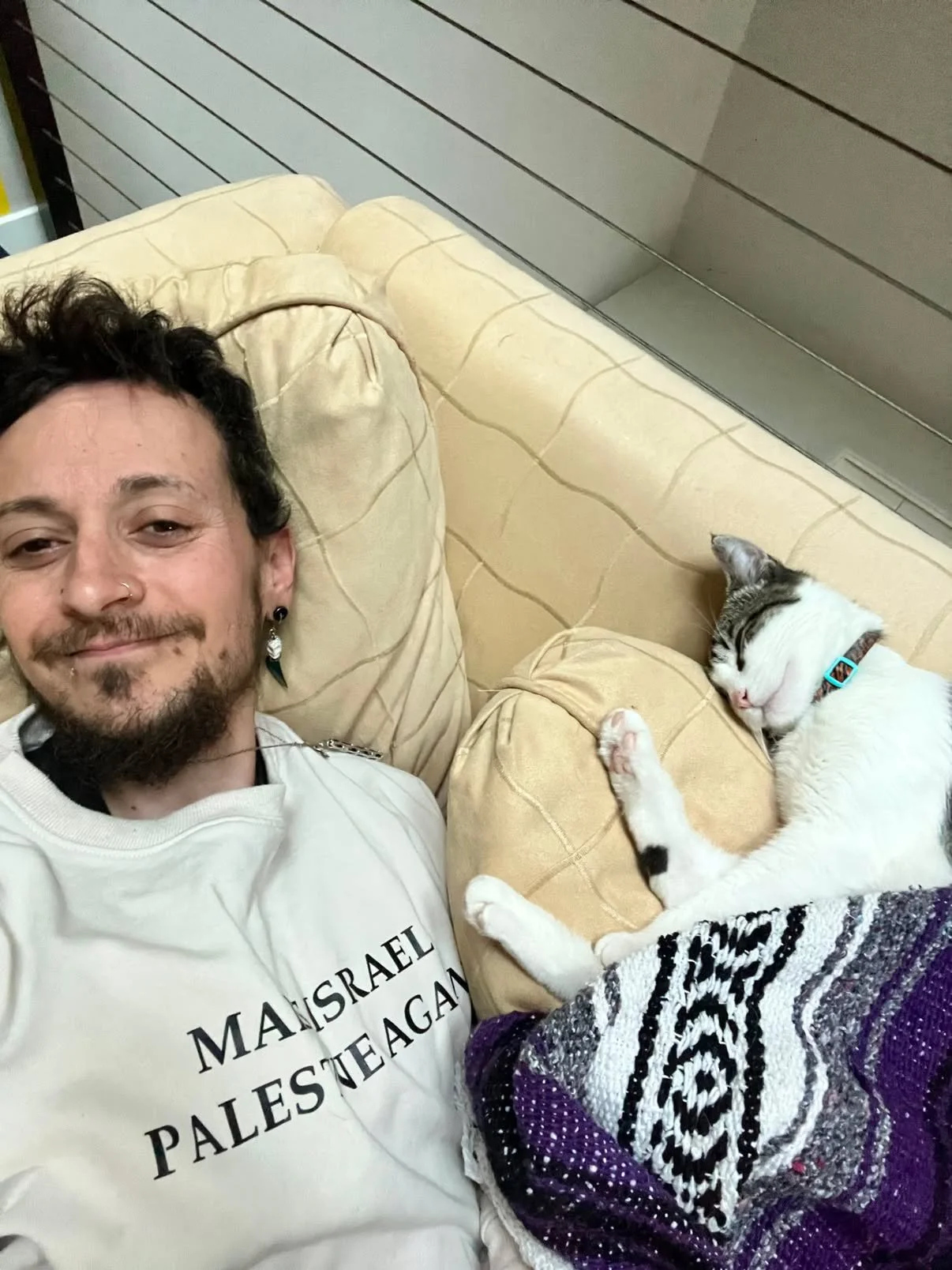
Activist networks introduced Lebanese-Brazilian Raffi Marhaba to other queer Arabs in Philadelphia. Photo: Raffi Marhaba
Marhaba's path to community followed a different route. After arriving in the U.S., they spent 16 years navigating the immigration process in New York before obtaining citizenship. During that time, they became deeply involved in activism and organizing, participating in movements ranging from racial justice campaigns to Palestine solidarity efforts. When they moved to Philadelphia five years ago, those networks eventually introduced them to other queer Arabs, including people whose family histories mirrored their own experiences of diaspora.
Through anti-ICE organizing, neighborhood activism and participation in the resistance choral group Rise Choir, Marhaba said they began forming relationships with other SWANA people who understood the complexity of balancing multiple identities.
“It's rare still that I can be in a space and be both queer and biracial and people are going to get it,” they said. “I think it's still rare to be completely honest.”
Still, they said those connections have become easier to find. “I feel like it's getting better for me personally because I'm finding those connections,” Marhaba said. “I think the awareness of Arabness in my circles is expanding. I wouldn't say in the U.S. it's expanding, I’d say that in my bubble it's expanding.”
The myth of a ‘Western’ identity
Saif and Marhaba reject assumptions that transgender or nonbinary identities are modern Western inventions. Saif has noted that queer people existed around him long before he had language for them, through friendships, trusted circles and unspoken understandings.
“If you don't talk about it, it doesn't exist,” he said of prevailing attitudes he encountered growing up. “But it's not true. It’s very much around.”
During visits to Kuwait, particularly his last trip in 2021, he noticed what he described as informal queer networks concentrated around cafes and gathering spots in downtown Kuwait City. People rarely discussed sexuality or gender identities openly, but many recognized one another through shared experiences and social cues.
“We didn't necessarily address it or verbalize it, like, ‘Hey, we're queer,’” he said. “But everyone in the scene knew that everyone was queer.”
Saif came out to several trusted friends during that visit and warned some that the trip might be his last before beginning medical transition. The trip also became an experiment in visibility. While still wearing the hijab around family members, he pushed boundaries by displaying a tattoo reading "queer" and wearing clothing with openly queer messages.
"I felt like I was trying to push the limits," he said.
Then something unexpected happened after he shared and reposted an online discussion about Arabic-language queer terminology. A cousin reached out privately.
"He was like, 'Hey, I just want to say I'm proud of you... and I'm also gay,'" Saif said.
Saif and Marhaba both stress that exclusion and acceptance are not unique to any one culture. Marhaba noted that every society contains both openness and prejudice, cautioning against stereotypes that portray Arab communities as uniquely intolerant while ignoring similar biases elsewhere.
For those who come after
Despite their different backgrounds, Saif and Marhaba offer similar advice to younger queer and trans people navigating questions of identity. Neither encourages coming out at all costs. Instead, they emphasize safety, patience and a recognition that every person's circumstances are different.
“You do not need to come out,” Saif said. “You don’t owe people coming out.”
Marhaba agrees that there is no single path forward. “A lot of the time, it’s not safe to do that,” they said. “A lot of the time, the thing you have to do is just hold on for dear life and know that once you’re out of that situation, you’re going have the opportunity to be yourself.”
The lesson that Marhaba wishes they could offer their younger self is compassion.
“Be compassionate with yourself,” they said. “It’s a hard journey. There’s nothing wrong with you. You are going to find chosen family and people who will support you and see you and love you just the way you are.”
Marhaba also stressed that no one navigates that journey alone.
“I could only be here and achieve the things that I have achieved because so many other queer and trans Arab people have paved the way for me to be here,” they said. “That’s a beautiful thing to remember — that we have the power of our ancestors and our legacy that we can tap into when things get hard.”
“And in the future,” they added, “you will be that person for someone else.”
***
Gawhara Abou-eid is an Egyptian-American researcher and journalist from Lewisburg, PA and an Al-Bustan News media fellow. They hold a BA in International Relations from The George Washington University, with a concentration in International Security Policy. Gawhara has published research for the League of Arab States in Cairo, and their journalism has appeared in The Standard Journal and The News-Item.

Al-Bustan News is made possible by the People’s Media Fund.