
Seeking SWANA Actors: Minou Pourshariati Navigates the Opportunities and Pitfalls of ‘Umbrella Casting’
By Gauri Mangala
July 21, 2026
Until recently, the ethnically ambiguous theatre actor could be seen as having it all. They could be cast as a Puerto Rican character in “West Side Story,” a resident of Agrabah in “Aladdin” and an Indigenous islander in “South Pacific.” The last decade of American theatre, however, has pushed theatre owners, producers and casting directors to think more deeply about how to consider casting along racial and ethnic lines. The concepts of color-conscious or color-blind casting, or even the “rainbow casting” popularized by musicals like “Hamilton” and, more recently, the Broadway production of “1776,” have become the norm in the industry.
In color-blind or rainbow casting models, productions prioritize actors of color, often resulting in a production in which ethnic and racial diversity is part of the overall vision or aesthetic. In color-conscious casting models, actors are cast in alignment with their racial and ethnic identities, and racially open roles are considered open all actors, instead of defaulting to white actors.
In this model, a production of “Hairspray,” for example, would cast Black actors in Black roles and white actors in white ones, as the racial makeup of the characters is important to an understanding of the plot of the story. A production of “Les Misérables,” on the other hand, can be understood and enjoyed with a racially diverse cast.
This new status quo presents many challenges to the ethnically ambiguous actor; what earlier presented as fluidity now presents as confusion. As such, actors must adapt. And Iranian American actor Minou Pourshariati found herself doing just that when she graduated college in 2014 and moved back to Philadelphia to pursue acting.
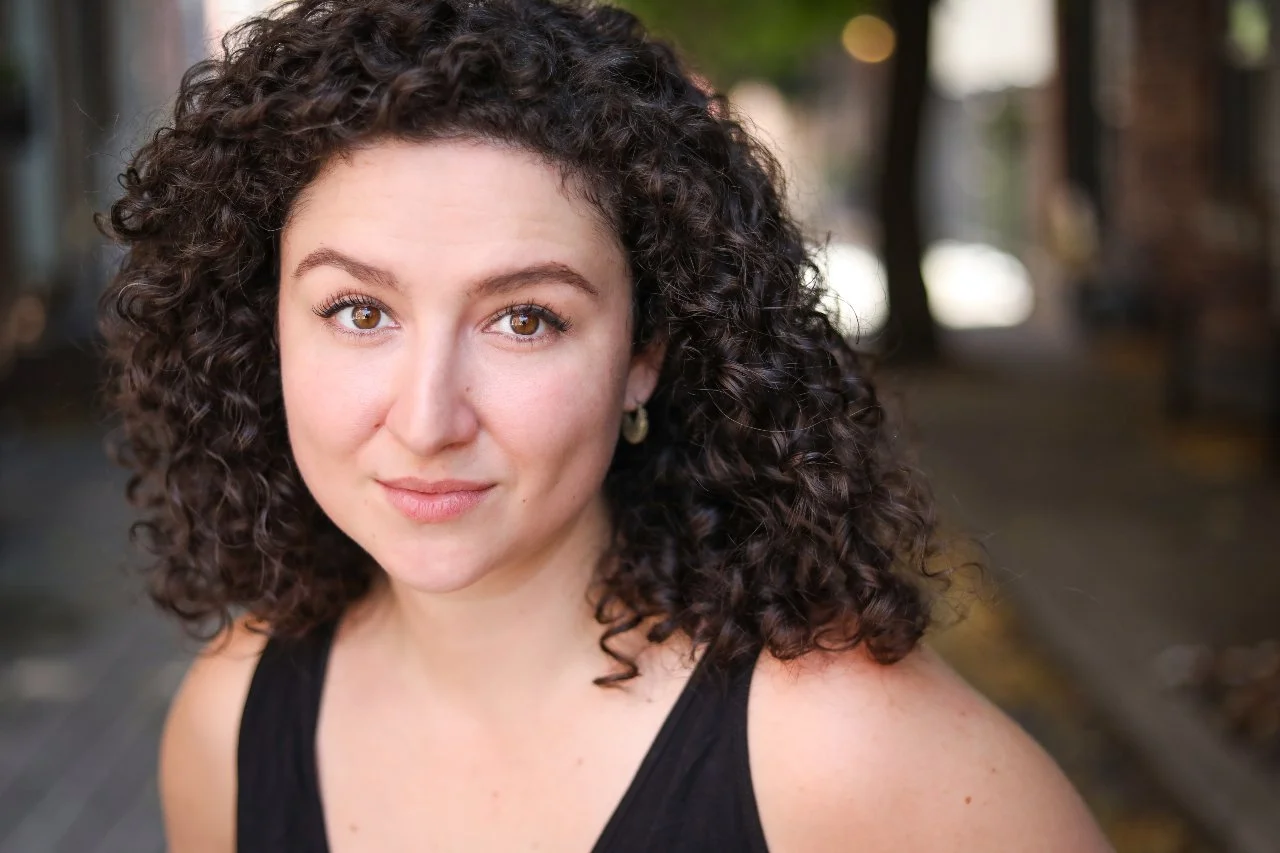
Actor Minou Pourshariati. Photo: Kim Carson
“I had a friend of mine telling me, ‘You need to be telling people that you are Iranian. Otherwise they won’t know,’” said Pourshariati. “The message I was hearing was ‘You need to distinguish yourself from the other white girls.’”
So Pourshariati, who for years had believed that her mixed-race background was a benefit in casting, was now faced with the need to lead with her Iranian heritage in order to secure acting roles. She began to adjust her biography and monologues accordingly, to better signal her ethnicity to casting directors.
The results were varied. For one thing, Pourshariati found that while she was being invited for auditions, they were not just for Iranian roles, but for roles representing the wider SWANA diaspora. This practice is referred to as “umbrella casting,” in which diaspora actors are deemed eligible to portray characters from a broader geographical area. For Pourshariati, this meant awkward auditions during which her lack of proficiency in “relative” cultures was evident. In one instance, the actor, who speaks basic Persian, was asked to speak Arabic for an audience.
“I don’t speak Arabic! And that’s a big part of that character,” Pourshariati said. “I don’t know how to show up for this in a way that honors myself and the characters and the community.”
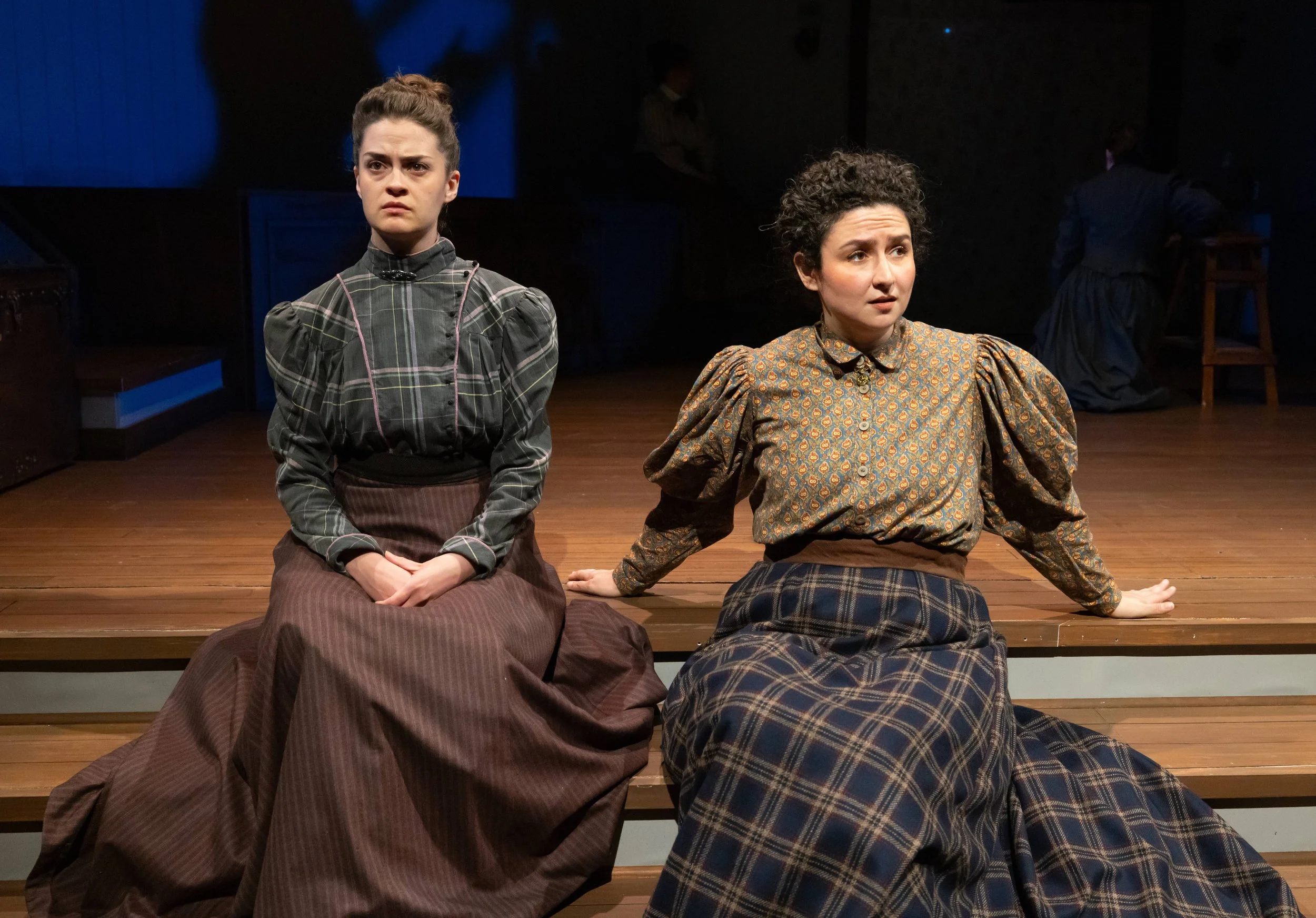
Minou Pourshariati, right, and Claire Inie-Richards in Suli Holum’s “The Woman Question” at People's Light Theatre, May 2026. Photo: Mark Garvin
The weight of this responsibility followed her to a production last spring at People’s Light Theater Company in Malvern, PA, where she performed the role of Tabat M. Islambooly in the world premiere of Suli Holum’s play, “The Woman Question.” Islambooly was a Kurdish woman who came to Philadelphia from Syria to study medicine in the late 19th century, and the play is a semi-biographical account of the inaugural class of the Woman’s Medical College of Pennsylvania.
“I personally felt some complicated tension around Tabat,” said Pourshariati. “[She was] someone who was Syrian, and I am not Syrian. Someone who was Jewish, and I am not Jewish. Someone who was Kurdish, and I am not Kurdish.”
For her role in “The Woman Question,” Pourshariati researched her character and her culture in the hopes of being able to better advocate for her character in the play. This is not an uncommon responsibility for actors of color, who are often tasked with working as historians and cultural consultants, especially in plays seeking to investigate identity and culture. For actors like Pourshariati, the work begins before even entering the audition room.
Joseph Ahmed, a theatremaker and Pourshariati’s collaborator, has found that creating his own work is the answer.
“There’s this constant negotiation of what are the boxes I fit into or the boxes that I’m seen as fitting into,” said Ahmed, who is half Bangladeshi. “I have to find my way into boxes because that is the way theatre works unless I am making my own work. I have done fewer auditions and relied less on regional theatre acting work.”
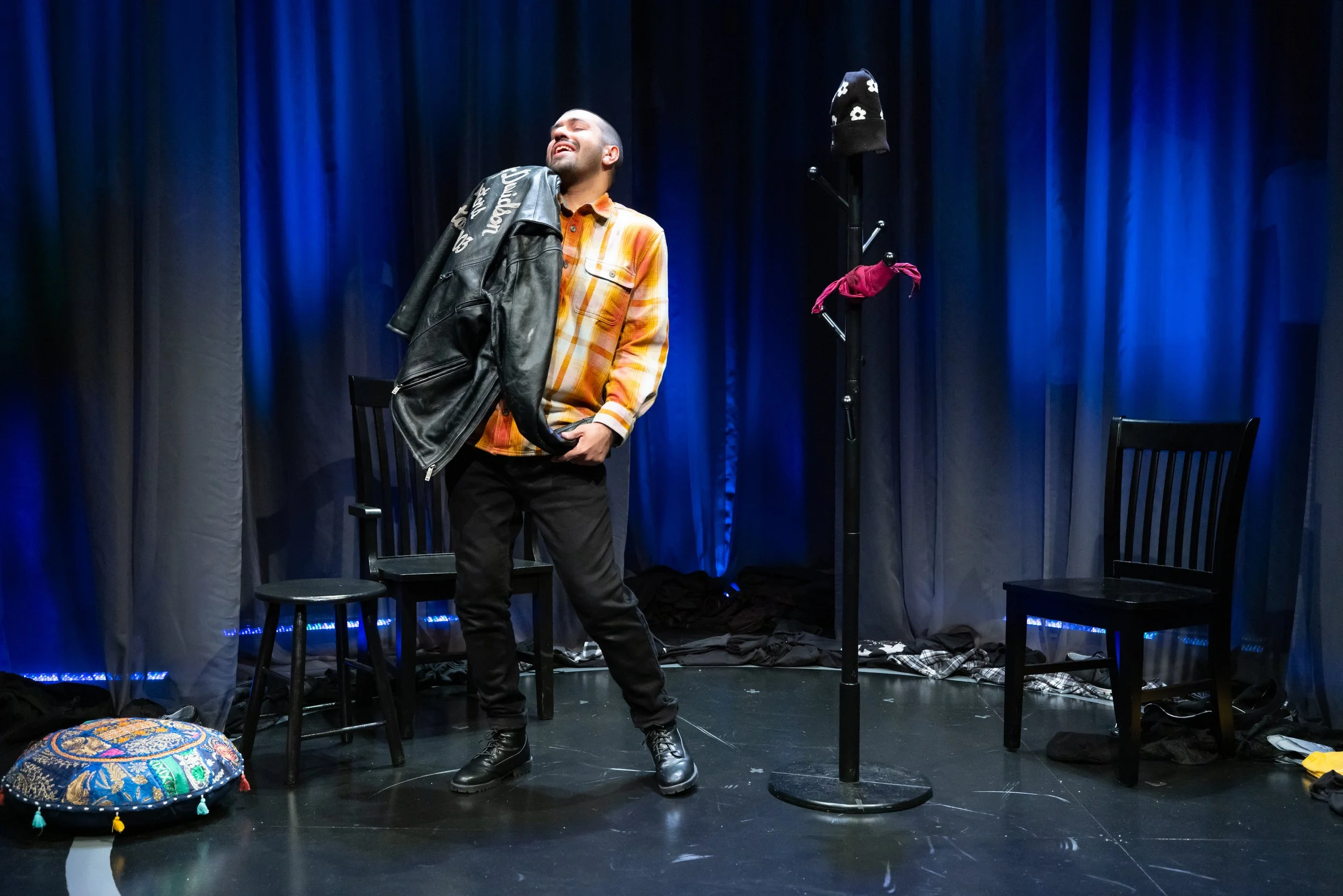
Joseph Ahmed performs in a production of Mashuq Mushtaq Din’s play “Draw the Circle” at the Hedgerow Theatre Company in 2026. Photo: Mark Garvin
Today, Ahmed often only auditions when explicitly invited by theatre companies. One such production was a solo show called “Draw the Circle” that Hedgerow Theatre Company produced in January 2026. The largely autobiographical play was written and originally performed by Mashuq Mushtaq Deen, and it requires an actor of South Asian descent. Ahmed was invited to perform the role.
“I ended up writing [a] performer's note in the program because I wanted people to know how I was located identity-wise in relationship to the play and some of the ways that I was navigating that, and how the content felt like it related to my own experience,” Ahmed said. “It wasn’t something that people could necessarily get from just seeing me on stage.”
Pourshariati wonders about Hedgerow’s choice to produce the show in the first place. “[Hedgerow] got so lucky that Joe was there and was able to do that role so beautifully,” she said. “I don’t know who else they would have cast. There are not a lot of other people in Philly that could have played that role.”
As performers, both Pourshariati and Ahmed have experienced the burden of doing dramaturgical research. But there are also directors in Philadelphia who are thinking about these things. Cat Ramirez, former Creative Director at Philadelphia Asian Performing Artists (PAPA), has worked hard for nearly a decade to create spaces that allow artists to honor their identities without feeling the pressure to perform culture for the sake of legitimacy or a role. For Ramirez, the answer has largely been to create affinity spaces, like PAPA, to make art.
“The thing that’s felt really cool about that organization, especially as a mixed-race white and Filipino person, is that I say ‘I’m Asian’ and that is not a questioned identity. It was always really important in my leadership of the organization, because I feel like I’ve had to prove if I am Asian in Asian spaces.”
Today, Ahmed and Pourshariati have taken up the mantle and are leading PAPA, hoping to continue offering an inclusive space for the Pan-Asian community. Ramirez remembers being one of the friends who encouraged Pourshariati to attend PAPA. “It was after the Barrymore [Theater Awards] one night, and Minou and I were talking about being mixed race. I [told her], ‘You should come sit with us. The experience you are describing is not one of a white person’s.’”
It was an important moment in Pourshariati’s experience as a half-Iranian actor. As part of PAPA, Ahmed developed his play “Abandonware,” which featured Pourshariati in the role of Ava, a half-Iranian, half-American knitter.
“I wrote a first draft and then Minou and I had this lovely conversation where I interviewed her about a bunch of different layers of culture, her experiences as a mixed person and different parts of Iranian tradition, and how much she felt like she did know,” Ahmed said. “Some of the core thematic threads of the play ended up coming out of that conversation.
The role came about after many members of the organization, including Ahmed and Ramirez, noticed Pourshariati’s talents — and the fact that the casting opportunities for Iranian performers had been limited in the Pan-Asian organization.
“I do feel like I will never be able to play a character that as closely aligns with my cultural identity as Ava, unless I write something myself,” Pourshariati said. “It meant so much to me that Joe did that for me. It’s rare to get to experience something that is so close [to who I am], but not quite. It requires a different kind of stretch as an actor.”
While developing Ahmed’s play, Pourshariati often called her father for information on Persian culture.
“My dad is my first conduit … and biggest conduit into Iranian culture. There’s something about Iranian life and Iranian culture that will always be a bit of a cipher for me. There’s a sort of mythicalness,” Pourshariati said.
Today, Pourshariati considers how she can use her experience to aid other diaspora artists in finding belonging and community. She also is thinking about writing her own play. Ahmed, who primarily develops his own plays to perform in, considers it the only answer to these questions around performing identity and culture in honest ways. “You just need to make your own work,” he said. “I think for anyone who has at least a seed of that desire, watering it makes a lot of sense.”
Pourshariati knows this will mean many more phone calls with her father.
***
Gauri Mangala is an Indian-American producer, writer and theatermaker. As a producer, Gauri has enjoyed working on commercial productions like “The Cottage” (Broadway), the national tour of “The Kite Runner” and Hasan Minhaj’s national comedy tour, “The King’s Jester.” Gauri is a member of the 2024-25 Philadelphia Asian Performing Artists Playwriting Project and a theatre critic for The Philadelphia Inquirer and other publications. She received her BA in anthropology and theatre arts from Gettysburg College and is pursuing her MA in theatre at Villanova University.

Al-Bustan News is made possible by the People’s Media Fund.