Opinion | The World Needs Humanitarians — and Humanitarians Need Our Support
By Amna Khalafalla
August 26, 2026
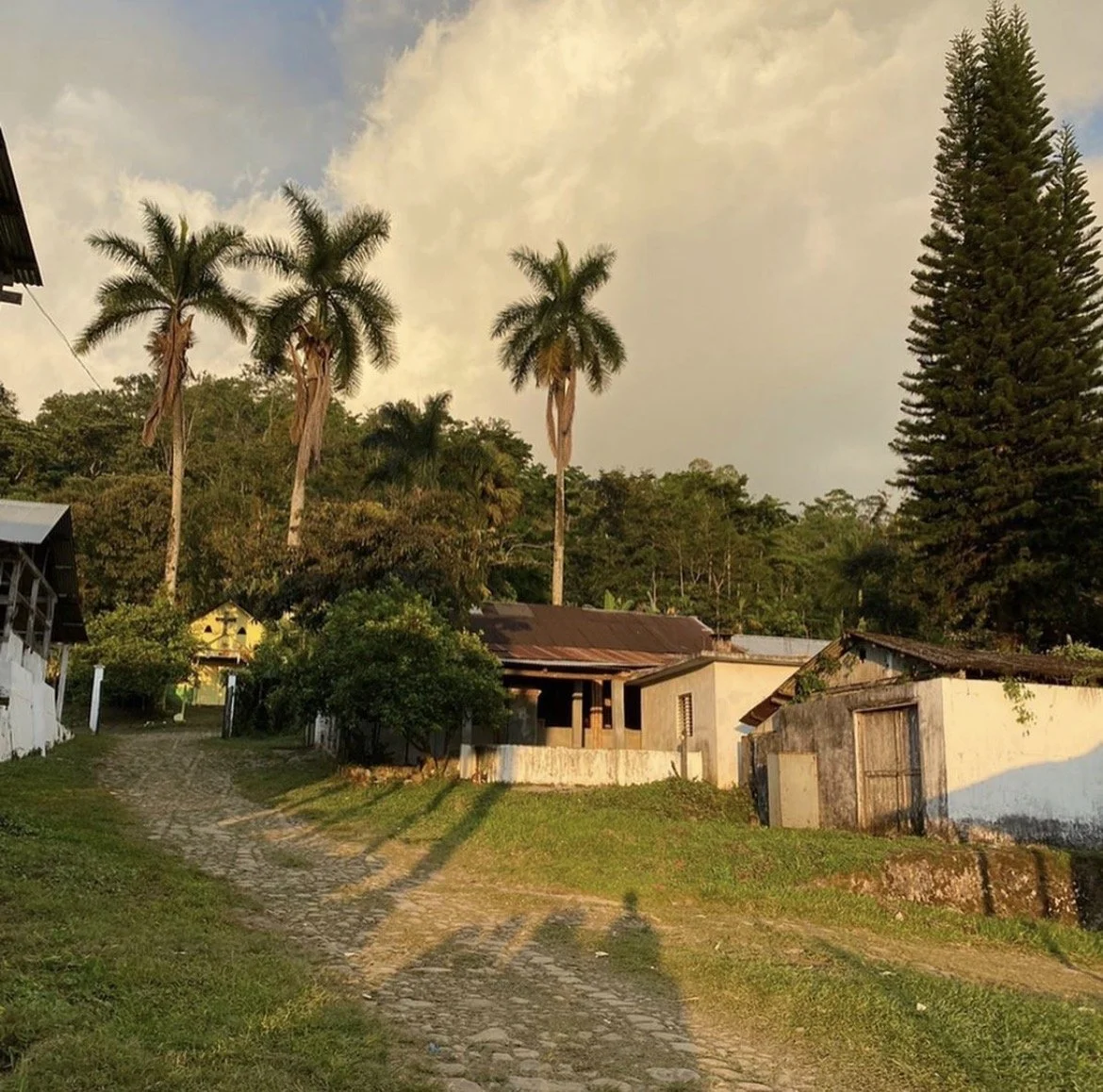
The Finca La Florida plantation in Quetzaltenango, Guatemala, 2019. All photos by Amna Khalafalla
In 2019, I stood on a hilly plantation in the Quetzaltenango Department, in the Western Highlands of Guatemala, listening to a Maya woman speak about her community's takeover of the plantation after the Guatemalan Civil War.
A repressive Ladino landowner had subjected the Indigenous workers to food and land insecurity for generations. Amid an unsparing war, the activist group began to imagine themselves as owners of the land they tended and organize. After a tumultuous period of organizing among the few families that remained at the Finca La Florida plantation, the workers successfully occupied the plantation as a form of protest, and they were granted ownership of the land by the government. It was learning about their struggle that drew me to work in the humanitarian field, particularly justice and advocacy work.
In countries like Guatemala that are grappling with the after-effects of civil conflicts, humanitarian aid organizations support long-term development in economic growth, education, health and improve the social and political conditions for vulnerable populations. In places like Sudan and Palestine, humanitarian aid organizations become a lifeline, providing monetary support, food, health services, and protection for minority groups.
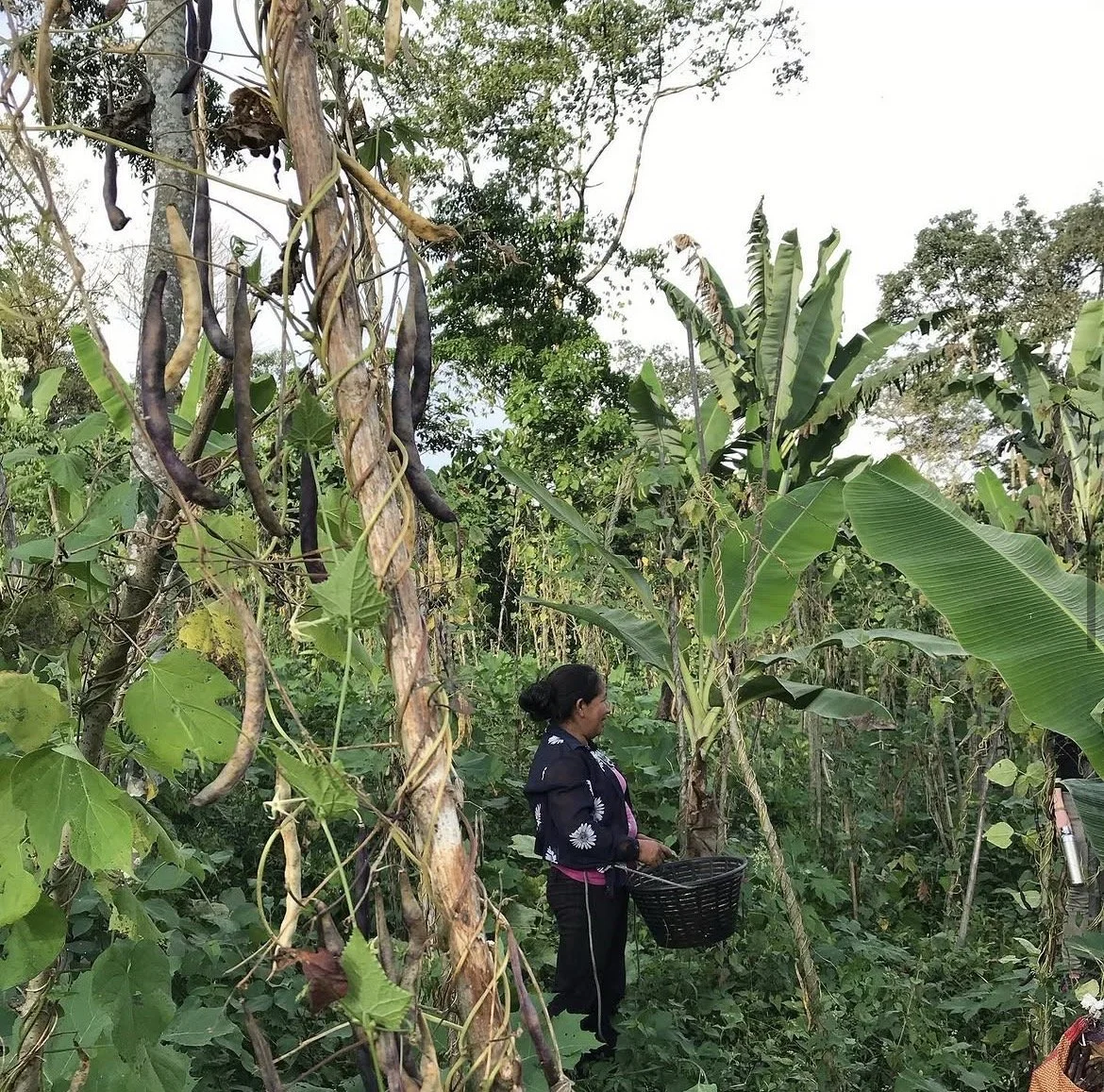
A worker picks fruit on the Finca La Florida plantation, 2019.
There are over 239 million people around the world in urgent need of humanitarian assistance and protection. But due to a decrease in contributions to humanitarian organizations by governments, there is a growing gap in service provision. Days after President Trump’s second inauguration in 2025, the United States paused all bilateral foreign assistance, shut down USAID and canceled some emergency programs. The elimination of USAID, the world's largest bilateral funder, which tackled poverty and provided emergency food aid worldwide, has devastated the humanitarian field.
The United Nations receives its funding from its member organizations, with each nation’s contribution being assessed based on a 'capacity to pay' formula. The U.S. has historically made the largest contributions to the UN; those contributions have decreased from $17 billion to $2 billion a year, a shortfall that other governments have not been able to make up. Since then, nations like England have also decreased their bilateral aid portfolio. As of this year, there is a $11.41 billion gap in funding to UN agencies.
In 2021, I returned to Guatemala to conduct research on funding gaps for feminist grassroots groups. I was intrigued by the movement and how it sustained itself amid the constant threat of gender-based violence and attacks on girls’ and women’s rights in the country. I was not surprised to learn that the availability of funds had never matched the need or the care that activists put into the work, leaving advocates overwhelmed and undercompensated.
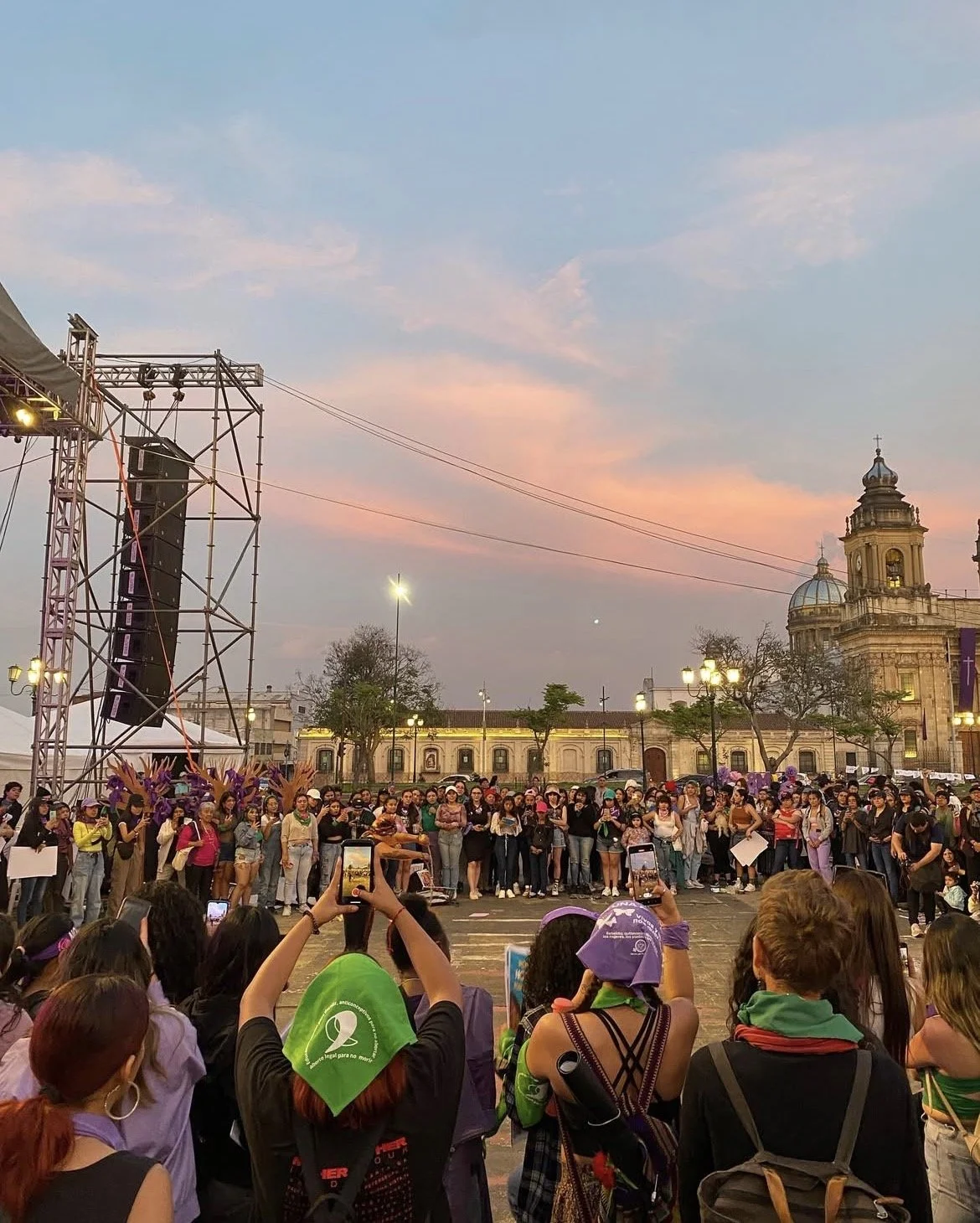
An International Women’s Day protest in Guatemala City.
Alongside my research, I worked with Colectiva Las Niñas de Guatemala, a feminist organization implementing empowerment programs for girls and women and campaigns to eradicate gender-based violence. As part of my research, I witnessed the impact of their work and wrote successful grant applications to connect them to funders. Despite the issues faced by the women and LGBTQIA+ people I met in the movement, their commitment to creating a just society was unwavering.
I attended a big grassroots protest in Guatemala City on November 25, 2021, the UN’s International Day for the Elimination of Violence Against Women. Women and girls wore green and purple handkerchiefs tied around their necks or as headbands. In a country with one of the worst rates of gender-based violence in Central America, the sight was motivating. Their activism inspired me to better understand the issues that girls and women face in Sudan, my home country.
In 2024, I traveled to Zambia to participate in a project providing support to women and girls living with HIV/AIDS, which was ultimately suspended following the dismantling of USAID and the President’s Emergency Plan for AIDS Relief (PEPFAR). My work entailed conducting health education workshops for teachers who utilized that information in their classrooms. Southern Africa continues to be the center of the AIDS epidemic, and women and girls live at the nexus between poverty and health epidemics. The Trump administration’s cuts are reversing the incremental progress that had been achieved at the local level.
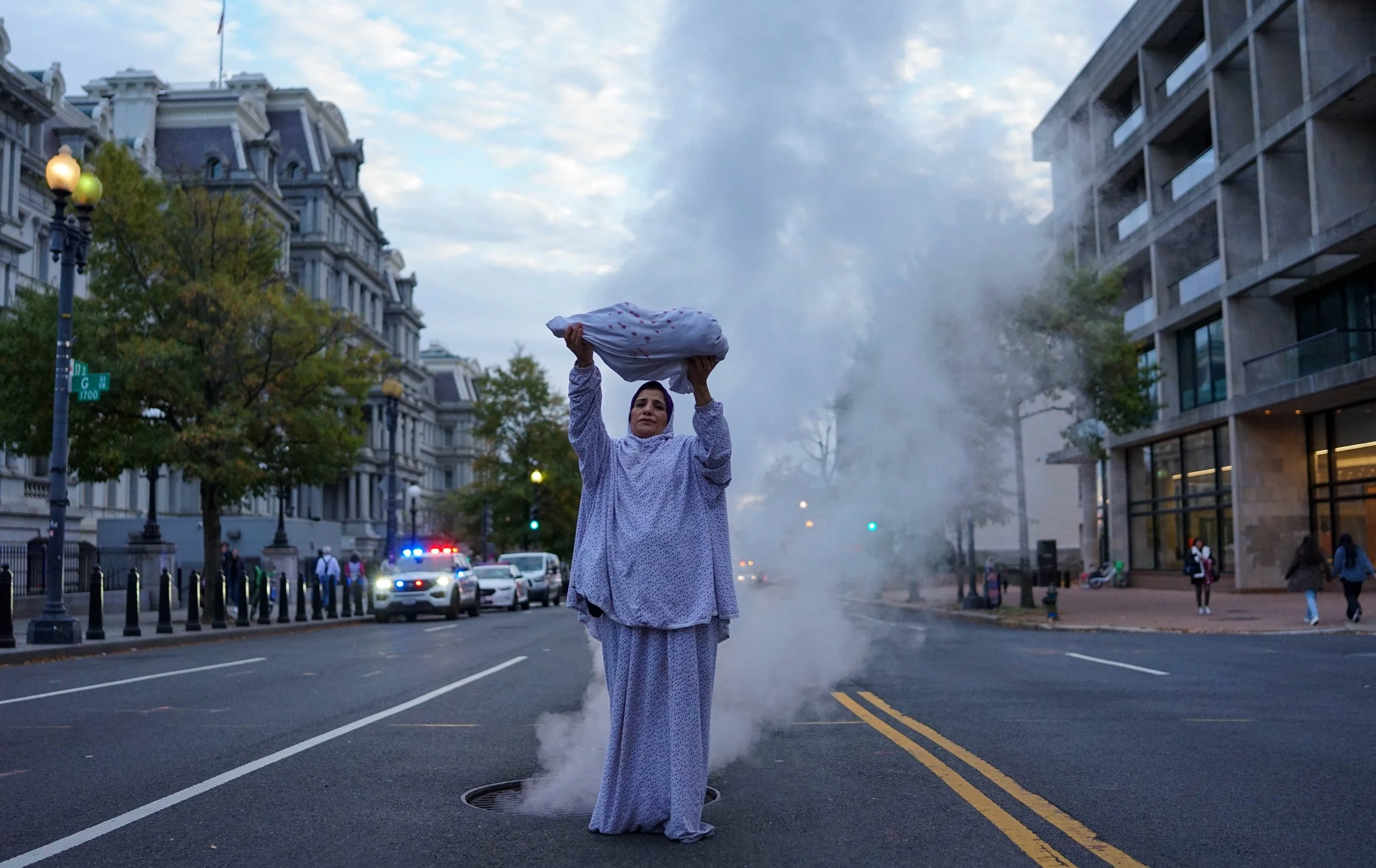
At the largest pro-Palestine protest in Washington D.C. on November 4, 2023, a protester holds a baby doll wrapped in a white shroud as a symbol of the children killed in the genocide in Gaza.
Today, my work in documentary photography and videography draws inspiration from humanitarians, activists, and everyday people striving to change the societies they live in. But there is still so much to learn about how people have advocated and fought for change in the past. My current focus is on former Sudanese activists in Philadelphia, whom I have shadowed and interviewed to better understand how they approached their work and the barriers that ultimately brought their activism to an end.
Throughout my time in Guatemala, Zambia and Philadelphia, I have seen how ordinary people sustain humanitarian work, even when the systems in place are working against them. As global conflicts become a common occurrence and environmental changes cause emergencies, the people who are first to respond will not be properly equipped to respond due to shortfalls in emergency and development aid. As Americans, we can pressure our government to reinstate bilateral aid through protest and through our votes.
***
Amna Khalafalla is a Sudanese American, Philadelphia-raised photo documentarian with a background in international development. She is currently working on a long-term project documenting Philadelphia’s community of Sudanese activists and is an Al-Bustan Journalism Fellow.
Al-Bustan News is made possible by the
People’s Media Fund.